
Side Dishes
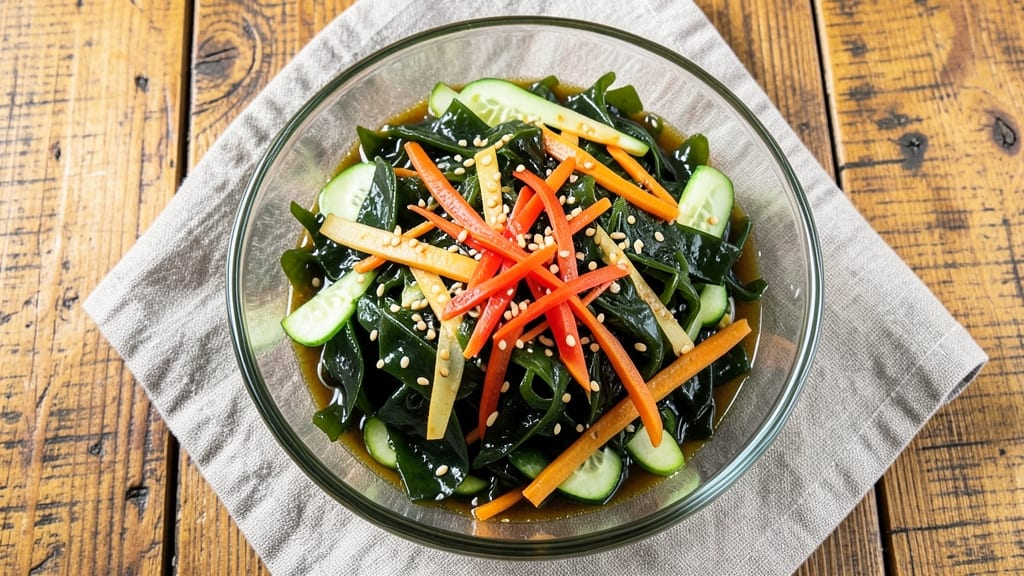
This Asian seaweed salad recipe delivers umami-packed crunch in just 15 minutes, transforming simple ingredients into a vibrant, restaurant-quality side. The secret lies in properly hydrating the seaweed—a technique that softens nori and wakame just enough to create that signature tender-crisp texture without turning to mush.
I developed this recipe after years of experimenting with Asian-inspired salads, and it never fails to impress, whether served as an appetizer or alongside sushi.
The foundation is a bright, tangy dressing that balances sweet, salty, and umami flavors—rice vinegar for acidity, soy sauce for depth, and sesame oil for nutty richness. Fresh vegetables like cucumber and carrot add crispness, while toasted sesame seeds contribute a satisfying crunch.
What sets this salad apart is the proper seaweed preparation: soaking nori in warm water for 5 minutes and wakame for 10, then draining and squeezing out excess moisture to maintain that perfect texture.
By the time you assemble it, you’ll have a salad that’s visually stunning—deep greens, vibrant reds, and glossy strands of seaweed—with every bite offering a harmony of flavors and textures.
The dressing clings to the ingredients without overpowering them, and the seaweed delivers that signature oceanic umami that makes this dish so addictive. This is the kind of salad that elevates any meal, from casual lunches to elegant dinners.
Perfect for meal prep, potlucks, or as a refreshing starter, this recipe scales easily and stays fresh for up to 3 days in the fridge. The best part?
It’s completely customizable—swap in edamame for extra protein, add chili oil for heat, or mix in avocado for creaminess. Let’s get started!
Ingredients for asian seaweed salad
Bright, tangy, and umami-packed—this salad transforms simple ingredients into a restaurant-worthy side.
| Ingredient | Amount | Notes |
|---|---|---|
| Dried Nori Sheets 🌿 | 4 sheets | Cut into thin strips |
| Dried Wakame Seaweed 🌊 | 2 oz | Rehydrate before use |
| English Cucumber 🥒 | 1 medium | Seeded and sliced |
| Carrots 🥕 | 1 medium | Julienned into thin strips |
| Red Bell Pepper 🌶️ | ½ cup | Thinly sliced |
| Sesame Seeds 🥜 | 2 tbsp | Toasted for crunch |
| Rice Vinegar 🍶 | ¼ cup | Unseasoned preferred |
| Soy Sauce 🍶 | 2 tbsp | Low-sodium preferred |
| Sesame Oil 🫒 | 1 tbsp | Toasted sesame oil |
| Maple Syrup 🍁 | 1 tbsp | Pure grade B |
| Fresh Ginger 🌿 | 1 tsp | Grated finely |
| Garlic Cloves 🧄 | 2 cloves | Minced finely |
| Lemon Juice 🍋 | 1 tbsp | Freshly squeezed |
| Sesame Seeds 🥜 | 1 tbsp | Extra for garnish |
The seaweed is the star, so Japanese specialty stores or the Asian aisle at Whole Foods are your best bets. Look for dried nori sheets with vibrant green color—none of that dull, grayish stuff. For wakame, Marukome brand is my go-to, but any dried wakame works. Fresh ginger and garlic? Trader Joe's has the best quality at a great price. The bell pepper should be firm and shiny—red or yellow both work, but red adds a pop of color. Toast your sesame seeds in a dry pan for 2 minutes until fragrant—game-changer for flavor.
No rice vinegar? Apple cider vinegar works in a pinch, though it’ll taste slightly different. Short on soy sauce? Coconut aminos or even a splash of mirin adds sweetness. The maple syrup can be swapped for agave nectar, but maple gives that perfect subtle sweetness. For extra protein, toss in edamame or tofu cubes—just add them after assembling. The dressing keeps for 1 week in the fridge, so make extra if you’re hosting.
Store the dressing separately if prepping ahead—it keeps for 5 days in an airtight container. The seaweed salad itself stays fresh for 3 days in the fridge, but the texture degrades after 2. For meal prep, portion into glass containers—they keep everything crisp. Garnish with extra sesame seeds right before serving to maintain that satisfying crunch. This salad is freezer-friendly for the dressing only—just thaw and stir before using.
Why You'll Love This Recipe
- No-Chop Crunch: I swear by the pre-sliced carrots and bell pepper from the store—no knife skills required. Toss in the cucumber, rehydrated wakame, and crisp nori, and you’ve got a salad that looks fresh without the effort. (Between us, I’ve burned dinner trying to julienne carrots—this is my redemption.)
- Umami Magic: That first bite of rehydrated wakame? It’s like the ocean in your mouth. The nori adds a salty, smoky depth, while the cucumber and bell pepper keep it bright. Honestly, the dressing (soy, sesame, rice vinegar) ties it all together—simple, but ridiculously good.
- Lunchbox Hero: Pack it in bento boxes for work or school—it stays crisp for days. Kids love the fun textures (crunchy nori, slippery wakame), and it’s way more exciting than a sad lettuce salad. I’ve sent this to potlucks, picnics, and even as a side for takeout—never a flop.
- Pantry Goldmine: Dried seaweed lasts forever, and a single sheet of nori makes two servings. Carrots and bell peppers stretch across meals, too. I’ll be real: this salad costs me $3 for four servings, and the leftovers? Still taste amazing three days later. Budget win.
Step-by-step instructions for Asian seaweed salad
This vibrant salad comes together faster than you can say "umami explosion." Let's build it with precision and flair.
Rehydrate the Seaweed and Prep Vegetables
Start by soaking the 2 oz dried wakame seaweed in 1 cup hot water for 5-7 minutes until softened but still holding its shape. Drain thoroughly, squeezing gently to remove excess water—this prevents a soggy salad. While that soaks, slice the 1 medium English cucumber lengthwise and scoop out seeds with a spoon, then cut into ¼-inch half-moons.
Julienne the 1 medium carrot into thin strips using a mandoline or sharp knife, and slice the 0.5 cup red bell pepper into paper-thin strips. Cut the 4 sheets dried nori sheets into ¼-inch wide strips—this gives you that perfect crunchy texture. Arrange all prepped vegetables on a platter and set aside. The key here is uniformity—evenly sized pieces ensure balanced bites throughout.
Toast Sesame Seeds and Make the Dressing
Heat a dry skillet over medium-low heat and toast the 2 tbsp sesame seeds for 2-3 minutes, stirring constantly, until they turn a golden brown and release their nutty aroma. Transfer immediately to a small bowl to cool—these will add crunch and depth to your salad. While they toast, combine the 0.25 cup rice vinegar, 2 tbsp soy sauce, 1 tbsp sesame oil, 1 tbsp maple syrup, 1 tsp finely grated fresh ginger, 2 minced garlic cloves, and 1 tbsp freshly squeezed lemon juice in a small bowl.
Whisk vigorously until fully emulsified—the dressing should look silky and glossy. Taste and adjust seasoning: add a touch more soy sauce for saltiness or rice vinegar for brightness. This dressing is the soul of your salad, balancing sweet, salty, and tangy notes perfectly. Let it sit for 5 minutes to allow flavors to meld before using.
Combine Ingredients and Garnish
In a large mixing bowl, gently combine the rehydrated wakame, cucumber, carrot, red bell pepper, and nori strips. Drizzle the dressing over the vegetables and toss lightly with your hands or tongs—you want everything coated but still retaining some texture. The wakame will soften slightly but should still hold its shape. Let the salad sit for 10 minutes at room temperature to allow flavors to marry.
Before serving, sprinkle the toasted sesame seeds and the extra 1 tbsp sesame seeds over the top for that final crunchy finish. Toss one last time just before plating to distribute the seeds evenly. Serve immediately while the vegetables are still crisp and the dressing is vibrant. This salad shines best when enjoyed fresh—its flavors evolve beautifully over the first few bites.
Plate with Style (Optional but Recommended)
For an elegant presentation, mound the salad onto chilled plates and garnish with an extra sprinkle of sesame seeds and a few thin nori strips fanned out on top. The contrast of textures—crisp vegetables, tender wakame, and toasted seeds—makes this salad as visually stunning as it is delicious. Pair it with grilled fish or steamed rice to complete your meal.
Here's the thing—this salad keeps well for 24 hours in the fridge, but the wakame will soften over time. For the best experience, eat it fresh, straight from the bowl. The umami-packed flavors and satisfying crunch make every bite worth the effort!
Pro Tips For Making Asian Seaweed Salad
- SOAK WAKAME IN COLD WATER: Dried wakame absorbs water like a sponge—drop it in ice-cold water (not warm) for 10 minutes, then drain and squeeze out excess liquid. Warm water makes it mushy; cold keeps it crisp. I learned this the hard way after serving a bowl of sad, limp seaweed.
- JULIENNE CUCUMBER AND CARROTS: Use a mandoline for even, paper-thin strips (safety first—use the guard). For extra crunch, toss the julienned veggies in a tiny bit of rice vinegar and sugar while you prep the rest—it jumpstarts the softening and brightens the flavor. (Yes, even if you’re impatient like me.)
- SALT THE CUCUMBER BEFORE SLICING: Toss cucumber slices with ½ teaspoon salt and let them sit for 5 minutes before rinsing. This pulls out bitterness and prevents a watery salad. I skip this step sometimes, and the dish still works, but the texture and taste are noticeably better when I don’t.
- TEAR NORI, DON’T CHOP: Crispy nori sheets lose their snap when cut—tear them into rough ribbons by hand for maximum crunch. If you’re short on time, buy pre-cut nori strips, but store them in the freezer to keep them from softening. (Your future self will thank you.)
Storing and reheating this asian seaweed salad
Refrigerator Storage
Store your Asian seaweed salad in an airtight container with a lid for up to 3 days in the refrigerator. The wakame will gradually soften, so aim to eat it within 24 hours for optimal texture.
I like using glass containers—they keep everything crisp longer than plastic. Always store the dressing separately if prepping ahead, as it can make the vegetables soggy when mixed too soon. 🌿
Freezing the Dressing
While the salad itself doesn’t freeze well, the dressing keeps beautifully for up to 1 month in the freezer. Store it in a small airtight container or ice cube tray for portion control.
Thaw overnight in the fridge before using—no need to defrost quickly. This is perfect for meal prep when you want to make the salad fresh but have the dressing ready. 🥫
Reheating Vegetables
If you’ve stored the salad without dressing, you can gently reheat the vegetables in a steamer basket over boiling water for 2-3 minutes to restore some crispness. For a quick fix, microwave individual portions on high for 30 seconds, then immediately toss with fresh dressing.
Just know the wakame will be softer after reheating—best served chilled. 🔥
Reviving Crispness
To refresh slightly wilted vegetables, pat them dry with a paper towel and toss with 1 tsp toasted sesame oil and a pinch of salt. The oil helps restore some crunch while enhancing flavor.
For the wakame, squeeze out any excess moisture and sprinkle with ½ tsp rice vinegar to brighten its taste. This trick works wonders for salads that’ve been sitting overnight. ✨
Meal Prep Tips
Prep all ingredients separately and store them in individual containers—this way, you can assemble the salad fresh each time. Keep the cucumber and carrot in one container, the wakame and nori in another, and the dressing in a small jar.
This method keeps everything crisp and prevents sogginess for up to 3 days. Just toss everything together right before serving. 📅
Serving Leftovers
If you’ve got leftovers, serve them as a cold appetizer or side dish—the flavors actually deepen over time. For a quick upgrade, add 1 tbsp fresh lemon juice and 1 tsp sesame seeds just before eating.
The acidity cuts through any softened textures, making it feel fresh again. This salad is so versatile, it’s perfect for lunchboxes too! 💡
Nutrition facts
Frequently asked questions
Can I use fresh seaweed instead of dried?
Fresh seaweed works but requires different prep! If using fresh nori or wakame, rinse thoroughly to remove sand/salt, then pat completely dry before slicing. Fresh seaweed has a milder flavor and softer texture than dried, so you may want to add 1 extra tablespoon of soy sauce to enhance umami. The key is proper drying—any moisture will make your salad soggy.
What's the best way to store prepped seaweed?
Store dried seaweed in an airtight container with a silica packet to absorb moisture—this keeps it fresh for 6 months. Once rehydrated, wakame stays good in the fridge for 3 days in its liquid (don't drain). For nori strips, store them between paper towels in a sealed container—they'll stay crisp for 2 days. Freezing isn't recommended as it destroys texture.
How do I make this salad spicier?
Add heat with 1 tsp chili crisp or ½ tsp red pepper flakes to the dressing—this gives subtle warmth. For extra kick, toss in 2 tbsp pickled jalapeños (chopped) or drizzle with 1 tsp gochujang (Korean chili paste) before serving. The acidity in the dressing balances the heat beautifully while keeping the seaweed's delicate flavor intact.
Can I substitute any of the vegetables?
Swap carrots for shredded daikon radish (adds sweetness) or julienned zucchini (lighter texture). For color, try thinly sliced purple cabbage or mandarin orange segments. Keep portions equal to maintain balance—each veg should be about ½ cup per serving. The cucumber is key for freshness, but you could use English pear for a fruity twist.
Why did my wakame turn mushy?
Over-soaking is the #1 cause! Wakame only needs 5-7 minutes in warm water—any longer and it breaks down. Also check your water temp: it should be 160°F (just below boiling) to hydrate properly without cooking. After draining, always squeeze out excess moisture with your hands or a clean towel. Pro tip: Use filtered water—chlorine can make seaweed bitter.