
Salads
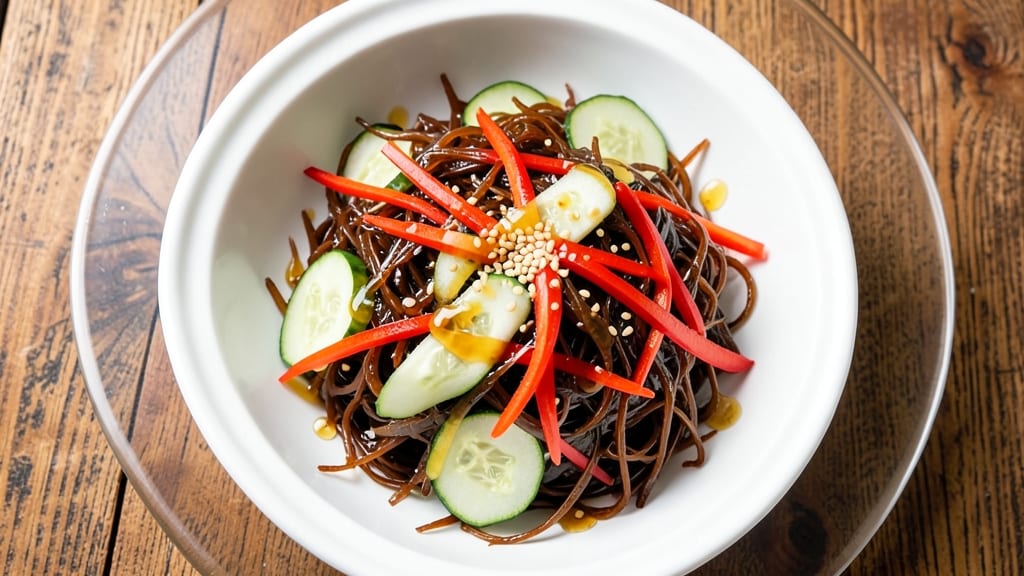
This arame seaweed salad delivers umami-packed crunch with a bright citrus dressing that transforms simple ingredients into a restaurant-worthy dish. The secret lies in perfectly balanced textures—tender arame strands, crisp vegetables, and a zesty dressing that cuts through the seaweed's natural richness.
I developed this recipe after discovering how arame's unique mineral notes elevate salads beyond basic greens, creating a dish that's both satisfying and unexpectedly elegant.
The foundation is simple yet strategic: dried arame rehydrated just enough to maintain its satisfying bite, paired with fresh bell peppers and cucumbers for refreshing contrast. A tangy citrus vinaigrette—made with rice vinegar, sesame oil, and a touch of honey—adds the perfect balance of sweet and sour.
What makes this salad special is how all elements work together: the seaweed provides umami depth, the vegetables offer crisp freshness, and the dressing ties it all with a bright, cohesive finish.
What you'll achieve is a salad that's visually stunning with its vibrant colors and textural contrast, while delivering complex flavors in every bite. The arame's natural sweetness pairs beautifully with the citrus, creating a harmony that's both unexpected and irresistible.
This isn't just another seaweed salad—it's a complete dish that stands up to any meal, whether served as a light lunch or an elegant appetizer.
The beauty of this recipe is its versatility—it works equally well as a standalone dish or alongside grilled proteins. The preparation is straightforward but yields professional-quality results, making it perfect for both weeknight meals and special occasions.
Let's create this vibrant, flavorful salad that proves seaweed can be the star of the plate.
Ingredients for arame seaweed salad
Dried arame and vibrant vegetables meet citrus-infused dressing for a sophisticated yet simple vegan salad.
| Ingredient | Amount | Notes |
|---|---|---|
| Dried Arame Seaweed 🌿 | 4 oz | Rehydrate in warm water for 10 minutes |
| Red Bell Pepper 🍆 | 1 whole | Thinly sliced, seeds removed |
| English Cucumber 🥒 | 1 whole | Seedless, thinly sliced |
| Rice Vinegar 💧 | ¼ cup | Unseasoned, mild flavor |
| Sesame Oil 🫒 | 1 ½ tbsp | Toasted sesame preferred |
| Raw Honey 🍯 | 1 tbsp | Substitute agave for vegan |
| Toasted Sesame Seeds 🌾 | 1 tbsp | Lightly toasted for aroma |
| Fresh Ginger 🧅 | 1 tbsp | Finely grated, fresh preferred |
| Diamond Crystal Kosher Salt 🧂 | ½ tsp | Fine grain preferred |
| Fresh Lime Juice 🍋 | 2 tbsp | Freshly squeezed |
| Extra-Virgin Olive Oil 🫒 | 1 ½ tbsp | Light, fruity variety |
| Red Chili Flakes 🌶️ | ¼ tsp | Optional for heat |
| Scallions 🧅 | 2 whole | Thinly sliced, white and green |
The arame is the star—look for vibrant, deep green strands at specialty stores like Whole Foods or Asian markets, where it's often sold in small packages. The dried variety rehydrates perfectly in 10 minutes, maintaining its satisfying crunch. For the vegetables, organic bell peppers and English cucumbers (with their thin skins) ensure crispness without bitterness. If you can't find dried arame, wakame works in a pinch, though the flavor profile differs slightly. The key to texture is slicing the peppers paper-thin—a mandoline makes this effortless.
No rice vinegar? Apple cider vinegar works, though the flavor shifts subtly. For the honey substitute, agave nectar mirrors the viscosity and sweetness perfectly. The sesame oil can be omitted if you're sensitive to its flavor, but toasted sesame seeds add essential nuttiness. Fresh ginger is non-negotiable here—it brightens the entire dish, but if you're out, 1/4 tsp ground ginger in a pinch (though texture will differ). The lime juice should be freshly squeezed—bottled juice lacks the acidity needed to cut through the umami. For heat, red pepper flakes are ideal, but a pinch of cayenne works if that's what's on hand.
Arame rehydrates best in room-temperature water—no boiling needed. Store dried arame in an airtight container for up to 6 months in a cool, dark place. Fresh vegetables should be prepped just before serving to maintain crispness—cut peppers and cucumbers keep for 2 days in the fridge if sealed tightly. The dressing components (vinegar, oil, honey) can be pre-mixed and stored for 1 week, though the ginger should be added fresh before tossing. For meal prep, keep dressing separate until ready to serve to preserve texture.
Why You'll Love This Recipe
- No-Soaking Needed: I’ll admit, I was skeptical about dried seaweed—until I tried this. Just toss the arame in warm water for 10 minutes, and it’s ready. No overnight soaking, no fuss. That’s 20 minutes saved right there.
- Umami-Packed Crunch: Between us, the arame has this addictive chewiness, while the red bell pepper adds a bright, fresh snap. A drizzle of sesame oil ties it all together—salty, nutty, and ridiculously satisfying. Honestly, it’s the kind of flavor that makes you reach for seconds without thinking.
- Meal Prep MVP: This salad holds up perfectly for days in the fridge. I make a big batch on Sundays, and it’s my go-to for lunches, potlucks, or even as a side for takeout. The cucumber stays crisp, and the dressing keeps it vibrant—no sad, wilted greens here.
- Budget Brightener: Dried arame is cheap, and it stretches far. A single packet feeds four people easily, and you’re getting that oceanic depth without the price tag of fresh seaweed. Plus, bell peppers and cucumbers are always affordable—this is a smart, flavorful stretch for your grocery dollars.
Step-by-step instructions for arame seaweed salad
This vibrant salad delivers perfect texture contrast and balanced flavors through precise preparation.
Rehydrate the Arame Seaweed
Place the 4 oz dried arame seaweed in a heatproof bowl and cover with 2 cups warm water (not boiling). Let it soak for 10 minutes until it softens and expands to about 3 times its original size. Drain thoroughly using a fine-mesh strainer, pressing gently to remove excess water.
I press the seaweed firmly against the strainer sides - this removes moisture without breaking the delicate strands. The seaweed should hold its shape when drained, with a slightly chewy yet tender texture. If any strands remain hard after 10 minutes, add 1 more minute of soaking time. The proper rehydration is critical for achieving the perfect umami crunch in your salad.
Prepare the Vegetable Components
Thinly slice the 1 whole red bell pepper lengthwise, removing seeds and membranes, then cut into ¼-inch thick strips. For the 1 whole English cucumber, trim the ends and slice into ⅛-inch thick rounds, then halve each slice lengthwise. Arrange all vegetables on paper towels and sprinkle lightly with 0.5 tsp diamond crystal kosher salt. Let them sit for 10 minutes to draw out excess moisture.
This salting step prevents a watery salad. I use a mandoline for even slices, but a sharp chef's knife works too. The pepper should be cut uniformly for even distribution in the final salad. After salting, gently pat the vegetables dry with fresh paper towels to remove any surface moisture before combining with the seaweed.
Create the Citrus Dressing
In a small bowl, whisk together the 0.25 cup rice vinegar, 2 tbsp fresh lime juice, 1 tbsp raw honey, 1 tbsp finely grated fresh ginger, 1.5 tbsp sesame oil, 1.5 tbsp extra-virgin olive oil, 0.25 tsp red chili flakes, and 0.5 tsp diamond crystal kosher salt. The mixture should be smooth with a slightly thick consistency.
This dressing balances the umami seaweed with bright citrus and subtle heat. I whisk vigorously for 30 seconds to fully emulsify the oils. The dressing should coat the back of a spoon but remain pourable. Taste and adjust - if too tart, add ½ tsp more honey; if too mild, add ½ tsp more lime juice. The perfect dressing enhances rather than overpowers the delicate seaweed flavor.
Assemble and Toss the Salad
In a large bowl, gently combine the drained arame seaweed with the prepared red bell pepper and cucumber slices. Sprinkle with the 1 tbsp toasted sesame seeds and 2 whole scallions, thinly sliced. Pour the dressing over the vegetables and toss gently with two forks or clean hands, being careful not to break the seaweed strands.
For best texture, I toss just until everything is evenly coated - about 15-20 gentle turns. The salad should be vibrant with distinct colors while maintaining individual component textures. Let it sit for 5 minutes before serving to allow flavors to meld. This waiting period enhances the overall taste experience without compromising the crisp textures.
Serve Immediately for Optimal Texture
Divide the salad among 4 serving plates, ensuring each portion contains an even distribution of seaweed, vegetables, and dressing. Garnish with additional toasted sesame seeds and a sprinkle of red chili flakes for visual appeal and extra flavor.
Serve immediately while the vegetables maintain their crisp texture. The salad's flavors develop best when eaten fresh, with the seaweed's umami notes complementing the bright citrus dressing. For best results, prepare no more than 2 hours before serving to preserve the vegetables' crispness and the seaweed's satisfying crunch.
Pro Tips For Making Arame Seaweed Salad
- SOAK ARAMÉ TWICE: Dried arame loves water but hates soggy texture—soak it in warm water for 10 minutes first, drain, then soak again in cold water for 15-20 minutes. The second soak tightens the strands and washes away any bitterness that lingers after the initial rehydration (trust me, you’ll taste the difference).
- SLICE CUCUMBER THIN: English cucumbers have thick skin and watery centers—cut them into ⅛-inch slices (yes, that’s thinner than it sounds) and toss them in ice water for 10 minutes before draining. This stops the salad from turning into a sad, watery mess mid-eating.
- VINEGAR FIRST, NOT LAST: Add rice vinegar to the dressing before tossing with the salad—let it sit for 2 minutes to mellow out its sharpness. Then add sesame oil last and toss gently; otherwise, the oil will coat everything unevenly and leave some strands dry (which defeats the whole point).
- SKIP THE PEPPER SEEDS: Unless you’re going for a spicy kick, remove the seeds and membranes from the red bell pepper before slicing—those little seeds add bitterness that clashes with the delicate seaweed. A quick swipe with a spoon works faster than you’d think.
Health benefits of arame seaweed salad
Rich in Iodine
Arame seaweed is one of the most iodine-rich foods you can eat, with just 4 oz providing about 1,000% of your daily needs. Iodine is essential for thyroid function, helping regulate metabolism and energy levels.
This makes arame particularly beneficial for those in iodine-deficient regions or following vegan diets, where iodine intake is often lower. 💪
Plant-Based Protein
This seaweed contains all nine essential amino acids, making it a complete plant-based protein source. A 4 oz serving delivers about 8 grams of protein, which is impressive for a vegetable-based ingredient.
It's especially valuable for vegans and vegetarians looking to diversify their protein sources beyond beans and tofu.
Mineral Powerhouse
Arame is packed with essential minerals like calcium, magnesium, and iron. Just 4 oz provides over 20% of your daily calcium needs, supporting bone health, while the magnesium helps with muscle function and stress reduction.
The iron content (about 15% daily value) supports healthy blood cells, though plant-based iron is best absorbed with vitamin C—luckily, our lime dressing provides that!
Low-Calorie Nutrition
With only about 30 calories per 4 oz serving, arame delivers serious nutrition without the calorie load. It's an excellent addition to weight-conscious diets because it provides fiber, vitamins, and minerals while keeping calories in check.
The high fiber content (about 3 grams per serving) also supports digestive health and helps maintain steady blood sugar levels.
Antioxidant Benefits
Arame contains polysaccharides and fucoxanthin, powerful antioxidants that help combat oxidative stress in your body. These compounds have been linked to reduced inflammation and may support heart health. The seaweed's unique mineral composition also contributes to its antioxidant properties, making it a truly health-promoting ingredient. ✨
Digestive Health
The fiber in arame (both soluble and insoluble) promotes healthy digestion and regularity. It also acts as a prebiotic, feeding beneficial gut bacteria in your microbiome. This makes arame not just a tasty addition to salads, but also a functional ingredient that supports your overall digestive wellness.
The combination of fiber and minerals makes this salad particularly beneficial for gut health.
Nutrition facts
Frequently asked questions
What makes arame seaweed different from other seaweeds in salads?
Arame has a unique umami-rich flavor that's more delicate than nori or wakame, with a slightly sweet, mineral-like taste. It maintains a satisfying chewy-crunch texture when properly rehydrated, unlike softer seaweeds that become mushy. The strands also hold their shape beautifully in salads, creating visual appeal while adding a satisfying bite.
Can I substitute dried arame with fresh seaweed?
Fresh arame is rare, but if you find it, use 8 oz fresh instead of 4 oz dried—it's much more perishable. For other seaweeds, wakame works best as a substitute, though the flavor will be slightly more briny. Never use kelp or dulse—they have completely different textures and tastes. Always rehydrate any dried seaweed before using in salads.
How do I know when the arame is properly rehydrated?
The seaweed should expand to about 3 times its original size and become tender yet still hold its shape. It should feel slightly springy when pressed between your fingers—not mushy or still hard. If any strands remain tough after 10 minutes, add 1 more minute of soaking time. Over-soaking makes it too soft and waterlogged.
Can I make this salad ahead of time?
Prepare the dressing and rehydrate the arame up to 2 hours ahead, but keep them separate until serving. The vegetables should be prepped fresh to maintain crispness. If storing, keep the arame in its soaking water (changed to fresh) in the fridge, and store vegetables in sealed containers. Toss everything together just before eating for best texture.
What if I don't have sesame oil for the dressing?
You can substitute with 1 tbsp neutral oil like avocado or grapeseed oil, but you'll lose some of the nutty depth. For flavor, add ½ tsp toasted sesame paste or ¼ tsp ground sesame seeds to the dressing. The salad will still be delicious—just slightly less complex. The citrus and ginger will still shine through beautifully.