
Side Dishes
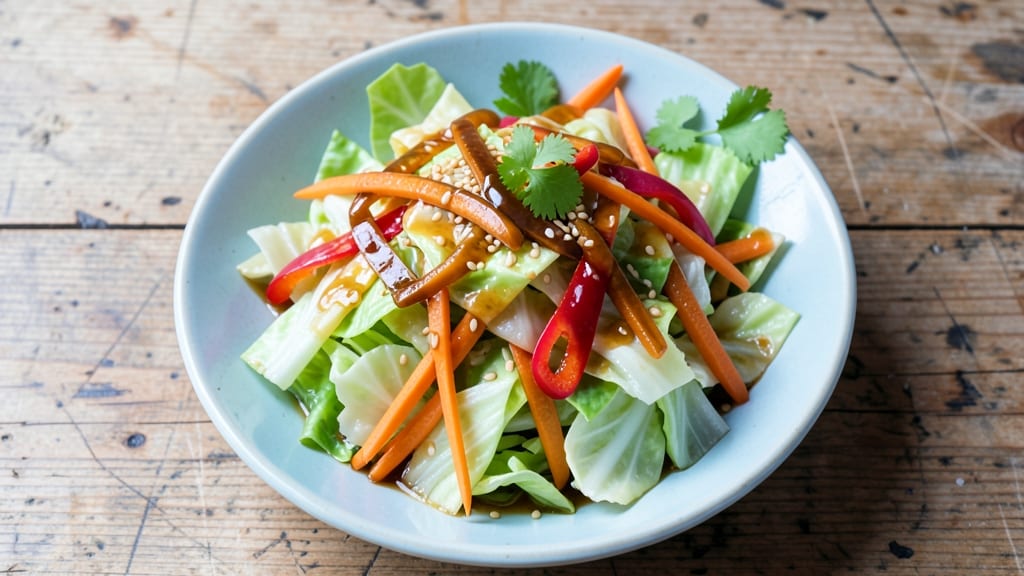
This Asian marinated vegetable salad delivers restaurant-quality crunch and umami in just 20 minutes—no fancy techniques required. The secret lies in a simple yet transformative marinade of rice vinegar, sesame oil, and a touch of honey, which tenderizes vegetables while infusing them with bold, savory-sweet flavors.
I developed this recipe after craving a fresh, vibrant side that could stand up to bold Asian-inspired mains without overpowering them.
The beauty of this dish is its versatility—it works as a standalone vegetarian meal, a light lunch, or a perfect pairing for grilled proteins.
Thinly sliced napa cabbage, shredded carrots, and crisp bell peppers soak up the marinade beautifully, while toasted sesame seeds and chopped scallions add texture and freshness. The dressing is quick to whisk together, and the prep can be done in advance for maximum convenience.
What you’ll end up with is a visually stunning salad bursting with color and flavor—crisp, tender vegetables with a glossy sheen from the marinade. The balance of tangy, nutty, and slightly sweet notes makes every bite satisfying, while the umami depth elevates it beyond basic coleslaw.
This is the kind of dish that transforms a simple side into a showstopper.
Perfect for meal prep, potlucks, or a quick weeknight dinner, this salad keeps well in the fridge for up to 3 days, making it an ideal make-ahead option. Whether you’re serving it alongside sushi, stir-fry, or enjoying it solo, the flavors will leave everyone asking for seconds. Let’s get started!
Ingredients for asian marinated vegetable salad
Fresh vegetables meet bold Asian flavors in this vibrant, umami-packed salad.
| Ingredient | Amount | Notes |
|---|---|---|
| Napa Cabbage 🥬 | 12 oz | Thinly sliced, stems removed |
| Carrots 🥕 | 2 medium | Julienned or thinly sliced |
| Red Bell Pepper 🌶️ | 1 whole | Thinly sliced, seeds removed |
| Sesame Oil 🫒 | 2 tbsp | Toasted for nutty flavor |
| Rice Vinegar 💧 | ⅓ cup | Unseasoned preferred |
| Honey 🍯 | 1 tbsp | Or agave for vegan option |
| Soy Sauce 🍶 | 1 ½ tbsp | Low-sodium preferred |
| Toasted Sesame Seeds 🌾 | 1 tbsp | For garnish |
| Green Onions 🧅 | 3 whole | Thinly sliced, white parts trimmed |
| Garlic Cloves 🧄 | 2 cloves | Minced for marinade |
| Ginger 🌿 | 1 tsp | Freshly grated |
| Sesame Seeds 🌾 | 1 tbsp | For extra crunch |
| Salt 🧂 | ½ tsp | Diamond Crystal preferred |
| Black Pepper 🌶️ | ¼ tsp | Freshly ground |
The vegetables are the stars here—napa cabbage should be crisp and vibrant, not wilted. Trader Joe's or local Asian markets often have the freshest, but any grocery store's produce section works. For the bell pepper, red or yellow varieties add the best color contrast. If you're short on time, pre-shredded coleslaw mix (the good stuff, not the bagged kind with dressing) can substitute for napa cabbage in a pinch. The carrots should be firm and bright orange—avoid any with soft spots. If you can't find napa cabbage, green cabbage or bok choy work well too, just slice thinner for quicker cooking.
No sesame oil? Toasted peanut oil gives a similar nutty depth, though it's a bit heavier. Short on rice vinegar? Apple cider vinegar or lime juice both work, but add a pinch more honey to balance the acidity. The honey can be swapped for maple syrup or agave if you're avoiding refined sugar. For extra umami, add a dash of fish sauce (though this would make it non-vegetarian) or a splash of coconut aminos instead. The garlic and ginger are non-negotiable—they're what gives this salad its signature depth. If you're using jarred minced garlic, reduce to half the amount since it's more concentrated.
This salad tastes even better the next day as the flavors meld—make extra for lunches. Store in an airtight container with a paper towel pressed on top to keep it crisp. Keeps for 3-4 days in the fridge, though the texture may soften after day two. For meal prep, marinate the vegetables separately and toss with the dressing just before serving to maintain that perfect crunch. The dressing itself keeps for up to 1 week in the fridge, so you can make it ahead and store it separately.
Why You'll Love This Recipe
- No-Sharp-Knife Night: I swear by this one when my cutting board’s already covered in yesterday’s prep. The Napa cabbage shreds easily—no mandoline required—while the carrots and bell pepper just need a quick chop. Honestly, my hands stay cleaner than with most salads, and that’s saying something.
- Umami Bomb: That sesame oil and rice vinegar combo? It’s the magic. The cabbage soaks up the tangy-sweet marinade while the bell pepper adds a subtle crunch—like a little flavor party in your mouth. (Yes, even on a Tuesday night.)
- Lunchbox Hero: Between us, this salad holds up better than most in the fridge. Pack it for work or school—it stays crisp, the dressing doesn’t pool, and the colors look fresh enough to make you proud. My kid even picks it over chips. (Not bragging.)
- Pantry Staple Power: You’re already buying these ingredients, right? Napa cabbage lasts forever, carrots are cheap, and that jar of rice vinegar? It’s in my pantry for everything. This salad costs next to nothing but feels like a fancy takeout. Budget win.
Step-by-step instructions for Asian marinated vegetable salad
This vibrant salad comes together in minutes with bold flavors that balance sweet, tangy, and umami notes.
Prepare and Thinly Slice the Vegetables
Start by removing the stems from the 12 oz Napa cabbage and cutting it into thin, even slices—about ¼-inch thick. The thinner you slice, the more tender and uniform the texture will be. Next, peel and julienne the 2 medium carrots into fine matchsticks, and remove the seeds from the 1 whole red bell pepper before slicing it thinly. Work quickly to keep the vegetables crisp—this salad relies on their fresh crunch.
For the 3 whole green onions, trim the white ends and slice them diagonally into ¼-inch pieces. These will add a bright, fresh finish to the dish. Keep all your sliced vegetables in separate piles so they stay crisp and don’t soften before marinating. If you’re short on time, you can use a mandoline for precision, but a sharp chef’s knife works just as well with practice.
Toast the Sesame Oil and Prepare the Marinade
Heat the 2 tbsp sesame oil in a small skillet over medium-low heat until it shimmers and releases a nutty aroma—about 1-2 minutes. Watch closely to avoid burning; the oil should smell rich and toasty, not acrid. Remove the skillet from heat and let the oil cool slightly before using it in the marinade.
In a large bowl, whisk together the toasted sesame oil, 0.33 cup rice vinegar, 1 tbsp honey, 1.5 tbsp soy sauce, 0.5 tsp salt, and 0.25 tsp black pepper. Add the 2 cloves minced garlic and 1 tsp freshly grated ginger to the mixture. The marinade should look glossy and slightly thickened—this is where the umami and brightness come from. Taste a small spoonful to balance the flavors; adjust with a touch more honey for sweetness or rice vinegar for tang if needed.
Marinate the Vegetables for Maximum Flavor
Add the sliced vegetables to the bowl with the marinade and toss gently but thoroughly to coat every piece. Let the salad sit at room temperature for 10 minutes, stirring occasionally. This short marinating time ensures the vegetables stay crisp rather than soggy, while still absorbing enough flavor to shine. If you’re using the salad immediately, proceed to the next step—if you have time, let it marinate for up to 15 minutes in the fridge for deeper flavor penetration.
Real talk: Don’t skip this step. The marinade transforms the salad from a simple veggie mix into a restaurant-worthy dish with layers of taste. The sesame oil adds depth, the rice vinegar brightens, and the soy sauce ties it all together with umami richness. The honey balances the acidity, while the garlic and ginger add warmth.
Garnish and Serve for Texture and Presentation
Transfer the marinated vegetables to a serving platter or individual bowls. Sprinkle the 1 tbsp toasted sesame seeds and 1 tbsp sesame seeds evenly over the top for added crunch and visual appeal. The toasted seeds will contrast beautifully with the tender vegetables and add a final nutty punch to every bite.
Garnish with the sliced green onions just before serving to keep them vibrant and fresh. Serve the salad immediately while the vegetables are still crisp and the flavors are at their peak. This dish pairs perfectly with grilled proteins, sushi, or even as a standalone light meal. The contrast of textures—crunchy vegetables, creamy sesame seeds, and the tangy-sweet marinade—makes it irresistible.
Pro Tips For Making Asian Marinated Vegetable Salad
- SHRED CABBAGE SMALL: I learned this the hard way—thin, matchstick strips of Napa cabbage soak up marinade better and stay crisp. If you’re chopping in big hunks, you’ll end up with soggy, limp leaves by the time you’re done tossing.
- JULIENNE CARROTS UNIFORM: Use a mandoline for even 1/8-inch strips—carrots cook at different rates depending on thickness. Thick slices stay crunchy while thin ones turn mushy; consistency guarantees every bite has the same texture.
- MARINATE SEPARATELY FIRST: Toss veggies in the dressing all at once and the cabbage will wilt into a sad pile. Instead, let carrots and bell peppers soak for 10 minutes first—this jumpstarts flavor without sacrificing structure.
- DRESS AT THE END: Sesame oil has a low smoke point and smells amazing when fresh. If you add it to the dressing ahead of time, it’ll turn rancid waiting for the veggies. Toss it in just before serving—trust me, the aroma alone makes it worth it.
Storing and reheating your asian marinated vegetable salad
Fridge Storage Tips
Store your marinated vegetable salad in an airtight container with a paper towel pressed on top to absorb excess moisture and maintain crispness. Keep it refrigerated at 40°F or below for up to 3 days—the flavors actually deepen overnight as the marinade infuses further.
I like using glass containers because they let me see the vibrant colors, but any sealed plastic container works too. 🥬
Freezing for Later
While this salad isn't ideal for long-term freezing (textures suffer), you can freeze the dressing separately for up to 1 week in an ice cube tray—just thaw and whisk before using.
For the vegetables, blanch them in boiling water for 30 seconds first, then drain and freeze in a single layer before transferring to a bag. Thaw in the fridge overnight for best results. ❄️
Reheating for Crunch
If you need to reheat, I recommend the microwave steam method: Place the salad on a microwave-safe plate, cover with a damp paper towel, and heat in 20-second bursts on 50% power until warmed through.
Avoid high heat—it turns veggies mushy. For a crispier texture, toss with 1 tsp toasted sesame oil after reheating. 🔥
Make-Ahead Marinade
Prepare the dressing 2 days ahead and store it in the fridge—it keeps perfectly in an airtight jar. When ready to serve, toss the freshly sliced vegetables with the chilled marinade.
This saves time and ensures maximum crunch. I often do this for busy weeknights when I know I'll be short on prep time. 💡
Reviving Wilted Salad
If your salad starts to wilt after a day or two, don’t toss it! Toss with 1 tbsp rice vinegar and 1 tsp sesame oil, then let it sit for 10 minutes before serving.
The acidity will perk up the veggies and restore some of that fresh crunch. It won’t be perfect, but it’s still delicious. 💪
Nutrition facts
Frequently asked questions
Can I use this salad as a main dish instead of a side?
This marinated vegetable salad is hearty enough to stand alone, especially when paired with protein-rich toppings like tofu, edamame, or grilled shrimp. The umami-packed dressing and crunchy textures make it satisfying on its own. For extra substance, serve with steamed rice or warm noodles on the side.
What if I don't have napa cabbage?
No problem! Swap it for green cabbage (slice thinner) or bok choy (shred the leaves). For a milder taste, shredded carrots or jicama work well too. Just adjust the marinating time—thicker veggies like cabbage hold up better to longer soaking.
How do I make this salad spicier?
Add ½ tsp red pepper flakes or 1 tsp sriracha to the marinade for heat. For a smoky kick, stir in ½ tsp gochujang (Korean chili paste) or a dash of chili crisp. Garnish with thinly sliced jalapeños or chopped cilantro for extra freshness and spice.
Can I make this salad ahead of time?
Yes! Prep the marinade 2 days ahead and store it separately. Slice the vegetables just before serving to keep them crisp. If you must marinate ahead, store the veggies and dressing in separate containers and toss them together 30 minutes before eating. The flavors meld beautifully overnight, but texture suffers if left too long.
What's the best way to keep the veggies crisp?
Slice the vegetables right before marinating and pat them dry with a paper towel to remove excess moisture. Use an airtight container with a paper towel pressed on top to absorb any liquid while storing. For extra crunch, chill the salad in the fridge for 15-20 minutes before serving.