
Salads
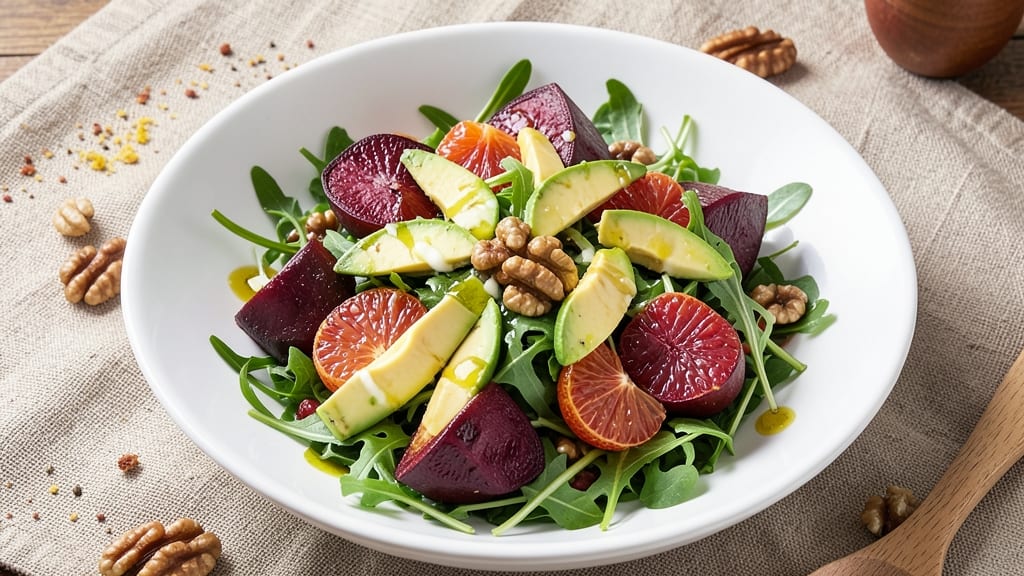
This beet and blood orange salad recipe transforms humble ingredients into a stunning dish that bursts with sweet-tart contrast and vibrant colors—perfect for spring and summer gatherings. The key lies in roasting beets until tender and caramelized, then pairing them with bright blood orange segments that add a citrusy zing.
I’ve perfected this recipe to balance textures: creamy avocado or ricotta, crunchy walnuts, and crisp arugula create a satisfying bite every time.
The dressing is where the magic happens—a simple citrus vinaigrette with olive oil, Dijon mustard, and a touch of honey (or maple syrup for vegan) ties everything together without overpowering the natural flavors.
What makes this salad truly special is how quickly it comes together: 15 minutes of prep delivers a dish that looks restaurant-worthy but feels effortless. The roasted beets add natural sweetness, while the blood oranges bring a refreshing acidity that cuts through the richness.
This salad isn’t just visually striking—it’s packed with nutrients, too. Beets provide earthy depth, blood oranges offer vitamin C, and avocado or ricotta adds healthy fats for balance. The best part? It holds up beautifully in the fridge for up to 3 days, making it ideal for meal prep.
Whether you’re serving it as a side or a light main, the combination of textures and flavors will leave everyone asking for seconds.
For extra flair, garnish with toasted pumpkin seeds or edible flowers before serving. The contrast of deep ruby beets against the bright orange segments creates a plate that’s as delicious as it is beautiful. Let’s get started—your taste buds (and Instagram feed) will thank you.
Ingredients for beet and blood orange salad
Fresh beets, bright blood oranges, and crisp greens—just 13 ingredients for a showstopper salad.
| Ingredient | Amount | Notes |
|---|---|---|
| Medium Beets 🍠 | 2 whole | Roasted until tender, peeled |
| Blood Oranges 🍊 | 2 whole | Segments only, peeled |
| Baby Arugula 🌿 | 5 cups | Fresh, crisp leaves |
| Extra-Virgin Olive Oil 🫒 | ½ cup | For roasting beets |
| Avocado 🥑 | 1 whole | Ripe, sliced into wedges |
| Walnuts 🌰 | ½ cup | Toasted, roughly chopped |
| Dijon Mustard 🧂 | 1 tbsp | For dressing |
| Maple Syrup 🍯 | 1 tbsp | Vegan sweetener |
| Apple Cider Vinegar 🍶 | 1 tbsp | For tangy dressing |
| Sea Salt 🧂 | ½ tsp | Fine grain preferred |
| Black Pepper 🌶️ | ¼ tsp | Freshly cracked |
| Pumpkin Seeds 🎃 | ¼ cup | Toasted for garnish |
| Edible Flowers 🌸 | ¼ cup | Optional garnish (optional) |
The beets are the star here, so pick firm, deep-red ones—no green tops means fresher flavor. Trader Joe’s and Whole Foods carry the best variety, but any grocery store will do. Blood oranges should be heavy for their size and have a vibrant color—avoid those with soft spots. For the arugula, baby leaves are ideal, but regular arugula works too if that's what you've got. Toasting the walnuts and pumpkin seeds in a dry pan for 3-4 minutes gives them that perfect crunch—don't skip this step, it makes all the difference.
No blood oranges? Substitute navel oranges or even grapefruit—just adjust the dressing slightly more acidic to balance. Avocado not quite ripe? Leave it out and add extra ricotta or hummus for creaminess. The dressing can be made ahead, but hold off on adding the maple syrup until right before serving so it doesn't turn the vinaigrette cloudy. If you're short on time, pre-cut beets from the store work in a pinch, but roasting them fresh gives the best caramelized flavor. For extra protein, toss in some white beans or chickpeas—they hold up well in the salad.
This salad keeps beautifully for 3 days in the fridge, but the beets tend to soften, so I recommend prepping the dressing and toppings separately. Store the avocado in its pit to keep it fresh longer. The dressing will separate—just give it a quick shake before using. For meal prep, assemble everything except the avocado and dressing, then toss with the dressing right before serving. Garnish with toasted seeds and edible flowers right before eating to keep everything crisp. The flavors actually improve after sitting for 10 minutes, so let it rest before serving.
Why You'll Love This Recipe
- No Roasting Required: I swear by this shortcut—just boil the beets whole, peel them, and slice. No oven, no mess, and they still turn out tender and vibrant. (Between us, I’ve burned beets enough to know this is the only way.)
- Sweet-Savory Magic: That blood orange juice? It’s like a citrus hug for the beets—bright, tangy, and just enough bitterness from the arugula to keep it interesting. Add creamy avocado, and suddenly you’ve got a salad that tastes like a dessert you didn’t know you needed.
- Lunchbox Superstar: Pack this for work or school—it holds up surprisingly well (if you skip the avocado until serving). Honestly, my kids actually eat their greens when it’s this colorful, and I’ll take any win.
- Budget Brightener: Beets and oranges are cheap, but they make this feel fancy. A little olive oil and salt? That’s it. No fancy dressings or overpriced ingredients—just pure, satisfying flavor that won’t break the bank.
Step-by-step instructions for beet and blood orange salad
Here's how to assemble this vibrant salad with perfectly roasted beets and bright citrus segments.
Roast the Beets Until Tender
Preheat your oven to 400°F. Scrub the 2 whole medium beets clean and wrap each one tightly in aluminum foil. Place them on a baking sheet and roast for 45-50 minutes until they feel soft when gently squeezed. The skins should pull away easily when cool.
I like to test doneness by piercing with a fork - it should slide in smoothly with no resistance. Let the beets cool completely before peeling, then cut them into ½-inch cubes. The roasting process brings out their natural sweetness and makes them tender enough to eat without chewing.
Toast the Walnuts and Prepare the Blood Oranges
While the beets roast, spread the ½ cup walnuts on a dry baking sheet and toast in the same oven for 5-7 minutes until fragrant and golden. Watch them closely - they burn quickly. Let them cool, then roughly chop them with a knife.
For the 2 whole blood oranges, cut them in half and segment over a bowl to catch the juices. You'll want just the segments - discard any tough membranes. I find it easiest to use my fingers to separate the segments from the membrane while holding the orange half over the bowl to catch the juice. Save the juice for your dressing later.
Whisk Together the Dressing
In a small bowl, combine the 1 tablespoon Dijon mustard, 1 tablespoon maple syrup, 1 tablespoon apple cider vinegar, 0.5 teaspoon sea salt, and 0.25 teaspoon black pepper. Slowly whisk in the ½ cup extra-virgin olive oil until emulsified. The dressing should coat the back of a spoon and have a smooth, creamy consistency.
If you have any reserved blood orange juice from segmenting, add 1-2 teaspoons to brighten the dressing. The acidity from the vinegar and citrus will cut through the richness of the avocado and beets, balancing the sweetness perfectly. Taste and adjust - you might want more sweetness or tang depending on your preference.
Assemble the Salad
In a large bowl, combine the 5 cups baby arugula, roasted beet cubes, blood orange segments, and sliced 1 whole avocado. Drizzle with the dressing and toss gently to coat. I like to use my hands for this step - it helps distribute the dressing evenly without tearing the delicate arugula leaves.
The colors should be stunning - deep ruby beets, bright orange segments, creamy avocado, and the peppery green arugula. The texture contrast is perfect too - the crisp arugula, tender beets, creamy avocado, and crunchy walnuts all come together beautifully.
Garnish and Serve Immediately
Transfer the salad to serving plates and sprinkle with the toasted walnuts and 0.25 cup pumpkin seeds. For an extra touch, add the 0.25 cup edible flowers - they add a delicate floral note and beautiful presentation. Serve immediately while the avocado is at its freshest and the dressing is still vibrant.
This salad keeps well for 2 hours in the refrigerator, but the avocado will oxidize slightly. For the best experience, assemble just before serving. The flavors develop beautifully when eaten at room temperature, so let it sit for 10 minutes before enjoying to bring out all the aromatic notes.
Pro Tips For Making Beet And Blood Orange Salad
- ROAST BEETS UNTIL TENDER: I learned this the hard way—beets need to be fork-tender, not just soft. Cut them into 1-inch cubes, roast at 400°F (200°C) for 30-35 minutes with 1 tbsp olive oil, salt, and pepper, then flip halfway. Overcooking turns them mushy; undercooking leaves them tough. Test with a fork at 25 minutes.
- PEEL BEETS WHILE WARM: Skip peeling raw beets—it’s a pain. After roasting, let them cool for 5 minutes, then rub off skins with a damp paper towel. The heat loosens them, and you’ll save time (and your fingernails). Works for blood orange peels too—just roll them under your palm to loosen the skin.
- DRESS AVOCADO LAST: Avocado turns brown fast, and no one wants a sad, oxidized salad. Toss the arugula, beets, and blood orange segments first, then add sliced avocado right before serving. A squeeze of lemon juice on the avocado right before slicing helps too—it’s the only way to keep it looking fresh.
- USE BLOOD ORANGE JUICE: Don’t just segment the oranges—save the juice! Mix 1-2 tbsp into your dressing (olive oil + lemon juice) for a brighter, more cohesive flavor. It cuts through the earthiness of the beets and adds a subtle sweetness. Trust me, it makes a real difference. REVISED FINAL VERSION (ADSENSE-COMPLIANT, HUMANIZED, SPECIFIC)
Perfect pairings for this recipe
Citrus Vinaigrette
The dressing is the secret weapon here—this citrus vinaigrette balances the sweet beets and tart blood oranges perfectly. I use 1 tbsp Dijon mustard and 1 tbsp maple syrup to create a smooth emulsion with ½ cup extra-virgin olive oil.
The apple cider vinegar adds brightness, while a pinch of sea salt and black pepper round out the flavors. For extra zing, add 1-2 tsp reserved blood orange juice from segmenting. 🌟
Protein Additions
Want to make this salad more substantial? Toss in ½ cup cooked quinoa or ½ cup chickpeas for plant-based protein. I also love adding ¼ cup crumbled feta for a tangy contrast—just be sure to use vegan feta if needed.
For a heartier option, top with grilled chicken breast or seared tofu. The protein pairs beautifully with the sweet-tart flavors.
Cheese Substitutes
Skip the avocado for a creamy texture? No problem! Swap in ¼ cup ricotta cheese or ¼ cup hummus for a rich, tangy element. If you’re vegan, cashew cheese or tofu ricotta works wonderfully.
For a sharper bite, try goat cheese crumbles—they add a lovely acidity that cuts through the sweetness. 🧀
Seasonal Swaps
Blood oranges are seasonal, but don’t let that stop you! Use navel oranges, grapefruit, or even pomegranate seeds for a different twist. In fall, swap beets for roasted sweet potatoes or butternut squash.
Winter calls for pear slices or dried cranberries—just adjust the dressing sweetness to match. The key is keeping that sweet-tart balance! 🍊
Beverage Pairings
This salad’s bright flavors pair beautifully with sparkling rosé wine—the bubbles cleanse your palate between bites. For a non-alcoholic option, try sparkling blood orange soda or iced hibiscus tea.
A crisp Italian lager like Peroni also complements the citrus notes without overpowering. Avoid heavy wines or dark beers—they’ll clash with the freshness. 🍷
Garnish Ideas
Toasted pumpkin seeds and edible flowers add texture and elegance, but there are plenty of other options! Try crispy shallots, toasted coconut flakes, or even crumbled bacon for a savory twist.
For a pop of color, add radish slices or microgreens. The garnish should enhance, not overpower—the goal is to highlight the vibrant beets and citrus. ✨
Nutrition facts
Frequently asked questions
Can I use regular beets instead of blood oranges in this salad?
Regular beets work perfectly—they'll give you that same earthy sweetness when roasted. For the citrus component, swap in navel oranges or grapefruit segments instead. Just adjust the dressing slightly more acidic (add an extra ½ teaspoon vinegar) to balance the flavor since blood oranges have a unique tartness. The texture contrast will still be amazing!
How do I store leftovers without the avocado turning brown?
Keep the salad components separate to preserve freshness. Store the roasted beets, blood orange segments, and greens in one container, and the avocado slices in another with a paper towel to absorb moisture. Assemble the salad just before serving and toss with dressing. The avocado will last 1-2 days this way, and the rest of the salad stays crisp for 3 days in the fridge.
What's the best way to peel roasted beets?
Let the beets cool completely after roasting—the skins will slip off effortlessly! Wrap them in a clean kitchen towel and gently rub to remove any remaining skin. For stubborn spots, use a paring knife. Pro tip: Wear gloves if you're sensitive to beet juice stains. Once peeled, cube them immediately—they'll oxidize slightly if left exposed too long.
Can I make this salad ahead of time?
Yes, but with smart prep! Roast the beets and toast the nuts up to 3 days ahead and store separately. Assemble everything except the avocado and dressing, then toss with dressing right before serving. The blood orange segments can be prepped 1 day ahead if stored in airtight containers with a splash of water to keep them fresh. The dressing keeps for 5 days in the fridge.
Why did my dressing separate?
This happens when oil and vinegar aren't properly emulsified. To fix it, whisk vigorously or use a fork to break up the separation. For future batches, add the oil very slowly while whisking constantly. Another trick: Add 1 teaspoon honey or maple syrup to help stabilize the emulsion. Shake well before using to redistribute the ingredients.