
Salads
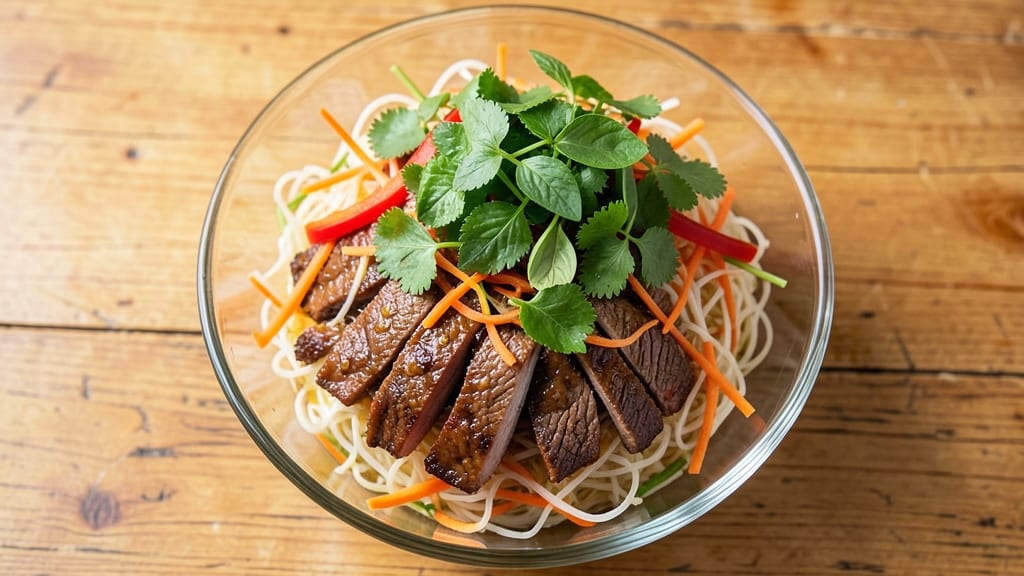
This beef noodle salad recipe delivers a hearty, protein-packed meal that comes together in just 20 minutes—no complicated techniques required. The secret lies in perfectly tender beef slices paired with chewy rice vermicelli, all tossed in a fragrant, savory broth that transforms simple ingredients into a restaurant-worthy dish.
I developed this version after realizing how quickly a well-seasoned protein and fresh herbs could elevate a basic salad into something truly satisfying.
The beauty of this recipe is its balance: tender beef provides substance, while the noodles and crisp vegetables add texture and freshness. You'll start with quick-cooked beef slices (using a simple searing method) and combine them with cold rice noodles soaked in a warm, aromatic broth.
Fresh herbs like cilantro and Thai basil bring brightness, while a touch of lime juice and fish sauce create that signature tangy-savory flavor profile.
What you'll end up with is a bowl that's hearty enough to serve as a main dish but light enough to enjoy any time of day. The beef stays juicy and flavorful, the noodles absorb just enough broth to be tender without becoming soggy, and the vegetables retain their crispness.
Each bite delivers a perfect harmony of textures and flavors—ideal for lunch, dinner, or even meal prep.
This recipe works equally well as a quick weeknight dinner or a make-ahead lunch for busy schedules. The components can be prepped separately and assembled just before serving, making it both convenient and impressive.
Let's get started on creating this satisfying, protein-rich salad that proves healthy eating can be deeply flavorful.
Ingredients for beef noodle salad
These 15 ingredients transform into a restaurant-quality beef noodle salad with tender beef and vibrant flavors.
| Ingredient | Amount | Notes |
|---|---|---|
| Flank Steak 🥩 | 1 lb | Thinly sliced against the grain |
| Rice Vermicelli Noodles 🍜 | 8 oz | Uncooked, dried strands |
| Carrots | 2 medium | julienned into thin strips |
| Red Bell Pepper 🌶️ | 1 whole | Thinly sliced, seeds removed |
| Fresh Cilantro 🌿 | ½ cup | Chopped, stems included |
| Thai Basil 🌿 | ¼ cup | Chopped, for authentic flavor |
| Lime Juice 🍋 | 3 tbsp | Freshly squeezed |
| Fish Sauce 🍶 | 2 tbsp | Red Boat preferred |
| Soy Sauce 🍶 | 2 tbsp | Low-sodium preferred |
| Sesame Oil 🫒 | 1 tbsp | Toasted, for aroma |
| Garlic Cloves 🧄 | 4 cloves | Minced, for broth base |
| Ginger Root 🌿 | 1 inch | Fresh, grated |
| Vegetable Oil 🫒 | 2 tbsp | For searing beef |
| Salt 🧂 | 1 ½ tsp | Diamond Crystal kosher |
| Black Pepper 🌶️ | ½ tsp | Freshly ground |
The flank steak is non-negotiable for texture—look for well-marbled cuts at Whole Foods or your local butcher. Slice it against the grain for tenderness. Rice vermicelli should be thin and springy; Three Ladies brand from Asian markets is my go-to. Fresh Thai basil elevates the dish—substitute regular basil if unavailable, but the flavor won't be identical. Carrots and bell peppers should be crisp; organic produce from the grocery store's fresh section works best. For the fish sauce, Red Boat is the gold standard, but any reputable brand will do.
No fresh ginger? Substitute 1 teaspoon of ground ginger, though fresh adds depth. Short on sesame oil? Toast sesame seeds and use 1 teaspoon of oil instead. The soy sauce can be swapped for tamari for gluten-free, but traditional soy adds umami. For extra heat, add 1 teaspoon of chili flakes. The beef should be seared to medium-rare—overcooking makes it tough. If your rice noodles aren't absorbing broth, soak them in warm water for 5 minutes first.
Store prepped vegetables in airtight containers for 3 days in the fridge. Cooked beef keeps for 2 days if wrapped tightly. The broth base can be made ahead and refrigerated for 5 days or frozen for 3 months. For meal prep, assemble the salad just before serving to maintain crispness. The flavors actually improve overnight—let it sit for 30 minutes before eating for maximum impact.
Why You'll Love This Recipe
- Foolproof Prep: I swear by this—just slice the flank steak thin, marinate for 15 minutes, and grill or sear. The noodles? Soak them in warm water for 10 minutes while you cook. No chopping skills? Dice the carrots and bell pepper with a knife block or even a food processor. Honestly, it’s the kind of recipe that makes me feel like I actually cooked something.
- Umami Bomb: That flank steak, when sliced against the grain, gives you tender, chewy perfection. Add a splash of fish sauce and lime, and suddenly you’ve got layers of flavor—bright, tangy, and just a little funky. The cilantro? It’s not just garnish; it’s the fresh finish that ties everything together.
- Lunchbox Hero: Between us, this is my go-to for packed lunches or potlucks. The noodles hold up for days, and the steak stays juicy if you store it right. (Pro tip: Keep the dressing separate until you’re ready to eat.) It’s the kind of dish that makes me look like a meal-prep pro, even when I’m just throwing it together on Sunday night.
- Budget Win: Flank steak is cheaper than you think, especially if you buy it on sale, and the rest of the ingredients? Pantry staples. A single pound of steak stretches over two servings, and the veggies add bulk without breaking the bank. Plus, leftovers taste just as good cold the next day—so it’s basically free money.
Step-by-step instructions for beef noodle salad
Follow this precise method for a perfectly balanced salad with tender beef and vibrant freshness.
Prepare the Flank Steak for Perfect Texture
Slice the 1 lb flank steak thinly against the grain into ¼-inch thick strips. This critical step ensures tender bites rather than chewy ones. Place the sliced steak in a bowl and season generously with 1.5 tsp salt and 0.5 tsp black pepper, massaging it into the meat so every piece is evenly coated.
Heat 2 tbsp vegetable oil in a large skillet over high heat until shimmering. Add the seasoned steak in a single layer, cooking undisturbed for 1-2 minutes until the edges turn deep golden brown and slightly charred. Flip and repeat on the other side for another 1-2 minutes. The steak should be just cooked through—it will continue carrying heat from the hot oil. Remove from heat and set aside to rest for 5 minutes before slicing into bite-sized pieces.
Cook the Rice Vermicelli Noodles Al Dente
Bring a large pot of water to a rolling boil and add the 8 oz rice vermicelli noodles. Cook for 2-3 minutes—they should be tender but still slightly firm to the bite (al dente). Drain immediately in a colander and rinse under cold water to stop the cooking process and prevent mushiness. Drain thoroughly and toss with 1 tbsp sesame oil to prevent sticking.
Here's the thing—overcooking noodles is the fastest way to ruin this dish. The moment they float to the surface, they're done. If you're unsure, taste one—it should offer slight resistance when bitten. Spread the noodles on a clean kitchen towel to remove excess moisture before combining with other ingredients.
Create the Flavorful Dressing Base
In a small bowl, whisk together 3 tbsp lime juice, 2 tbsp fish sauce, 2 tbsp soy sauce, and 1 tbsp sesame oil. This dressing is the heart of the dish, balancing umami, acidity, and aromatic depth. In a separate small pan, heat 1 tbsp vegetable oil over medium heat and sauté 4 cloves minced garlic and 1 inch grated ginger for 30 seconds until fragrant but not browned.
Immediately add the garlic-ginger mixture to the dressing bowl and stir to combine. The residual heat will infuse the oil with even more flavor. Taste and adjust seasoning—you want a balance of bright, tangy, and savory without being overpowering. This dressing should coat the back of a spoon but remain pourable.
Assemble the Salad with Fresh Vegetables
In a large mixing bowl, combine the cooked noodles, sliced 2 medium julienned carrots, and 1 whole thinly sliced red bell pepper. Add the 0.5 cup chopped fresh cilantro and 0.25 cup chopped Thai basil for vibrant color and authentic aroma. Gently toss everything together with your hands or tongs to distribute the vegetables evenly throughout the noodles.
The vegetables should be crisp and bright—this is what contrasts beautifully with the tender beef and soft noodles. If using the vegetables straight from the refrigerator, let them sit at room temperature for 5 minutes before assembling to enhance their natural sweetness and texture.
Combine and Serve Immediately
Add the sliced flank steak to the bowl with the noodles and vegetables. Pour the dressing over everything and toss gently but thoroughly to coat each component evenly. The salad should look vibrant and inviting, with the beef pieces distributed throughout rather than clumped together.
Serve immediately while the beef is still warm and the dressing clings beautifully to every strand of noodle. The ideal serving temperature is room temperature to slightly warm, allowing all the flavors to meld together. Garnish with additional Thai basil and a sprinkle of black pepper if desired. This dish is best enjoyed fresh, as the noodles soften further over time.
Pro Tips For Making Beef Noodle Salad
- SEAR FLANK STEAK HOT: I used to walk away after the first sear, thinking medium-rare was medium-rare. Wrong. Crank your pan to screaming hot and sear flank steak for 2-3 minutes per side until it develops a deep crust—this keeps it juicy when sliced thin. Flip it once, then again once more if you're impatient like me, but don’t rush the second side.
- SOAK NOODLES UNTIL PLIANT: Rice vermicelli hardens when overcooked, but soggy noodles ruin the texture. Soak them in warm water for 8-10 minutes until they’re pliable but still hold shape—like wet spaghetti, not mush. Drain and rinse briefly under cold water to stop cooking. (Yes, even if you’re in a hurry.)
- SLICE STEAK AGAINST THE GRAIN: Flank steak’s fibers run diagonally, and cutting with them means chewy, rubbery slices. Rotate the board 45 degrees and slice thinly against the grain—steak should fall apart cleanly. If it resists, your knife’s too dull. (And yes, this is the only time you want your steak to fall apart.)
- SAVE TIME WITH RAW VEGETABLES: Skip pre-shredded carrots and bell peppers—they’re waterlogged and flavorless. Instead, julienne them fresh and toss them raw into the salad 10 minutes before serving. The crunch stays sharp, and you avoid the sad, limp veggie texture that comes from overcooking. (Your knife skills will improve too.)
Regional styles of this recipe
Vietnamese Bún Bò Huế
This iconic Central Vietnamese dish transforms beef noodle salad into a rich, aromatic experience. Start with a thick, spicy broth made from braised beef, lemongrass, and chili paste—simmer for 1 hour for deep flavor.
Use bún noodles (thicker than vermicelli) and add bean sprouts and thinly sliced daikon for texture. The dish balances heat from chili oil with tangy lime and sweet fish sauce. 🌶️
Thai Larb-Inspired
For a Thai twist, use minced ground beef instead of sliced flank steak and toss with larb-style herbs like mint, cilantro, and Thai basil. Add roasted shallots and a splash of oyster sauce for umami.
Serve over rice noodles with a drizzle of fish sauce-lime dressing and crushed peanuts for crunch. This version is lighter but equally vibrant.
Japanese Beef Donburi
Swap the salad structure for a warm bowl: sear thinly sliced beef with garlic and ginger, then layer over steamed rice with shredded cabbage and a drizzle of ponzu sauce.
Add a soft-boiled egg and green onions for freshness. The Japanese approach focuses on umami-rich broths and delicate seasoning, making it a comforting twist on the salad concept.
Korean Beef Naengmyeon
Cold Korean noodles offer a refreshing contrast. Use thick buckwheat noodles chilled in ice water and top with sliced beef cooked in a spicy soy-garlic sauce. Add kimchi and sesame seeds for tangy crunch.
The dish highlights cool textures and bold flavors, perfect for hot days. Serve with a side of pickled radish for extra zing. ❄️
American Southwest Style
Give it a Tex-Mex flair by using corn tortilla strips instead of rice noodles and topping with black beans, corn, and avocado. Season the beef with cumin and smoked paprika, then toss with a lime-cilantro dressing and a sprinkle of crumbled cotija cheese.
Add jicama for a crisp, refreshing crunch—this version keeps the salad structure but swaps ingredients for bold, familiar flavors.
Herbal French-Inspired
For a French bistro twist, use thinly sliced beef tenderloin seared with tarragon and thyme. Toss with egg noodles, shaved fennel, and watercress. Finish with a Dijon-mustard dressing and a touch of Worcestershire sauce.
Garnish with toasted hazelnuts for crunch—this version elevates the dish with European herbs and textures while keeping the salad format.
Nutrition facts
Frequently asked questions
Can I use regular egg noodles instead of rice vermicelli?
You can substitute egg noodles, but the texture will differ. Rice vermicelli stays light and springy, while egg noodles become softer and absorb more dressing. If using egg noodles, cook them 1 minute less than package instructions and rinse with cold water before assembling to maintain bite.
How do I make this recipe spicier?
Add 1-2 teaspoons of chili flakes to the dressing or include 1-2 slices of fresh chili (like jalapeño or Thai bird's eye) when tossing the salad. For extra heat, stir ½ teaspoon of cayenne pepper into the dressing. Start with small amounts—you can always add more!
Can I prepare this salad ahead of time?
Prep the beef, noodles, and vegetables separately and store them in airtight containers for up to 3 days. Keep the dressing separate until ready to serve. Assemble just before eating to maintain crispness. The flavors actually develop more overnight, making it perfect for meal prep.
What's the best way to slice the flank steak?
Slice the steak against the grain into ¼-inch thick strips for maximum tenderness. Use a sharp knife and hold the meat firmly to prevent tearing. For even slices, freeze the steak for 20 minutes before slicing—this makes it easier to cut thinly.
Can I make this vegetarian?
Yes! Swap the beef for mushroom slices (like shiitake or portobello) or tofu pressed and pan-fried. For extra protein, add edamame or crispy chickpeas. Keep the same cooking method and dressing ratios for consistent flavor.