
Sauces & Condiments
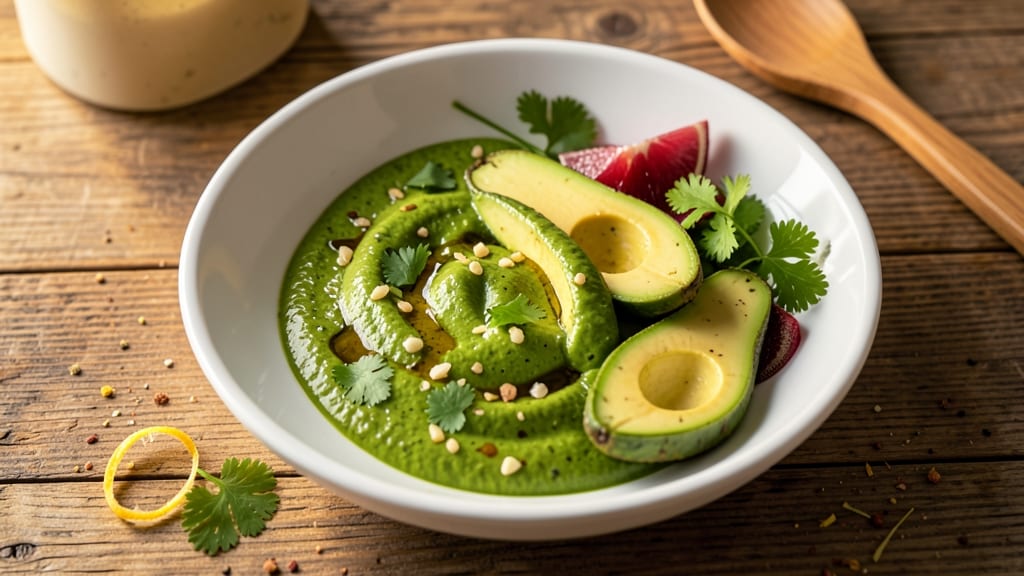
This creamy avocado vinaigrette salad dressing recipe transforms ordinary salads into vibrant, restaurant-worthy dishes with just five simple ingredients. The secret lies in blending ripe avocado with tangy vinegar and citrus, creating a luscious, emulsified dressing that stays fresh for days.
I developed this recipe after craving a dressing with depth—something that balanced creamy richness with bright acidity without separating or turning rancid.
The magic happens when you blend the avocado until completely smooth, then gradually whisk in the oil to create a stable emulsion. A splash of lime juice adds zing, while fresh herbs like cilantro or parsley contribute freshness.
What sets this apart is its creamy texture without the heaviness of traditional creamy dressings—each bite delivers a perfect harmony of smoothness and tang.
This versatile dressing elevates everything from grain bowls to crisp greens, and it keeps beautifully in the fridge for up to five days. The avocado’s healthy fats help preserve freshness, so you can enjoy this bright green goddess on demand.
Whether you're prepping meals for the week or dressing a last-minute salad, this recipe delivers restaurant-quality results with minimal effort.
Pair it with roasted vegetables, grilled proteins, or fresh salads for a dressing that’s as nutritious as it is delicious. The blend of creamy avocado and zesty vinegar makes it a standout for any meal—no fancy equipment required. Let’s make this dressing that tastes like a vacation in your fridge.
Ingredients for avocado vinaigrette salad dressing
Five ingredients transform into restaurant-quality avocado vinaigrette that's creamy, tangy, and packed with flavor.
| Ingredient | Amount | Notes |
|---|---|---|
| Ripe Avocados 🥑 | 2 whole | Pitted, peeled, flesh scooped |
| Extra-Virgin Olive Oil 🫒 | ½ cup | Light, fruity variety preferred |
| Apple Cider Vinegar 🍏 | 2 tbsp | Raw, unfiltered for depth |
| Fresh Lime Juice 🍋 | 2 tbsp | Strained, no pulp |
| Fresh Cilantro Leaves 🌿 | ¼ cup | Stems removed, loosely packed |
| Garlic Cloves 🧄 | 1 whole | Peeled, roughly chopped |
| Sea Salt 🧂 | ½ tsp | Fine grain preferred |
| Black Peppercorns 🌶️ | ¼ tsp | Freshly cracked |
| Filtered Water 💧 | 1 tbsp | For thinning if needed |
The avocados are the star—choose ones that yield slightly to gentle pressure but aren't mushy. Whole Foods or local farmers markets usually carry the ripest ones. If you can't find perfect avocados, let them sit at room temperature for 30 minutes before using. The cilantro adds freshness, but if you're not a fan, substitute fresh parsley or basil. For the olive oil, California avocado oil or Spanish Arbequina adds a subtle nutty note that pairs beautifully with the avocado. The vinegar should be raw and unfiltered—Bragg or Texas Pete are my go-tos for that authentic tang.
No fresh lime? Lemon juice works in a pinch, but lime's brightness is ideal. Want extra creaminess? Add 1 tbsp silken tofu or mashed white beans to the blend. The garlic can be omitted if you prefer milder flavor, but trust me—it's worth the aromatic punch. If your dressing separates, just give it a quick whisk. For a nutty twist, toast the garlic cloves in a dry pan for 30 seconds before adding. The water is just for thinning if needed—most times, you won't even use it.
Store this dressing in an airtight container with a thin layer of olive oil on top to preserve freshness. It keeps for 5 days in the fridge—the avocado's healthy fats actually help extend shelf life. For longer storage, freeze in ice cube trays and transfer to a bag. Thaw in the fridge overnight. The dressing thickens when chilled, so give it a stir before using. This makes about 1 cup, perfect for 2-3 salads or as a drizzle for grain bowls.
Why You'll Love This Recipe
- No Blender Needed: I mash the avocado right in the jar with a fork—no fancy equipment, no cleanup. That creamy texture happens in seconds, and honestly? It’s the easiest way to get rich dressing without the hassle.
- Tangy Creamy Magic: The lime and apple cider vinegar cut through the avocado’s richness just enough to keep it bright and addictive. Every bite feels balanced—like a hug for your taste buds, but with way more flavor.
- Weeknight Superstar: Slather it on greens for a quick lunch, toss it with grilled chicken for dinner, or drizzle it over tacos. It’s my go-to when I’m too tired to think, but still want something that tastes like I cared.
- Lasts Longer Than You Think: I make a big batch on Sundays, and it keeps in the fridge for days without turning weird. The lime juice actually preserves the avocado, so you’re not scrambling to use it up before it browns. Budget win.
Step-by-step instructions for avocado vinaigrette salad dressing
Here's how to blend this velvety, vibrant dressing that keeps its creamy texture for days.
Prepare the Avocado Base
Cut the 2 whole ripe avocados in half, remove the pits, and scoop the flesh directly into a food processor. I like to use the widest blade for this step—it helps break down the avocado more efficiently. Add the 0.5 teaspoon sea salt and 0.25 teaspoon freshly cracked black peppercorns right away. This salting at the beginning helps distribute flavor evenly throughout the dressing.
Pulse the avocado mixture for about 30 seconds until it starts to break down but isn't completely smooth. You're looking for a chunky texture at this stage—this prevents the dressing from becoming too thick later. The avocado should be finely minced but still retain some visible flecks. If your avocados are particularly soft, you might need to add 1 tablespoon of the filtered water during this initial pulse to help the processor work more smoothly.
Add Aromatics and Acid
Add the 0.25 cup fresh cilantro leaves, 1 whole peeled garlic clove, 2 tablespoons apple cider vinegar, and 2 tablespoons fresh lime juice to the food processor. The acid components will help balance the richness of the avocado while adding brightness. Pulse everything together for another 30-45 seconds until the cilantro and garlic are finely chopped but the mixture still has some texture.
I always taste at this point to check the balance. You should notice a bright, slightly tangy flavor with a creamy avocado base. If it tastes too acidic, add a pinch more of the sea salt. If it needs more acidity, add another ½ teaspoon of lime juice or vinegar. Remember, you can always adjust the flavor at the end if needed, but getting it right now ensures the best foundation.
Incorporate the Olive Oil
With the processor running, very slowly drizzle in the 0.5 cup extra-virgin olive oil. I mean slowly—about 1 tablespoon at a time. This gradual incorporation prevents the oil from separating and creates a beautifully emulsified dressing. The mixture should become smooth and creamy as the oil blends in completely.
Continue processing for another 30-45 seconds after all the oil is incorporated. The dressing should be completely smooth with no visible streaks of oil. If you notice any separation or the texture looks too thick, add another ½ teaspoon of lime juice or 1 teaspoon of filtered water and pulse again. The final consistency should be like a thick, velvety mayonnaise—spoonable but still pourable.
Final Adjustments and Storage
Transfer the avocado vinaigrette to a clean glass jar with a tight-sealing lid. Give it a final taste and make any necessary adjustments. For extra brightness, add another squeeze of lime juice. For more depth, add a pinch more salt or cracked pepper. The dressing should be creamy, tangy, and perfectly balanced—bright enough to complement any salad but rich enough to stand on its own.
Store the dressing in the refrigerator where it will keep for up to 5 days. The longer it sits, the more the flavors meld together, creating an even more complex dressing. Before using, give it a good stir—sometimes the avocado separates slightly at the top, but it always blends right back together. This dressing works beautifully on mixed greens, grain bowls, or even as a dip for crispy vegetables or chips.
Pro Tips For Making Avocado Vinaigrette Salad Dressing
- Scrape Avocado Skin Off First: I learned this the hard way—peeling avocados after mashing them is a mess. Use a spoon to scoop out the flesh directly from the skin, then discard the skin. No more sticky fingers or wasted pulp.
- Use Cold Avocado: Pull avocados straight from the fridge for a smoother, creamier texture. Room-temperature avocado oxidizes faster and can turn grainy. Cold also helps balance the acidity of the vinegar and lime.
- Strain the Cilantro: Skip the food processor for cilantro—it makes the dressing bitter. Instead, finely chop the leaves and press them through a mesh strainer to remove tough stems and seeds. Your dressing will taste fresher and cleaner.
- Emulsify in Stages: Start with just the avocado, lime, and vinegar—whisk them into a paste first. Then slowly drizzle in the olive oil while stirring constantly. This prevents separation and gives you a silky, cohesive dressing every time.
Troubleshooting this recipe
Separation Issues
If your dressing separates after blending, don’t panic—this is common with avocado-based dressings. The key is to re-emulsify by whisking vigorously for 30-45 seconds until smooth. For a quicker fix, add 1 teaspoon of lime juice or vinegar, then pulse again.
The acid helps break down the avocado’s natural oils, restoring that creamy texture. If it’s still stubborn, add 1 tablespoon of water and blend until fully combined. 💫
Overly Thick Texture
If your dressing turns out too thick, thin it with ½ teaspoon of lime juice or 1 teaspoon of water at a time. Blend briefly between additions until you reach a spoonable but pourable consistency.
Avoid over-thinning—this dressing should coat the back of a spoon but still flow easily. For future batches, slightly under-ripe avocados (just yielding to pressure) will give a firmer base. 🥑
Rancid or Off Flavors
Avocado dressings can develop an off taste if exposed to air or stored too long. To prevent this, always store with a thin layer of olive oil on top to create a protective barrier. If the dressing smells sour or tastes bitter, it’s time to toss it—avocado oxidizes quickly.
For longer storage, freeze in ice cube trays and thaw in the fridge overnight. Fresh is best, though, so use within 5 days for peak flavor. ❄️
Lumpy or Grainy Texture
Lumps usually mean the avocado wasn’t blended long enough or the oil was added too quickly. For a silky finish, pulse the avocado base until completely smooth before adding oil. If you’re short on time, blend the avocado with 1 tablespoon of water first to help emulsify.
For extra smoothness, strain the dressing through a fine-mesh sieve after blending—just be aware it’ll lose some texture. 💡
Too Mild or Bland
If your dressing lacks depth, boost it with extra garlic, a pinch of smoked paprika, or a dash of hot sauce. For a brighter kick, add 1 teaspoon of honey or agave to balance the acidity.
Taste as you go—avocado’s natural richness can mask flavors, so don’t be shy with seasonings. A sprinkle of toasted cumin or coriander adds warmth, while fresh herbs like dill or mint introduce new dimensions. 🌶️
Color Changes
Avocado dressings may darken slightly over time due to oxidation, but this doesn’t affect taste. To preserve that vibrant green hue, store in a dark glass jar away from light. If the color turns brown, it’s still safe to eat, but the flavor may be slightly off.
For a fresher look, add a drop of lemon juice before serving—it brightens both color and flavor. 💛
Nutrition facts
Frequently asked questions
Can I make this avocado dressing without a food processor?
Use a high-powered blender or even a handheld immersion blender for best results. If you only have a fork, mash the avocado thoroughly first, then whisk in the oil drop by drop while stirring constantly. The key is patience—whisking vigorously for 5-7 minutes will create that creamy emulsion. For extra insurance, add 1 tablespoon of water to help bind the ingredients.
How do I prevent the avocado from turning brown?
Avocado oxidizes quickly when exposed to air. To keep it vibrant, spritz the cut avocado halves with lime juice before scooping out the flesh, and work quickly when blending. For storage, press plastic wrap directly onto the dressing's surface before sealing the jar lid, creating an airtight barrier. The lime juice in the recipe also helps preserve color—don't skip it!
What's the best way to use up leftover dressing?
This versatile dressing works on everything from salads to wraps! Drizzle it over grain bowls, tacos, or roasted veggies for instant flavor. Use it as a dip for crudités, chips, or even grilled shrimp. For extra creativity, mix 1 tablespoon into hummus or pesto to give it a creamy twist. The dressing also makes a fantastic marinade for chicken or fish—just thin it with 2 tablespoons of water first.
Can I substitute other fruits for avocado?
While avocado provides the perfect creamy texture, you can experiment with mashed banana or silken tofu for a similar consistency. For a fruit-based version, try ½ cup blended mango or peach (add 1 teaspoon of lemon juice to prevent browning), but the flavor will be sweeter. The dressing won't emulsify as well, so you may need to add 1 extra tablespoon of oil and whisk vigorously. Avocado's healthy fats are key for that stable, creamy texture.
Why does my dressing taste bitter after a day?
This usually happens when avocado oxidizes or the dressing sits too long exposed to air. Always store with a thin layer of olive oil on top to protect it. If bitterness appears, the dressing is still safe but best used immediately. For longer storage, freeze in ice cube trays—thawed dressing will taste fresher. The 5-day fridge life assumes proper storage; if you notice off flavors earlier, it's time to remake it.