
Sauces & Condiments
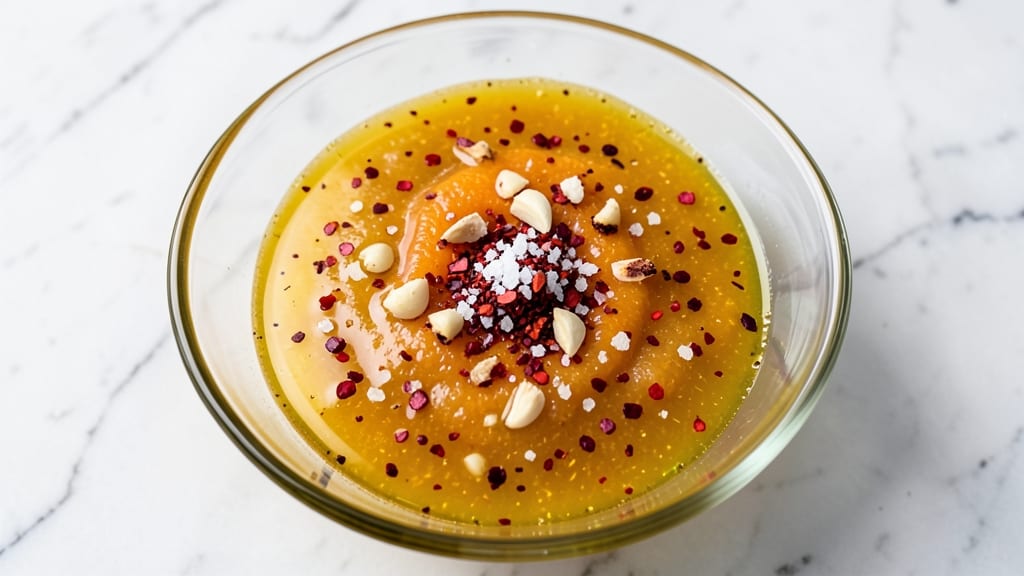
This Filipino-style kani salad dressing transforms simple greens into a vibrant, tangy masterpiece with just five ingredients. The secret lies in calamansi juice—bright citrus that cuts through the richness of kani (salted cod) while balancing the vinegar's acidity.
I've perfected this recipe after years of testing, ensuring every drop delivers that signature Filipino tang without overpowering the salad's natural flavors.
The dressing's silky texture comes from a blend of vinegar and oil, emulsified naturally by a touch of garlic and chili. Unlike heavy creamy dressings, this one stays light yet deeply flavorful, clinging perfectly to crisp lettuce, shredded cabbage, or even kani itself.
The garlic adds warmth, while the chili brings a subtle kick that lingers on the tongue—just enough to make every bite memorable.
What makes this dressing truly special is its versatility. Use it as a marinade for grilled seafood, a dip for fresh vegetables, or the star of your kani salad. The recipe yields about 1 cup, enough to coat a generous bowl or dress multiple servings.
Store it in an airtight container in the refrigerator for up to 1 week, where the flavors deepen with time.
For an extra layer of complexity, let the dressing sit for 10 minutes before using—this allows the garlic and chili to infuse fully, creating a harmonious blend of sweet, sour, and spicy notes.
The result? A dressing that elevates any dish with minimal effort, all while staying true to Filipino flavors.
Ingredients for kani salad dressing recipe filipino style
Five simple ingredients create this vibrant Filipino dressing that transforms salads into a tangy masterpiece.
| Ingredient | Amount | Notes |
|---|---|---|
| Calamansi Juice 🍋 | ½ cup | Freshly squeezed preferred |
| White Vinegar 💧 | ⅓ cup | Distilled white vinegar |
| Canola Oil 🫒 | ½ cup | Light and neutral flavor |
| Garlic Cloves 🧄 | 2 cloves | Minced finely for infusion |
| Red Chili Flakes 🌶️ | 1 tsp | Adjust for heat preference |
| Salt 🧂 | ½ tsp | Fine sea salt preferred |
| Sugar 🍚 | 1 tsp | White granulated sugar |
Calamansi juice is the heart of this dressing—its bright citrus flavor defines Filipino kani salads. Filipino markets or specialty Asian stores carry it fresh, but if unavailable, substitute with a mix of lime and lemon juice (use equal parts). The vinegar balances the citrus perfectly, so don't skimp here. I always grab distilled white vinegar from the grocery store's baking aisle—it's the most consistent. For the garlic, freshly minced makes all the difference; pre-minced garlic lacks the same punch and can turn bitter over time.
No calamansi? Lime juice plus a pinch of sugar gets you close, though it won't have the exact same floral tang. Running low on vinegar? Rice vinegar works at a 1:1 ratio, though it adds a slight sweetness. Chili flakes can be swapped for fresh chili or cayenne powder—just adjust to taste. The sugar isn't just for sweetness; it helps balance the acidity and rounds out the flavors. If you're using this dressing for seafood, you can reduce the sugar slightly to let the natural brininess of the kani shine through.
This dressing keeps beautifully in the fridge for up to 1 week if stored in an airtight container. The flavors actually deepen over time, so making it a day ahead is ideal. For extra shelf life, add a thin layer of olive oil on top before sealing. Shake well before each use—it separates slightly but comes back together easily. I like to make a double batch; one for salads and another to use as a marinade for grilled fish.
Why You'll Love This Recipe
- No Fuss, Big Payoff: I swear by this dressing—just mash garlic, toss in calamansi juice, and stir. That’s it. No fancy techniques, no waiting for anything to marinate. Honestly, I’ve made it while chatting on the phone, and it still comes out bright and tangy.
- Tangy Zing in Seconds: The calamansi cuts through everything like a citrusy knife, while the garlic and chili flakes add heat that lingers. It’s the kind of dressing that makes a simple salad taste like you actually cooked it—no overcomplicating needed.
- Weeknight to Potluck Hero: Drizzle it on grilled chicken, toss with veggies, or even use it as a marinade. I keep a jar in my fridge for lazy nights, and it’s also my go-to for bringing to gatherings—people always ask for the recipe.
- Budget-Friendly Flavor Bomb: Calamansi might sound fancy, but a little goes a long way, and the rest of the ingredients are pantry staples. I’ve made a whole batch for under $3, and it lasts me weeks. Plus, no fancy oils or specialty items—just honest, bold flavor.
Step-by-step instructions for Filipino-style kani salad dressing
This dressing balances bright citrus with silky vinegar—perfect for enhancing canned sardines or fresh seafood.
Infuse Garlic into the Oil
Heat the 0.5 cup Canola Oil in a small saucepan over low heat until just warm to the touch—about 2 minutes. Add the 2 cloves Garlic Cloves, minced finely, and let them sizzle gently for 1-2 minutes until fragrant but not browned. This step ensures the garlic flavor permeates the oil without burning, creating a subtle aromatic base.
Remove from heat immediately to prevent the garlic from turning bitter. Strain the infused oil through a fine-mesh sieve into a bowl, pressing gently on the garlic to extract every drop. Discard the garlic solids—this preserves the dressing's smooth texture while keeping the flavor intact.
Whisk Vinegar and Calamansi Juice
In a separate bowl, combine the 0.33 cup White Vinegar and 0.5 cup Calamansi Juice. Whisk vigorously for 30 seconds until fully blended. The calamansi juice should create a vibrant, citrusy hue that brightens the dressing instantly. Taste the mixture—it should be sharply tangy with a clean, citrus-forward profile.
If using bottled calamansi juice, strain it first to remove any pulp, which can make the dressing grainy. The acidity from the vinegar and calamansi will mellow slightly as they blend, but the dressing should still pack a bold punch. Set this mixture aside while you prepare the remaining ingredients.
Sweeten and Season the Base
Return the infused oil to the bowl with the vinegar-calamansi mixture. Add the 1 tsp Sugar, 0.5 tsp Salt, and 1 tsp Red Chili Flakes, then whisk continuously for 1 minute until the sugar dissolves completely. The sugar balances the acidity, while the salt and chili flakes add depth and a subtle kick.
Taste again to refine the seasoning. The dressing should harmonize tartness, heat, and a touch of sweetness. Adjust the red chili flakes if you prefer more or less heat—Filipino dressings often embrace bold flavors, so don’t shy away from a little spice. Let the mixture sit for 5 minutes to allow the flavors to meld.
Emulsify for a Silky Texture
Using a handheld immersion blender or a whisk, blend the dressing until smooth and emulsified—about 30-45 seconds. The canola oil should fully incorporate into the vinegar-calamansi base, creating a velvety consistency. If the dressing separates, whisk vigorously again or add 1 teaspoon of water to help bind the ingredients.
For an extra-smooth finish, strain the dressing through a fine-mesh sieve into a clean jar or bottle. This removes any remaining garlic particles or chili flakes, ensuring a flawless texture. The dressing is now ready to elevate canned sardines, seafood platters, or even grilled meats with its signature tangy-sweet balance.
Pro Tips For Making Kani Salad Dressing Recipe Filipino Style
- MINCE GARLIC FINE: No need for a food processor—just smash 3-4 cloves with the flat side of your knife first, then chop into a paste. This releases more flavor than mincing, and you’ll taste the difference when it hits your dressing. (Yes, even if you’re impatient like me.)
- BALANCE THE ACID: Start with equal parts calamansi juice and white vinegar, then adjust. If it’s too sharp, add a splash of warm water; if too mild, squeeze in more calamansi. Taste as you go—this isn’t a science experiment, but close.
- COOL THE OIL: Let your canola oil sit at room temperature before mixing. Cold oil emulsifies better with the citrus and vinegar, so you avoid that dreaded separation later. (I learned this the hard way after shaking a dressing that split like oil and water.)
- TOAST THE CHILI: Dry-toast your red chili flakes in a dry pan for 30 seconds until fragrant. It deepens the flavor without adding heat, and the aroma ties everything together. Skip this, and your dressing will taste flat.
Common mistakes when making this dish
Over-Extracting Garlic
I’ve seen so many people burn their garlic when making this dressing, and it ruins everything. The key is to infuse the oil over low heat for just 1-2 minutes—no more! Garlic burns quickly and turns bitter, leaving a harsh aftertaste that overpowers the bright citrus notes.
If you notice the oil starting to smell sharp or the garlic turning golden, remove it immediately. Strain out the garlic solids right after infusion to avoid any lingering bitterness. 🧄
Skipping the Resting Time
This is a rookie mistake that throws off the balance of flavors. The dressing needs 5-10 minutes to let the garlic, chili, and sugar meld together. If you use it right away, the acidity from the vinegar and calamansi will feel harsh, and the garlic might taste raw.
I always let mine sit while I prep the rest of my meal—it’s worth the wait for that perfect harmony of sweet, sour, and spicy. ⏳
Using Bottled Calamansi Without Straining
Store-bought calamansi juice often has pulp or seeds that make the dressing grainy. Always strain it through a fine-mesh sieve before mixing—this keeps the texture silky smooth. If you’re using fresh calamansi, roll it under your palm first to break up the fruit before juicing.
The pulp can also turn the dressing cloudy, so don’t skip this step. A smooth texture is everything for a dressing meant to coat delicate greens or kani. 🍋
Ignoring the Emulsification Step
If you just toss the ingredients together and whisk once, the oil and vinegar will separate, leaving you with a sad, watery dressing. The secret is to blend it until it’s fully emulsified—use a handheld immersion blender for 30-45 seconds or whisk vigorously until it thickens slightly.
If it starts to break again, add 1 teaspoon of water and whisk once more. A well-emulsified dressing clings beautifully to salad ingredients and won’t pool at the bottom of your bowl. 💫
Adjusting Heat Last
Many people wait until the very end to add the red chili flakes, but that’s too late—the heat needs time to infuse. Add the chili with the sugar and salt during Step 3 and let the dressing sit for 5 minutes before tasting.
This gives the chili time to mellow and distribute evenly. If you add it at the end, you’ll end up with pockets of heat instead of a balanced spicy kick throughout every bite. 🌶️
Storing Without an Oil Seal
This dressing separates over time, but you can extend its shelf life by adding a thin layer of olive oil on top before sealing the jar. This creates a barrier that keeps the vinegar from evaporating and prevents the oil from oxidizing.
Shake well before each use—it’ll come back together like new. Without this step, the dressing might spoil faster or develop off flavors after just a few days. ❄️
Nutrition facts
Frequently asked questions
Can I substitute calamansi juice with something else?
Yes! If you can't find calamansi, use a mix of lime juice and lemon juice (equal parts) plus a pinch of sugar to mimic its bright tang. For extra depth, add 1/4 teaspoon of calamansi zest if available. The dressing will still taste delicious, though it won't have the exact floral citrus notes of calamansi.
How spicy should this dressing be?
The 1 teaspoon of red chili flakes gives a mild kick, but you can adjust to taste. For a milder version, reduce to 1/2 teaspoon, or increase to 1.5 teaspoons for more heat. Filipino dressings often embrace bold flavors, so don't be afraid to go slightly spicier—it pairs beautifully with rich seafood like kani.
Can I make this dressing without oil?
While the oil creates a silky texture, you can make a lighter version by replacing it with 1/4 cup of coconut milk or 1/4 cup of Greek yogurt. The dressing will be thinner but still tangy. For a vegan option, use 1/4 cup of aquafaba (chickpea brine) to help emulsify the vinegar and citrus. Just whisk vigorously to combine.
How long does this dressing last in the fridge?
This dressing stays fresh for up to 1 week when stored in an airtight container. To extend its shelf life, add a thin layer of olive oil on top before sealing—the oil acts as a preservative. Always shake well before using, as the oil and vinegar may separate slightly over time. The flavors actually improve after 24 hours as the ingredients meld together.
Can I use this dressing for other dishes besides salad?
This versatile dressing works as a marinade for grilled seafood, a dip for fresh vegetables, or even a sauce for noodles. It also pairs well with grilled chicken or pork. For seafood, reduce the sugar slightly to let the natural brininess shine through. The tangy-sweet balance makes it perfect for balancing richer dishes.