
Salads
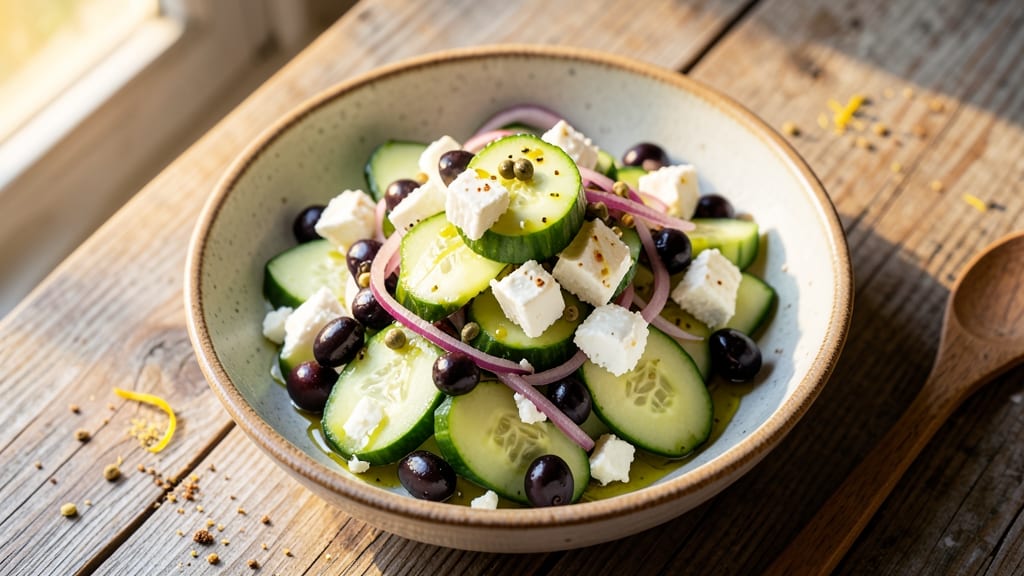
This Greek salad recipe without tomatoes delivers all the bright, crisp flavors of traditional Horiatiki—just without the fruit. The secret lies in balancing salty olives, briny capers, and tangy feta with cool cucumbers and sharp red onion, all tossed in a simple olive oil dressing that shines even without tomatoes.
I developed this version after realizing how much I missed the classic flavors when fresh tomatoes weren't available, and it's become my go-to summer salad.
The foundation of this salad is crisp cucumbers cut into perfect chunks and fresh feta cheese crumbled just before serving to maintain that signature texture. Kalamata olives and capers add deep Mediterranean flavor, while red onion brings a sharp bite that cuts through the richness.
The dressing—just olive oil, lemon juice, and oregano—enhances rather than overpowers, letting the ingredients speak for themselves.
What makes this salad special is how the components work together: the cool crunch of cucumbers contrasts with the creamy feta, while the olives and capers add layers of umami.
Unlike traditional versions, this one relies on extra briny elements (like more olives or pickled vegetables) to maintain that signature tang. It's refreshing enough for a light lunch but hearty enough to serve as a side for grilled meats.
Perfect for summer gatherings or as a quick weeknight meal, this salad keeps well for up to 24 hours in the fridge—though the feta will soften slightly, so serve it fresh when possible.
The beauty of this version is its flexibility: swap in roasted red peppers or artichokes for even more depth. Let's build this bright, tomato-free Greek salad that still tastes authentically Mediterranean.
Ingredients for greek salad recipe no tomatoes
Crisp cucumbers, briny olives, and creamy feta—this Mediterranean bowl shines without tomatoes.
| Ingredient | Amount | Notes |
|---|---|---|
| Persian Cucumbers 🥒 | 3 whole | Seedless, cut into 1-inch chunks |
| Fresh Feta Cheese 🧀 | 8 oz | Block form, crumbled by hand |
| Kalamata Olives 🫒 | 1 cup | Pitted, sliced in half lengthwise |
| Red Onion 🧅 | 1 medium | Thinly sliced, soak 10 mins to mellow |
| Capers 🌿 | ¼ cup | Rinsed to reduce saltiness |
| Extra-Virgin Olive Oil 🫒 | ½ cup | Light, fruity variety preferred |
| Fresh Lemon Juice 🍋 | 2 tbsp | Freshly squeezed, strained |
| Dried Oregano 🌿 | 1 tsp | Mediterranean blend preferred |
| Salt 🧂 | ½ tsp | Diamond Crystal kosher salt |
| Fresh Dill 🌿 | ¼ cup | Chopped, stems removed |
| Red Wine Vinegar 🍷 | 1 tbsp | For dressing tang |
| Black Pepper 🌶️ | ¼ tsp | Freshly cracked |
The cucumbers are non-negotiable—Persian or English hothouse work best for that clean crunch. Whole Foods or Trader Joe's always have the best selection, but any seedless variety does. For the feta, block form is essential—pre-shredded gets clumpy and loses texture. Look for aged 3-4 months for that perfect balance of salt and creaminess. Kalamata olives should be plump, not shriveled, and Costco's bulk bin is my go-to for freshness. Red onions? Vidalia or red globe types add the most color and sweetness, but any red will work if sliced thinly.
No capers? Pickled giardiniera or chopped cornichons add similar briny punch. Fresh dill is ideal, but dried works at one-third the amount if you're in a pinch. The dressing is where the magic happens—use a light olive oil (like Colavita) that won't overpower, and always strain the lemon juice to keep it clear. For extra depth, I sometimes add 1 tsp Dijon mustard to the dressing, but it's optional. If you're serving this with grilled meats, add 1 extra tbsp red wine vinegar to cut through the richness.
This salad holds up beautifully for 24 hours in the fridge, but the feta softens—so serve it fresh when possible. Store components separately: cucumbers and onion in one container (they'll wilt), olives and feta in another. The dressing keeps for 5 days if stored in a sealed jar. For meal prep, double the dressing and keep it in a separate bottle—just toss everything together when ready to eat. The briny elements make this salad even more satisfying the next day, so don't hesitate to make extra.
Why You'll Love This Recipe
- No-Chop Nightmare: I swear, the Persian cucumbers slice themselves—just halve them lengthwise, sprinkle lemon, and let them sit while you toss the rest. Honestly, this is the salad I make when I’ve had enough of my own hands.
- Feta & Brine Magic: That salty, crumbly feta with the briny olives and capers? It’s like a flavor explosion in your mouth. The red onion adds this sharp, sweet kick that makes it impossible to stop eating—even when you’re full.
- Picnic & Potluck Hero: Between us, this is my go-to for summer gatherings. It travels well, stays crisp, and pairs perfectly with grilled anything. My friends keep asking for the recipe, and I’m not even pretending to share it.
- Leftover Luxury: Make a big batch on Sunday, and you’ve got lunch for days. The feta stays fresh, the cucumbers hold their crunch, and the olives just get more flavorful. I’ll be real: I’ve had this salad for breakfast. No judgment.
Step-by-step instructions for Greek salad without tomatoes
Here's how to assemble this vibrant salad with crisp, refreshing ingredients that shine.
Prep the Vegetables for Maximum Crunch
Start by washing the 3 whole Persian cucumbers thoroughly and cutting them into 1-inch chunks. I like to use a sharp chef's knife and work in stages—cutting the cucumbers first keeps them crisp while you prep the other ingredients. Place the cucumber chunks in a large mixing bowl immediately after cutting to preserve their texture.
Next, thinly slice the 1 medium red onion, aiming for even slices about 1/8-inch thick. Transfer the onion slices to a small bowl and cover them with cold water for 10 minutes—this helps mellow their sharpness while keeping them firm. Drain well before adding to the salad. The capers should be rinsed in a fine-mesh strainer under cold water for 30 seconds to reduce their saltiness without losing their briny punch.
Crumble the Feta and Slice the Olives
Use your hands to crumble the 8 oz block of fresh feta cheese into small, uneven chunks—this gives the salad that signature rustic texture. I always work quickly here to prevent the feta from becoming too soft. Place the crumbled feta in the same mixing bowl with the cucumbers, setting it aside for now.
Halve the 1 cup Kalamata olives lengthwise with a sharp knife. Their deep purple hue and slightly chewy texture are what make this salad stand out. Arrange the olive halves on top of the feta and cucumbers, spreading them evenly. The olives' natural oils will start to release as they sit, enhancing the salad's flavor profile.
Whisk Together the Dressing Components
In a small bowl, combine the 0.5 cup extra-virgin olive oil, 2 tbsp fresh lemon juice, 1 tbsp red wine vinegar, 1 tsp dried oregano, 0.5 tsp salt, and 0.25 tsp black pepper. Whisk vigorously for 30 seconds until the dressing emulsifies into a smooth, glossy liquid. The lemon juice should brighten the flavors, while the vinegar adds a subtle tang that cuts through the richness of the feta.
Taste the dressing before adding it to the salad. If it needs more acidity, add a splash of additional lemon juice. If it's too sharp, a tiny pinch of salt will balance it. This is your chance to adjust the flavor profile before committing to the full salad.
Assemble and Toss the Salad
Drain the red onion slices thoroughly and add them to the mixing bowl with the cucumbers, feta, and olives. Pour the dressing over the ingredients and gently toss everything together with a large spatula. Work quickly but carefully—you want to coat the vegetables evenly without mashing the cucumbers or breaking the feta pieces.
Sprinkle the 0.25 cup chopped fresh dill over the top just before serving. The dill's bright, herbal notes will elevate the salad's flavor profile, adding a fresh finish that complements the briny capers and rich feta. Let the salad sit for 5 minutes before serving to allow the flavors to meld together.
Serve Immediately for Peak Freshness
Transfer the Greek salad to a platter or individual bowls, making sure the ingredients are distributed evenly. The cucumbers should still be crisp and cool, the feta creamy yet firm, and the olives glossy from the dressing. Serve immediately while the vegetables are at their freshest—this salad doesn't wait well, and the flavors are best enjoyed right away.
For an extra touch, garnish with a few additional Kalamata olive halves or a sprinkle of cracked black pepper. Pair it with warm pita bread or grilled meats to round out the meal. The balance of textures—crunchy cucumbers, creamy feta, briny olives, and tender onion—makes every bite satisfying and refreshing.
Pro Tips For Making Greek Salad Recipe No Tomatoes
- DICE ONIONS SMALL: Persian cucumbers and red onion are the stars here, so cut the onion into 1/4-inch pieces—not thin slices. Thin rings release too much water and turn the salad soggy within 30 minutes. (I learned this after crying over a waterlogged bowl.)
- DRAIN OLIVE BRINE: Kalamata olives come packed in brine, and that liquid is salty enough to drown your salad’s flavor. Dump them in a colander, rinse briefly, then pat dry with a paper towel. Wet olives make the feta taste bland in comparison.
- SALT FETA FIRST: Fresh feta is salty, but not all brands are created equal. Sprinkle it with a pinch of flaky salt and let it sit for 5 minutes before adding to the salad. This evens out the texture and prevents a single salty bite ruining the whole dish.
- ADD CAPERS LAST: Tossing capers in early means they’ll sink to the bottom and disappear. Instead, sprinkle them over the top right before serving—along with a drizzle of olive oil. That way, every bite gets their briny punch without hunting for them. (Yes, even if you’re impatient like me.)
Essential equipment for great greek salad recipe no tomatoes
Sharp Knife Essentials
Your 8-inch chef's knife is the MVP for this salad—it lets you slice cucumbers into perfect 1-inch chunks and halve olives with precision. I swear by the Wüsthof Classic for its razor-sharp edge that stays put through multiple cuts.
For the red onion, a serrated knife (like Mercer Culinary Genesis) prevents slippage when making thin slices. 🔪
Cutting Boards Matter
A large bamboo cutting board (like Bamboo Board by GreenPan) gives you ample space to prep all ingredients simultaneously. The natural antimicrobial properties also keep your workspace fresh.
Avoid plastic boards—they dull knives faster and harbor bacteria. For the onion soak, I use a small glass bowl to monitor the water level while mellowing the sharpness.
Mixing Bowl Selection
Go for a wide, shallow mixing bowl (I use Le Creuset stoneware) to prevent ingredients from getting buried during tossing. The wide surface area makes it easy to distribute the dressing evenly.
For the dressing itself, a small glass jar with a tight lid keeps it fresh in the fridge for up to 5 days—just shake before using.
Feta Handling Tools
Use your clean hands to crumble feta—no utensils needed! The natural oils in your fingers help create those perfect, uneven chunks. For storage, transfer any leftover feta to an airtight container with a paper towel to absorb excess moisture.
A small ladle comes in handy for portioning the dressing without over-tossing the salad.
Dressing Whisk Upgrade
A small whisk (like OXO Good Grips) emulsifies the dressing in seconds. For extra precision, I add the lemon juice and vinegar first, then slowly drizzle in the olive oil while whisking continuously.
This prevents the dressing from separating. Keep your whisk clean—leftover oregano residue can make future dressings taste bitter.
Serving Presentation
Transfer the salad to a large platter or individual bowls—I love Corelle stoneware for its durability and elegant look. Use a slotted spoon to arrange ingredients neatly, placing cucumbers and olives in the center with feta clustered around the edges.
A small bowl for extra dressing** on the side lets guests customize their portions without soggy salads. 🍽️
Nutrition facts
Frequently asked questions
Can I substitute capers with something else if I don't have them?
For that signature briny kick, try pickled cornichons (chopped), giardiniera (drained), or even pickled green olives (pitted and halved). Each adds a different texture—cornichons bring a tangy crunch, while giardiniera offers a mix of peppers and spices that work beautifully with the feta and cucumbers.
Why does my feta turn rubbery when I make this salad?
Feta gets rubbery when it's pre-shredded (the wax coating prevents moisture loss) or left out at room temperature too long. Always use block feta and crumble it fresh—store it in the fridge until ready to serve. If it's already crumbled, transfer it to an airtight container with a paper towel to absorb moisture. Keep it chilled until the last minute.
How can I make this salad more substantial for a main course?
Add protein by tossing in grilled chicken breast (cubed), chickpeas (rinsed), or shrimp (cooked and chilled). For heartiness, double the feta to 12 oz and add 1/2 cup toasted walnuts or pine nuts for crunch. Serve with warm pita bread or crusty focaccia on the side to soak up the dressing.
Can I make this salad ahead of time?
Store the components separately: cucumbers and onion in one container (they'll wilt), olives and feta in another, and dressing in a sealed jar. Assemble just before serving to keep the cucumbers crisp. The dressing keeps for 5 days in the fridge, and the feta stays fresh for 3 days if stored properly. For meal prep, double the dressing and keep it separate until ready to toss.
What's the best way to keep cucumbers crisp in this salad?
Cut cucumbers right before assembling and place them in an ice water bath for 10 minutes to shock them and maintain crispness. Pat them dry before adding to the salad. For extra crunch, add 1 tsp lemon juice to the dressing—it helps preserve texture. Avoid cutting cucumbers too early, as they'll release water and become soggy.