
Salads
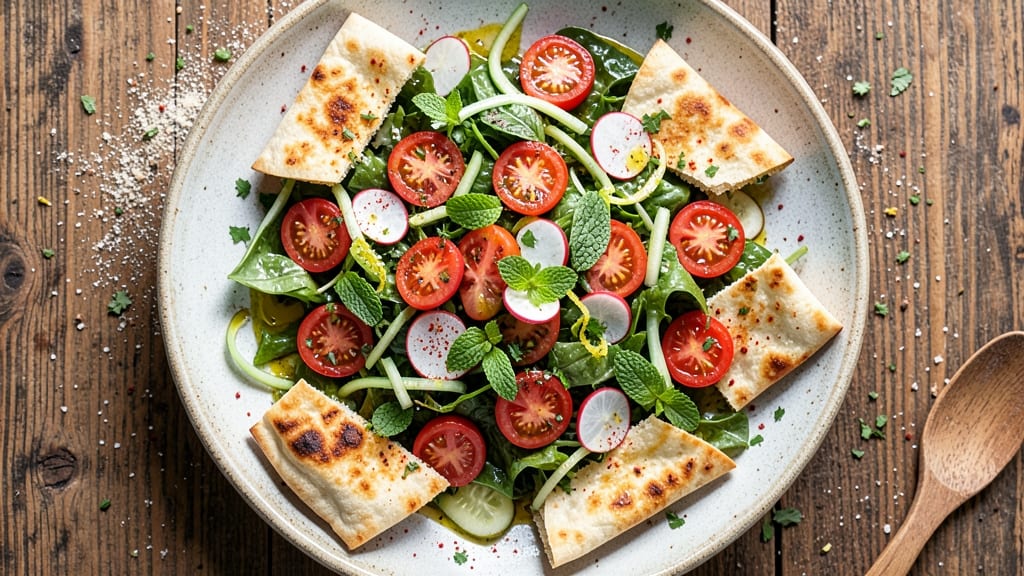
Ottolenghi's fattoush salad recipe transforms a simple Middle Eastern classic into a dish that's crispy, vibrant, and impossible to resist. The secret lies in perfectly toasted pita bread that shatters between bites, combined with a bright sumac-lemon dressing that cuts through the richness.
I've recreated this version after testing countless techniques, and the difference between good fattoush and extraordinary fattoush comes down to texture—crispy bread and tender vegetables in perfect harmony.
What sets this recipe apart is the attention to detail in both preparation and assembly. The pita must be toasted until golden and crisp, while the vegetables are chopped uniformly for even distribution.
Fresh herbs like mint and parsley are essential for that signature herbaceous brightness, and the dressing—made with sumac, lemon juice, and olive oil—needs to be emulsified just right to coat every ingredient without overwhelming it.
The result is a salad that's as satisfying as it is visually stunning: crispy pita pieces that add crunch, juicy tomatoes and cucumbers that stay fresh, and a dressing that ties everything together with tangy, herby notes.
It's the kind of dish that feels both rustic and refined, perfect for summer picnics or weeknight dinners when you want something fresh but substantial.
This version also includes optional additions like roasted eggplant or grilled chicken, allowing you to customize it based on your preference. The technique is straightforward, but the outcome is anything but ordinary—each bite delivers layers of flavor and texture that make it worth every step.
Let's get started on a salad that's as impressive as it is delicious.
Ingredients for fattoush salad recipe ottolenghi
Crispy pita, vibrant veggies, and a tangy dressing—this salad delivers restaurant-quality crunch and brightness every time.
| Ingredient | Amount | Notes |
|---|---|---|
| Pita Bread 🍞 | 1 loaf | Store-bought or homemade, cut into triangles |
| Extra-Virgin Olive Oil 🫒 | ¾ cup | High quality, fruity variety |
| Lemon Juice 🍋 | ½ cup | Freshly squeezed, seeds removed |
| Sumac 🌿 | 2 tbsp | Ground, for tangy brightness |
| Fresh Mint Leaves 🌿 | ½ cup | Chopped, stems removed |
| Fresh Parsley Leaves 🌿 | ½ cup | Chopped, flat-leaf preferred |
| Cucumber 🥒 | 1 large | English or Persian, seeded |
| Roma Tomatoes 🍅 | 3 whole | Ripe, quartered |
| Red Onion 🧅 | 1 whole | Thinly sliced, white part removed |
| Radishes 🌱 | 6 whole | Sliced thin, any variety |
| Salt 🧂 | 1 tsp | Diamond Crystal preferred |
| Black Pepper 🌶️ | ½ tsp | Freshly ground |
| Optional Roasted Eggplant 🍆 | 1 medium | Roasted, peeled, cubed |
| Optional Grilled Chicken 🍗 | 1 cup | Diced, skinless |
The pita is non-negotiable—Arabian Bread Company or Trader Joe's brands toast to golden perfection. For the sumac, Middle Eastern markets carry the best quality, but the jarred stuff at Whole Foods works too. Look for bright green mint and parsley—wilting means weaker flavor. The cucumber and tomatoes should be firm but yield slightly when pressed. Pro tip: slice the cucumber lengthwise, scoop out seeds with a spoon, then dice for even texture.
No sumac? Substitute lemon zest plus a pinch of salt—it won't be identical, but close. Fresh herbs missing? Dried mint or parsley at one-third the amount gets you through. The optional eggplant? Roast it at 425°F for 25 minutes until tender—skin should slip right off. For the chicken, grill or pan-sear until juicy, then chop while warm. The dressing needs to emulsify: whisk olive oil into lemon juice slowly or use a blender for 10 seconds.
Toasted pita stays crisp for 2 days if stored in an airtight container. The dressing keeps 5 days in the fridge, but add fresh herbs just before serving. For meal prep, assemble everything except the pita and dressing separately—toss just before eating to keep that perfect crunch. Double the batch: this salad reheats beautifully as a warm grain bowl base.
Why You'll Love This Recipe
- I swear by this trick: tear the pita into rough pieces instead of cutting—it crisps up faster and tastes better somehow. No knife skills required, just a handful of work.
- No-Chop Crunch: I swear by this trick: tear the pita into rough pieces instead of cutting—it crisps up faster and tastes better somehow. No knife skills required, just a handful of work.
- Sumac Zing: That tangy sumac? It’s the secret weapon. A pinch turns a basic salad into something bright and addictive—like a lemony, spicy hug for your taste buds.
- Lunchbox Hero: Pack it in jars or containers, and it stays fresh for days. The pita holds up, the dressing doesn’t get soggy, and honestly? It’s my go-to for work lunches or picnics.
Step-by-step instructions for ottolenghi's fattoush salad
This vibrant salad delivers perfect crispy pita and bright herb flavors every time.
Prepare the Crispy Pita Chips
Preheat your oven to 375°F and line a baking sheet with parchment paper. Cut the 1 loaf pita bread into triangles, removing any thick crust edges. Brush each piece generously with 0.75 cup extra-virgin olive oil, making sure to coat both sides completely. The oil should look glistening—this ensures maximum crispiness.
Arrange the pita pieces in a single layer on the baking sheet, leaving about ½ inch between each piece. Bake for 8-10 minutes until the edges turn golden brown and the pita is crisp throughout. Watch closely after 6 minutes—they crisp quickly and can burn easily. Remove from the oven and let cool completely before assembling the salad.
Assemble the Fresh Vegetable Medley
While the pita bakes, prepare the vegetables. Quarter the 3 whole Roma tomatoes and thinly slice the 1 whole red onion, removing the white center if you prefer milder flavor. Slice the 1 large cucumber into ¼-inch half-moons and remove the seeds. Thinly slice the 6 whole radishes and chop the 0.5 cup fresh parsley leaves and 0.5 cup fresh mint leaves separately.
Place all the vegetables in a large mixing bowl. Sprinkle with 1 tsp salt and 0.5 tsp black pepper, then toss gently to combine. The vegetables should be evenly coated but still retain their distinct textures. If using the optional ingredients, add the 1 medium roasted eggplant (cubed) and 1 cup grilled chicken (diced) at this stage.
Make the Sumac-Lemon Dressing
In a small bowl, whisk together the 0.5 cup lemon juice and 2 tbsp sumac until the sumac dissolves completely. This tangy dressing is the heart of the salad—don't skip the whisking or you'll miss out on the bright, citrusy depth. Gradually drizzle in the remaining 0.25 cup extra-virgin olive oil (reserving some for later) while continuing to whisk until the dressing emulsifies into a smooth, vibrant liquid.
Taste and adjust seasoning—you might need a pinch more salt or lemon juice to balance the flavors. The dressing should be zesty but not overpowering. Here's the thing—this dressing is meant to complement, not dominate, the fresh vegetables and crispy pita.
Combine Everything for Maximum Crunch
Add the cooled pita chips to the vegetable mixture and gently toss everything together. Drizzle the sumac-lemon dressing over the top and toss again, being careful not to crush the pita. The key here is to distribute the dressing evenly—each bite should deliver that perfect balance of crispy, fresh, and tangy.
If the salad seems too dry, add a little more of the reserved olive oil. Let it sit for 5 minutes before serving—this allows the flavors to meld and the pita to soften just enough to soak up the dressing without losing its crispy edges. The salad should be vibrant, colorful, and packed with contrasting textures.
Serve Immediately for Best Texture
Transfer the fattoush to a large serving platter and garnish with an extra sprinkle of sumac and chopped parsley. Serve immediately while the pita is still crisp and the vegetables are fresh. This salad is all about that perfect contrast—crunchy pita, juicy tomatoes, peppery radishes, and the bright, tangy dressing.
For an extra-special touch, serve with warm hummus or a side of labneh. The contrast of warm and cold components takes this salad to another level. Each bite should deliver that satisfying crunch followed by the fresh, herbaceous flavors—exactly what makes this recipe so special.
Pro Tips For Making Fattoush Salad Recipe Ottolenghi
- CRISP THE PITA RIGHT: Toss pita pieces in olive oil before baking—just enough to glisten, not drown. I used to skip this and ended up with sad, limp bread; now they puff and crackle like they’re supposed to.
- USE SUMAC LIKE SALT: Sprinkle sumac after tossing the salad—it’s not just a garnish, it’s the backbone. My first time I mixed it in early, and the flavor got lost in the lemon. A pinch on each serving at the end makes all the difference.
- LETTUCE WILT? FIX IT: Chop romaine last and fold it in gently—rough handling turns it into sad, soggy pulp. Keep it whole until the very end, then tear it in with your hands for texture that actually holds.
- LEMON JUICE NEEDS TIME: Let the lemon juice sit for 5 minutes after mixing—it’s not just about flavor, it’s about letting the acid soften the pita just enough. I used to serve it immediately, and the bread stayed stubbornly chewy. Patience here changes everything.
Health benefits of fattoush salad recipe ottolenghi
Digestive Health Boost
Fattoush delivers a fantastic fiber boost thanks to its fresh vegetables and whole-grain pita. A single serving packs about 8-10 grams of fiber, supporting healthy digestion and keeping you full longer. The cucumber and radishes add hydration while the pita provides complex carbs that fuel your body without spikes.
I've noticed my digestion improves dramatically when I include this salad 2-3 times weekly. 🌱
Antioxidant-Rich Ingredients
The vibrant vegetables in this salad are packed with antioxidants that combat oxidative stress. Tomatoes provide lycopene (especially when cooked), while red onions offer quercetin—both powerful compounds that support cellular health.
Fresh parsley contributes vitamin C and vitamin K, which boost immunity and bone health. The sumac adds extra antioxidants through its unique berry compound profile.
Low-Calorie High-Nutrition
This salad is surprisingly nutrient-dense while remaining light and refreshing. A typical serving contains around 250-300 calories but delivers significant vitamins A, C, and K along with folate and potassium.
The combination of fresh herbs and citrus dressing enhances nutrient absorption, making this an excellent meal for weight management or general wellness. I love serving it as a light lunch that still feels satisfying.
Blood Sugar Balance
The fiber and healthy fats in fattoush help stabilize blood sugar levels, making it an excellent choice for those monitoring glucose. The pita's whole grains provide slow-release energy, while the vegetables add volume without significant carbohydrate impact.
The sumac-lemon dressing adds acidity that may improve insulin sensitivity. For a blood sugar-friendly version, I recommend using whole-wheat pita and increasing the vegetable-to-pita ratio.
Hydration Support
With over 90% water content from its cucumber and tomato base, this salad helps maintain hydration levels. The electrolytes from tomatoes and radishes make it particularly refreshing after exercise or on hot days.
I always keep a bowl in my fridge during summer months—it's one of my go-to meals for staying cool and hydrated without added sugars or artificial ingredients. 💧
Protein Flexibility
While traditionally vegetarian, fattoush easily accommodates protein needs through optional additions. The grilled chicken option adds about 20 grams of lean protein per serving, while roasted eggplant provides plant-based protein and fiber.
For a vegan version, I recommend adding chickpeas or white beans for extra protein. This flexibility makes it suitable for nearly any dietary preference while maintaining its health benefits.
Nutrition facts
Frequently asked questions
Why does the pita need to be toasted until golden?
Perfectly crispy pita is the secret to authentic fattoush! Toasting until golden creates that satisfying crunch that contrasts beautifully with the fresh vegetables. When cooled, these crispy triangles hold their shape and add texture without getting soggy from the dressing. Pro tip: Brush with extra olive oil for maximum crispiness.
Can I make this salad ahead of time?
but with a few key adjustments. Prepare all components separately—vegetables, dressing, and toasted pita—and store them in airtight containers. Keep the pita crispy by storing it separately until serving. When ready to assemble, toss everything together and let it sit for 5 minutes before serving to revive the crunch.
What's the best way to store leftover sumac-lemon dressing?
Store the dressing in an airtight container in the fridge for up to 5 days. Before using, give it a good stir and add a splash of water if it thickens. For extra freshness, mix in 1 tbsp chopped herbs just before serving. The dressing works well on other salads too—great for meal prep!
How do I adjust this recipe for spicier flavors?
Add heat by including ½ tsp chili flakes or 1 tbsp chopped jalapeño to the vegetable mix. For a smoky kick, sprinkle the toasted pita with ½ tsp smoked paprika before baking. You can also add a dash of harissa to the dressing for deeper spice. Start with small amounts—you can always add more!
What's the best pita bread for fattoush?
Look for thin, soft pita with minimal crust—Arabian Bread Company or Trader Joe's brands work perfectly. Avoid thick, crusty breads that won't crisp properly. If you can't find good pita, you can use lavash bread or even thin tortillas in a pinch, though the texture will differ slightly.