
Side Dishes
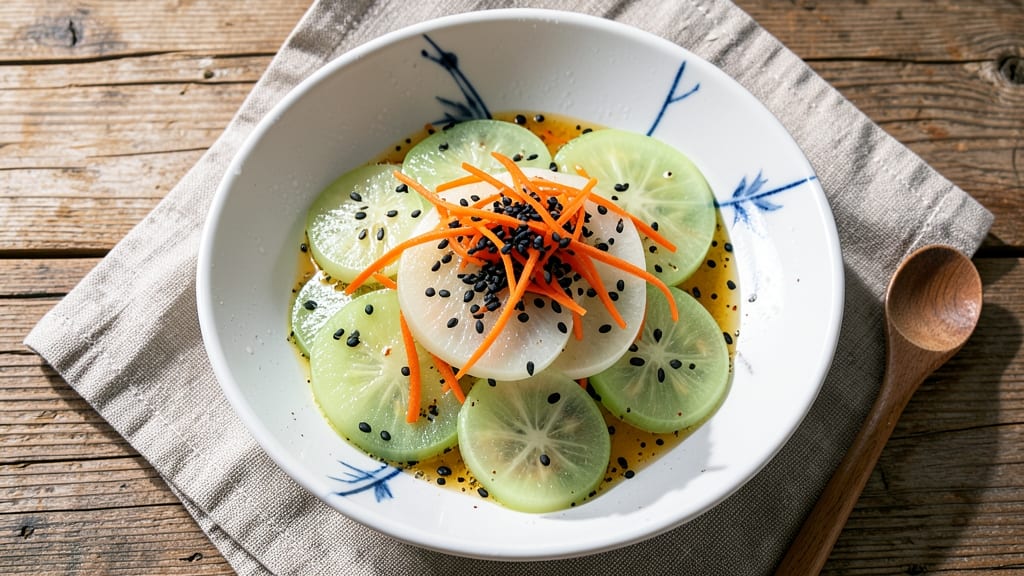
Japanese daikon salad transforms humble radish into a crisp, tangy side that brightens any meal. This classic dish relies on proper grating and a simple vinegar-sugar dressing to create the perfect balance of crunch and flavor.
The key lies in squeezing out excess moisture for that signature texture—no soggy bites here. What makes this salad special is its versatility. While traditional versions use dashi for depth, I’ve included a vegan-friendly alternative that still delivers authentic flavor.
The dressing transforms ordinary daikon into something vibrant, with just the right amount of sweetness and acidity to complement any main dish. You’ll end up with a dish that’s refreshing yet satisfying—ideal for summer meals, bento boxes, or as a light lunch.
The crisp-tender daikon holds its shape beautifully, while the dressing adds a bright, tangy contrast that keeps every bite interesting. Perfect for meal prep or last-minute sides, this recipe delivers restaurant-quality results with minimal effort. Let’s get started on creating your own crunchy, refreshing delight.
Ingredients for daikon salad recipe japanese
These vibrant ingredients transform simple daikon into a crisp, tangy Japanese delight perfect for any meal.
| Ingredient | Amount | Notes |
|---|---|---|
| Daikon Radish 🥕 | 2 lb | Fresh, firm, no bruising |
| Rice Vinegar 🍶 | ½ cup | Seasoned preferred for depth |
| Granulated Sugar 🍚 | ¼ cup | White or raw cane |
| Sesame Oil 🌿 | 1 tbsp | Toasted, not flavored |
| Vegetable Oil 🫒 | 1 tbsp | Light, neutral flavor |
| Salt 🧂 | 1 ½ tsp | Diamond Crystal preferred |
| Fresh Ginger 🧅 | 1 tbsp | Grated, peeled |
| Red Pepper Flakes 🌶️ | ½ tsp | Adjust for heat preference |
| Sesame Seeds 🌱 | 1 tbsp | Toasted lightly for crunch |
| Green Onion 🧅 | 2 whole | Thinly sliced, white and green |
| Dried Shiitake Mushrooms 🍄 | 2 whole | Rehydrated, sliced thin |
| Vegan Dashi Powder 🍵 | 1 tsp | Or kombu + shiitake broth |
The daikon is non-negotiable—look for firm, unblemished roots at Asian markets or well-stocked grocery stores like Whole Foods. A mandoline or box grater makes quick work of the grating, but a sharp knife works too. Pro tip: Pat the daikon dry before grating to maximize crispness. For the dressing, seasoned rice vinegar adds instant umami depth—don't skimp on quality here. If you can't find it, mix regular rice vinegar with 1/2 tsp sugar and 1/4 tsp salt per tablespoon.
No sesame oil? Toasted peanut oil works in a pinch, though the flavor will differ slightly. The vegan dashi powder can be swapped for 1 cup kombu broth + 1 tsp shiitake powder if you're making it from scratch. For extra crunch, toast your sesame seeds in a dry pan for 30 seconds until golden. The sugar can be adjusted—coconut sugar or maple syrup work beautifully if you prefer a deeper caramel note. Fresh ginger is ideal, but dried ginger at half the amount gets you close if you're in a hurry.
Grated daikon keeps for 2 days in the fridge if stored in a sealed container with paper towels to absorb moisture. The dressing stays fresh for 1 week—make extra for quick stir-fries. For meal prep, store components separately and toss together before serving. This salad tastes even better the next day as flavors meld. Freeze the dressing for up to 3 months if you're prepping ahead, but thaw gently before using.
Why You'll Love This Recipe
- I’ll be real: daikon can feel intimidating, but this salad only needs thin slices—not matchsticks. A mandoline or even a sharp knife in 10 minutes does the trick, and the crunchy texture rewards the effort so much.
- No-Knife Nightmare: I’ll be real: daikon can feel intimidating, but this salad only needs thin slices—not matchsticks. A mandoline or even a sharp knife in 10 minutes does the trick, and the crunchy texture rewards the effort so much.
- Sweet-Savory Magic: That balance of rice vinegar’s tang and sugar’s caramelized bite? It’s the kind of flavor that makes you pause mid-bite. Add a drizzle of sesame oil at the end, and suddenly, simple daikon becomes ridiculously good.
- Lunchbox Legend: Between us, this salad keeps like a champ—pack it in bento boxes for work or school lunches, and it’ll still taste fresh hours later. The vinegar dressing actually improves overnight, so leftovers aren’t just edible; they’re better.
Step-by-step instructions for Japanese daikon salad
This refreshing salad balances sweet, tangy, and umami flavors with satisfying crunch.
Prepare the Daikon Radish and Shiitake Mushrooms
Peel the 2 lb daikon radish using a vegetable peeler, leaving the root end intact to prevent splitting. Cut it into ½-inch thick slices—thinner slices will soften faster during pickling. Transfer to a large mixing bowl.
For the shiitake mushrooms, place the 2 whole dried shiitake mushrooms in a small bowl and cover with hot water. Let them soak for 15 minutes until softened. Drain, then slice them thinly against the grain. Add them to the bowl with the daikon.
Create the Pickling Marinade
In a small saucepan, combine the 0.5 cup rice vinegar, 0.25 cup granulated sugar, 1 tbsp sesame oil, and 1.5 tsp salt. Heat over medium-low heat until the sugar dissolves completely—about 3-4 minutes. Stir occasionally to prevent scorching.
Remove from heat and let cool to room temperature. Once cooled, pour the marinade over the daikon and shiitake mushrooms. Add the 1 tbsp grated fresh ginger and 0.5 tsp red pepper flakes, then toss gently to distribute evenly. Cover and refrigerate for at least 4 hours, or preferably overnight, for maximum flavor development.
Finish with Toasted Sesame and Green Onions
Before serving, toast the 1 tbsp sesame seeds in a dry skillet over low heat for 1-2 minutes until golden and fragrant. Stir constantly to prevent burning. Let cool slightly, then sprinkle over the salad.
Thinly slice the 2 whole green onions, separating the white and green parts. Toss them into the salad just before serving to keep them crisp. Finally, sprinkle 1 tsp vegan dashi powder over the top—this adds a subtle umami depth that ties everything together.
Serve with Perfect Texture
Taste and adjust seasoning if needed—add a pinch more salt or sugar if the balance isn't quite right. The salad should be tangy-sweet with a gentle heat from the red pepper flakes and a satisfying crunch from the daikon.
Serve chilled as a side dish with grilled fish, rice bowls, or as a refreshing standalone salad. The flavors continue to meld even after mixing, so don't hesitate to toss again just before serving for that restaurant-quality presentation.
Pro Tips For Making Daikon Salad Recipe Japanese
- Shave Thin, Not Shred: Use a mandoline or sharp knife to slice the daikon paper-thin—about 1/16-inch—so it soaks up the dressing instead of sitting soggy in it. I learned this the hard way after making a batch where the daikon stayed crunchy and watery no matter how long I tossed it.
- Sweat the Daikon First: Before tossing, quickly sear the sliced daikon in vegetable oil over medium-high heat for 2–3 minutes until just wilted. This removes excess moisture and builds a subtle caramelized edge that makes the salad taste deeper. (Yes, even if you’re impatient like me—just don’t burn it.)
- Skip the Granulated Sugar: Swap granulated sugar for a 1:1 mix of mirin and a pinch of salt—it dissolves faster, adds umami, and prevents the dressing from clumping. My grandmother swore by this, and she was right: the texture stays silky, not grainy.
- Toss in Stages: Dress the daikon in two batches: first, coat half with vinegar, sugar, and sesame oil, then fold in the raw half. This ensures even distribution without drowning the radish in liquid. I was skeptical until I tried it—now it’s my non-negotiable step.
Regional styles of this recipe
Kyoto-Style Delicacy
In Kyoto, daikon salad is often served as a light, refreshing accompaniment to kaiseki meals. The traditional version includes a touch of dashi for umami depth, but I’ve adapted it with vegan dashi powder to keep it inclusive.
The Kyoto approach emphasizes thinly sliced daikon (almost julienned) for a delicate texture that melts in your mouth. Serve it chilled with sashimi or grilled fish for an authentic pairing. 🍣
Osaka Hearty Version
Osaka’s take on daikon salad leans into bold flavors—think extra red pepper flakes (up to 1 tsp) and a splash of soy sauce in the dressing. The locals love it as a standalone side with okonomiyaki or takoyaki.
For this version, increase the sesame oil to 2 tbsp and add 1 tbsp soy sauce to the marinade. The result is a tangy, spicy kick that cuts through rich Osaka street food. 🌶️
Hokkaido Crunchy Classic
Hokkaido’s daikon salad is all about maximum crunch—they use young, firm daikon and skip the shiitake mushrooms to keep it light. The dressing is simpler: rice vinegar, sugar, and a pinch of salt, with no oil.
Toss in thinly sliced scallions and toasted sesame seeds right before serving. This version is perfect for summer meals or as a light lunch with miso soup. The crispness stands out beautifully against Hokkaido’s fresh, cool climate. ❄️
Okinawa Tropical Twist
Okinawa’s daikon salad gets a tropical makeover with pineapple juice replacing half the rice vinegar and a pinch of turmeric for color. Add diced mango or mandarin orange segments for sweetness and a sprinkle of chili flakes for heat.
This version is bright, fruity, and perfect for summer festivals or as a refreshing starter. The tropical flavors balance the daikon’s earthiness beautifully. 🍍
Tokyo Modern Fusion
Tokyo’s take on daikon salad is bold and experimental—think truffle oil (replace sesame oil) and microgreens for garnish. Some chefs even add crispy shallots or pickled ginger for contrast.
For a vegan-friendly version, swap the vegan dashi powder for 1 tsp kombu powder and add 1 tbsp mirin to the dressing. This modern twist works well with sushi rolls or as a gourmet side for izakaya dishes. 🌟
Nutrition facts
Frequently asked questions
Can I use regular radish instead of daikon?
While you can try it, daikon's mild sweetness and crisp texture are key to this dish. Regular radish is more pungent and tends to soften faster in the dressing. If substituting, use 2 cups grated radish and add 1 extra tablespoon of sugar to balance the flavor. The texture won't be quite the same, but it'll still be delicious!
How long does the salad keep fresh?
The daikon salad stays best for 3-4 days in the fridge when stored in an airtight container. The dressing can be made separately and stored for 1 week. For maximum crispness, add fresh sesame seeds and green onions just before serving. The flavor actually improves after 24 hours as the daikon absorbs the dressing.
Is this recipe naturally gluten-free?
Yes! All the ingredients are naturally gluten-free. Just be sure to check your vegan dashi powder label—some brands may contain wheat. For extra safety, use a certified gluten-free dashi alternative. The salad's crisp texture and tangy dressing make it perfect for gluten-sensitive diets.
Can I make this with pre-shredded daikon?
Pre-shredded daikon works in a pinch, but freshly grated gives the best texture. If using store-bought, squeeze out excess moisture with a clean towel—this prevents a watery salad. For even better results, try grating yourself with a mandoline or box grater (about 1/4-inch thickness works well). The fresh grating releases more flavor!
What's the best way to adjust the spice level?
Start with the 0.5 tsp red pepper flakes and taste before serving. For more heat, add 1/4 tsp at a time. For mild heat, reduce to 1/4 tsp or omit completely. If you prefer smoky flavor, swap half the red pepper flakes for smoked paprika. The dressing's acidity helps balance any spice—don't be afraid to experiment!