
Side Dishes
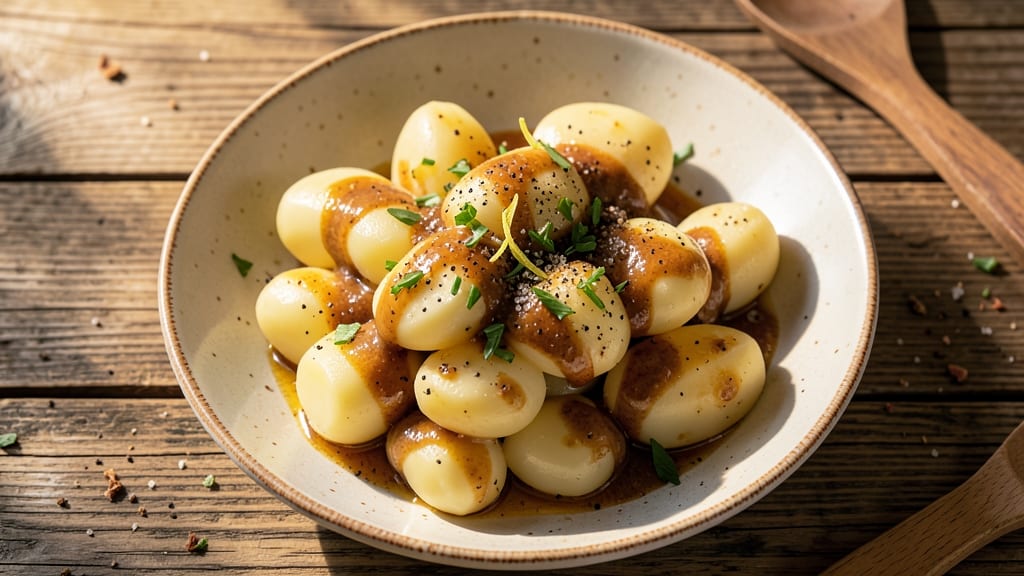
This German canned potato salad recipe transforms humble canned ingredients into a tangy, mustard-kissed side that tastes like a home-cooked classic. The secret lies in a vinegar-based dressing that tenderizes the potatoes while adding bright acidity, balanced perfectly with sharp mustard and fresh herbs.
I developed this version after discovering how canned potatoes—when properly braised—can achieve the same satisfying texture as freshly boiled ones, without the fuss of peeling or boiling.
The beauty of this recipe is its simplicity and versatility. With just a few pantry staples—canned potatoes, vinegar, mustard, and optional canned fish or pickles—you can create a dish that’s hearty enough for a main or light enough for a side.
The dressing, made with apple cider vinegar and a touch of sugar, cuts through the richness while the mustard adds depth that’s unmistakably German. It’s the kind of recipe that keeps well for days, making it perfect for meal prep or potlucks.
What makes this salad truly special is how the flavors meld over time. The vinegar and mustard work together to create a dressing that clings to each potato, while the optional canned fish (like sardines or mackerel) adds a briny, umami kick.
For a vegetarian twist, swap the fish for extra hard-boiled eggs or finely chopped pickles. The result? A salad that’s crisp, tangy, and packed with layers of flavor—no fresh potatoes required.
Ready in under 30 minutes and requiring only a mixing bowl and a fork, this recipe proves that canned ingredients can deliver restaurant-quality results. Serve it alongside grilled meats, sandwiches, or even as a standalone dish for a satisfying, no-fuss meal. Let’s get started!
Ingredients for canned german potato salad
Pantry staples and a few fresh herbs transform canned potatoes into a German-inspired salad with tangy depth.
| Ingredient | Amount | Notes |
|---|---|---|
| Canned Potatoes 🥔 | 2 cans | 15 oz each, drained |
| Apple Cider Vinegar 🍎 | ½ cup | Unfiltered preferred |
| Dijon Mustard 🌶️ | 2 tbsp | High-quality for tang |
| Granulated Sugar 🍚 | 1 tbsp | White or brown |
| Salt 🧂 | 1 ½ tsp | Diamond Crystal preferred |
| Black Pepper 🌶️ | ½ tsp | Freshly ground |
| Fresh Dill 🌿 | 2 tbsp | Chopped, stems removed |
| Fresh Parsley 🌿 | 2 tbsp | Chopped, flat-leaf |
| Canned Sardines 🐟 | 1 can | Optional, drained, optional |
| Pickles 🥒 | ¼ cup | Chopped, optional |
| Vegetable Oil 🫒 | 1 tbsp | For braising |
| Hard-Boiled Eggs 🥚 | 2 whole | Optional, chopped |
| Red Onion 🧅 | ¼ whole | Finely diced, optional |
The canned potatoes are the star—look for brands like Libby’s or Del Monte with minimal additives. German-style vinegar (like Bragg’s or Heinz) adds authentic tang, but apple cider vinegar works perfectly. Fresh herbs make all the difference: buy dill and parsley from the grocery store’s refrigerated section—they should be bright green and firm. For the optional protein, sardines in olive oil (like Wild Planet) add briny richness, while hard-boiled eggs or pickles keep it vegetarian-friendly. The red onion is optional but adds a subtle bite that balances the sweetness.
No apple cider vinegar? White vinegar or red wine vinegar works in a pinch, though the flavor will be slightly sharper. Substitute Dijon mustard for whole-grain mustard (reduce to 1.5 tbsp) for a nuttier taste. Fresh herbs wilt fast, so chop them right before mixing. Short on time? Dried dill at one-third the amount (2 tsp) or freeze fresh herbs in ice cube trays for later use. The optional pickles or eggs can be swapped for finely chopped jalapeños (for heat) or avocado slices (for creaminess).
This salad tastes even better the next day as flavors meld—store in an airtight container for up to 5 days in the fridge. For meal prep, portion into individual containers with a drizzle of dressing on top to prevent sogginess. The dressing clings best when chilled, so refrigerate for at least 1 hour before serving. Freeze the dressing separately (without potatoes) for up to 3 months if you want to make it ahead.
Why You'll Love This Recipe
- No Chopping Required: I just open a can, drain the potatoes, and stir—no peeling, no boiling, no fuss. That apple cider vinegar tang cuts through the richness of the mustard and sugar, making it taste like you slaved over it.
- Sweet-Tart Magic: The sugar isn’t cloying, the vinegar isn’t harsh—it’s that perfect balance where the mustard adds depth and the salt ties it all together. Honestly, it’s the kind of flavor that makes you want to eat it straight from the jar.
- Picnic Perfect: This holds up for hours in a cooler, stays creamy without getting soggy, and pairs with anything—hot dogs, grilled chicken, or even just a sandwich. I’ve taken it to tailgates, potlucks, and lazy Sunday brunches without a second thought.
- Budget-Friendly Leftovers: A single can of potatoes stretches into four servings, and the dressing costs pennies. The best part? It tastes just as good reheated the next day—sometimes even better, because the flavors meld overnight. My wallet and my lunchbox thank me every time.
Step-by-step instructions for German canned potato salad
Transform simple canned potatoes into a rich, tangy salad with this straightforward method.
Braise the Potatoes in Vinegar and Mustard
Heat the 1 tablespoon vegetable oil in a large skillet over medium heat. Add the 2 cans drained canned potatoes and cook for 2 minutes until they begin to sizzle gently. This step prevents the potatoes from absorbing too much liquid later.
Pour in the 0.5 cup apple cider vinegar and 2 tablespoons Dijon mustard, stirring to combine. Add the 1 tablespoon granulated sugar, 1.5 teaspoons salt, and 0.5 teaspoon black pepper. Bring the mixture to a gentle boil, then reduce heat to low and simmer for 8-10 minutes, stirring occasionally. You'll notice the potatoes absorbing the tangy liquid and developing a glossy sheen—this is when they begin to soften and develop flavor.
Real talk: Don't rush this step. The vinegar needs time to mellow and blend with the potatoes, creating that signature German depth. If the mixture looks too thin, let it simmer longer—it should coat the back of a spoon by the end.
Add Aromatics and Optional Ingredients
Once the potatoes are tender and the sauce has thickened slightly, remove the skillet from heat. Stir in the 0.25 whole finely diced red onion and let it sit for 2 minutes to soften slightly. This prevents the onion from being too sharp and adds subtle sweetness.
If using, drain and flake the 1 can sardines into the skillet, distributing them evenly. The sardines add a briny richness that balances the tang. For extra texture, chop the 2 hard-boiled eggs and fold them in now—they'll absorb the flavors while staying firm. If you prefer them whole, add them later to keep them intact.
Here's the thing—if you're skipping the sardines, add 0.25 cup chopped pickles now for a similar tangy crunch. The pickles also help cut through the richness of the potatoes and eggs, keeping the salad bright.
Fold in Herbs and Adjust Seasoning
Stir in the 2 tablespoons chopped fresh dill and 2 tablespoons chopped fresh parsley until evenly distributed. These herbs add freshness that cuts through the richness of the mustard and vinegar. Taste the mixture and adjust seasoning if needed—you might need a pinch more salt or a splash of vinegar to balance the flavors.
Let the salad cool to room temperature. This resting period allows the flavors to meld and the potatoes to absorb the dressing completely. If you're short on time, transfer it to a bowl and refrigerate for 30 minutes while you prepare sides.
Don't skip this step. The herbs need time to infuse, and the potatoes will develop a better texture as they cool. The salad will taste even more cohesive after resting.
Chill and Serve
Transfer the salad to a serving bowl and refrigerate for at least 1 hour before serving. Chilling allows the flavors to fully develop and the potatoes to firm up slightly, making them easier to serve. If you're in a hurry, at least 30 minutes in the fridge will improve the texture.
When ready to serve, give the salad a final taste and adjust seasoning if needed. The flavors will deepen as it sits, so don't be afraid to add a pinch more salt or a splash of vinegar at the end. Serve chilled or at room temperature, garnished with additional fresh dill or parsley if desired.
This salad keeps well in the refrigerator for 3-4 days, making it perfect for meal prep. The flavors actually improve over time as the vinegar and mustard continue to mellow. Enjoy it as a side dish or a light main course with crusty bread.
Pro Tips For Making Canned German Potato Salad
- Drain and Rinse Potatoes: The canned potatoes come with starch clinging to them like glue—skip rinsing and your salad turns into a gluey mess. Dump them into a colander, give them a quick cold water rinse, and shake off the excess. This keeps the texture light and the dressing from turning into a paste.
- Mix Dressing Last: I used to toss everything together at once, and the vinegar would make the potatoes soggy before I could even taste it. Instead, mix the vinegar, mustard, sugar, and salt in a separate bowl first, then fold it in gently right before serving. The potatoes stay firm, and the flavors stay bright.
- Use Warm Vinegar: Cold apple cider vinegar feels harsh and cuts through the potatoes instead of marrying with them. Warm it up slightly—just enough to take the chill off—by microwaving for 10 seconds or setting the bottle in hot water for a minute. The salad tastes richer and more balanced.
- Add a Pinch of Salt to the Dressing: The canned potatoes are already salted, but the dressing needs its own boost. Taste the vinegar-mustard mix before adding it to the potatoes—you’ll need at least ½ teaspoon of salt per ¼ cup of vinegar. This prevents the salad from tasting flat or vinegary, even if you’re using low-sodium potatoes.
Storing and reheating this dish
Refrigerator Storage
Transfer your German canned potato salad to an airtight container with a tight-sealing lid—I love using glass Pyrex bowls for this. The vinegar-based dressing helps preserve the potatoes for up to 5 days in the fridge, but I recommend eating it within 3-4 days for peak freshness.
The flavors actually deepen as the vinegar and mustard meld together over time. 🥫
For meal prep, portion the salad into individual serving containers with a small layer of dressing on top. This prevents sogginess and keeps the potatoes from absorbing too much liquid.
Store at 40°F or below—the cold temperature helps maintain the crisp texture of the potatoes and the tangy brightness of the dressing.
Freezer Storage
While this salad isn’t ideal for freezing (the texture can get mushy), you can freeze the dressing separately for up to 3 months. Mix the vinegar, mustard, sugar, salt, and pepper in a freezer-safe bag, leaving 1 inch of headspace for expansion.
Thaw overnight in the fridge before combining with fresh potatoes. 🧊
If you must freeze the entire salad, try this trick: Toss the cooled salad with an extra 1 tablespoon of vegetable oil to create a protective barrier. Freeze in a single layer on a tray first, then transfer to a ziplock bag.
Thaw in the fridge overnight—expect some texture changes, but the flavors will still be delicious.
Reheating Methods
For best results, reheat only the dressing separately and toss it with fresh potatoes. Warm the dressing in a small saucepan over low heat for 3-5 minutes, stirring constantly, until it reaches 160°F.
Then mix it with chilled potatoes just before serving. This keeps the potatoes crisp and prevents them from turning mushy. 🔥
If you reheat the entire salad, do so gently: Spread it in a single layer on a microwave-safe plate and heat on 50% power for 1-2 minutes, stirring halfway. Add a splash of water or vinegar if it looks dry—this helps restore the tangy moisture.
For stovetop reheating, warm in a skillet over low heat with 1 tablespoon of oil to prevent sticking.
Texture Preservation
The key to reheating is gentle heat and minimal moisture. Overheating or adding too much liquid will turn the potatoes into a sad, gluey mess. I’ve found that reheating in batches (small portions at a time) gives the best results—this way, you can control the temperature better. 💡
For serving, let the reheated salad sit at room temperature for 5-10 minutes before eating. This helps the flavors rebalance, especially if you’ve added fresh herbs or pickles. If the salad seems too thick after reheating, stir in 1-2 tablespoons of cold water or vinegar to restore the right consistency.
Nutrition facts
Frequently asked questions
Why does German potato salad use vinegar instead of mayo?
Traditional German potato salad relies on vinegar for its signature tangy brightness and crisp texture. Unlike mayo-based versions, vinegar creates a lighter, more refreshing dressing that won't make the potatoes soggy. The acidity also helps tenderize the potatoes while balancing the richness of optional ingredients like sardines or eggs. This method keeps the salad fresh-tasting even after days in the fridge!
Can I make this salad without canned fish?
The salad works perfectly as a vegetarian dish. Simply omit the sardines and boost the protein with 2 extra hard-boiled eggs or 0.5 cup chopped pickles. For extra heartiness, add 0.5 cup diced red bell pepper or 0.25 cup chopped celery. The vinegar-mustard dressing will still shine through beautifully.
What's the best way to reheat leftover German potato salad?
Reheat only the dressing separately over low heat until warm, then toss it with chilled potatoes just before serving. This preserves the crisp texture. For stovetop reheating, add 1 tablespoon oil to prevent sticking. Microwave on 50% power for 1 minute, stirring halfway. Never reheat to steaming—it'll turn the potatoes mushy!
How do canned potatoes compare to fresh in this recipe?
Canned potatoes work surprisingly well—they're pre-cooked and ready to eat, saving time while achieving similar texture when braised in the vinegar-mustard mixture. The key difference is canned potatoes have slightly more moisture, so you'll need to simmer them longer (8-10 minutes) to develop flavor. For extra crunch, pat them dry before adding to the skillet.
Can I make this salad ahead of time for a picnic?
This salad makes excellent picnic food! Prepare it 1 day ahead and store it in an airtight container with a layer of dressing on top to prevent sogginess. The flavors actually improve overnight. Pack it in a thermos for cold picnics or serve it at room temperature. For hot weather, add ice packs to keep it chilled. The vinegar dressing helps preserve freshness for up to 4 days in the fridge!