
Sauces & Condiments
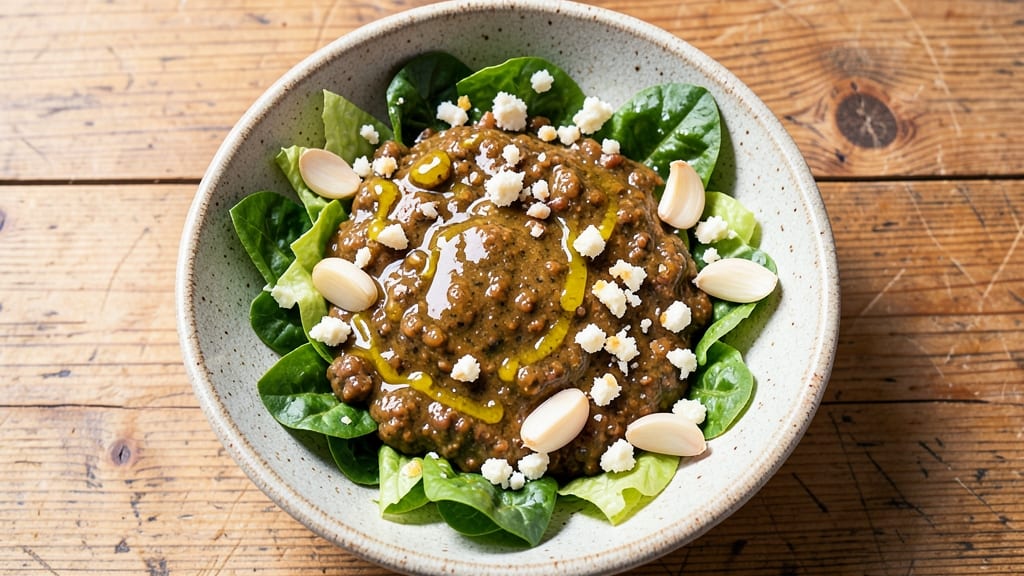
This caesar salad vinaigrette recipe delivers all the bold, savory depth of traditional Caesar without a single drop of mayo. The secret lies in emulsifying anchovies, Dijon, and Worcestershire into a silky, tangy dressing that clings perfectly to romaine.
I developed this recipe after years of testing—it’s the one that finally convinced even mayo skeptics to try anchovies without the creaminess.
What sets this apart is the balanced umami punch from high-quality anchovies and the acidity of lemon juice, which cuts through richness while keeping the dressing stable. No whisking battles or last-minute fixes—just a smooth, restaurant-quality sauce that stays vibrant for days.
The key technique? Slowly incorporating olive oil while stirring constantly to create that signature Caesar texture.
By the time you drizzle this over crisp romaine, you’ll taste layers of garlic, anchovy saltiness, and bright lemon—bold enough to stand up to grilled chicken or crispy croutons, yet light enough to let the lettuce shine.
It’s the dressing I reach for every time I crave that classic Caesar flavor without the heaviness.
Store it in the fridge for up to 5 days in an airtight container, or freeze for longer shelf life. Perfect for batch prep—make a big batch and use it all week on salads, wraps, or even as a marinade for proteins. Let’s make this dressing!
Ingredients for caesar salad vinaigrette
Nine ingredients, bold flavor—this anchovy-infused vinaigrette delivers classic Caesar depth without mayo.
| Ingredient | Amount | Notes |
|---|---|---|
| Anchovy Fillets 🐟 | 4 whole | High-quality, packed in oil |
| Dijon Mustard 🍯 | 1 tbsp | Mild or hot variety preferred |
| Worcestershire Sauce 🍶 | 1 tbsp | Lea & Perrins brand recommended |
| Fresh Lemon Juice 🍋 | 2 tbsp | Freshly squeezed, strained |
| Extra-Virgin Olive Oil 🫒 | ½ cup | High-quality, fruity variety |
| Garlic Cloves 🧄 | 2 cloves | Fresh, minced fine |
| Shallot 🧅 | 1 small | Mince finely for smooth texture |
| Granulated Garlic 🧄 | ½ tsp | For extra umami depth |
| Diamond Crystal Kosher Salt 🧂 | ½ tsp | Fine grain preferred |
| Freshly Ground Black Pepper 🌶️ | ¼ tsp | Freshly cracked for best flavor |
Anchovies make or break this dressing. Look for high-quality fillets packed in oil—they dissolve smoothly and add that signature umami. I always grab Cannedelized or La Martora brands from the international aisle at Whole Foods or Trader Joe's. The Worcestershire sauce should be Lea & Perrins—no substitutes here. Fresh lemon juice is non-negotiable; bottled just won't cut it. For the olive oil, California extra-virgin brands like Corto or Otto have that fruity punch that elevates everything. Shallots add sweetness without overpowering—substitute 1 tsp minced onion if you're in a pinch, but it won't be the same.
No anchovies? Double the Worcestershire and add 1 tsp soy sauce for umami, but you'll miss that signature depth. Subbing Dijon mustard? Whole-grain mustard works at half the amount, but it'll be less smooth. The garlic and shallot can be roasted first for a milder flavor—toss minced garlic and shallot with 1 tsp olive oil, roast at 400°F for 5 minutes. For a lighter dressing, reduce olive oil to 1/4 cup. If storing for more than 3 days, add an extra 1/2 tsp lemon juice to prevent separation. The key to stability is the slow oil incorporation—don't rush it!
This dressing stays vibrant for 5-7 days in the fridge when stored in an airtight jar with a thin layer of olive oil on top. For longer storage, freeze in 2-tbsp portions—thaw in the fridge overnight. I always make double batches because it disappears fast. Perfect for batch prep: use it on salads, as a marinade for proteins, or even drizzled over roasted vegetables. The flavor actually improves after a day as everything melds together. If it separates, just whisk vigorously before using—it'll come back together.
Why You'll Love This Recipe
- Five-Ingredient Magic: Honestly, this vinaigrette comes together with just a whisk and a bowl—no blender, no fancy gadgets. The anchovies dissolve into the mustard like a dream, and the lemon brightens everything up in seconds.
- Umami Bomb: That first taste of Worcestershire and anchovies? It’s the kind of punch that makes you pause mid-bite. The Dijon mustard adds depth, and the olive oil ties it all together with a silky finish—no weird aftertaste, just pure flavor.
- Dresses Up Everything: Between us, this isn’t just for salads. Drizzle it over grilled chicken, toss it with roasted potatoes, or even use it as a marinade. I’ve even slathered it on toast for a quick open-faced sandwich—works every time.
- Pantry Staple Power: You’re already using these ingredients for other things, right? The anchovies and Worcestershire last forever, and the lemon keeps for weeks. Make a double batch and store it in the fridge—you’ll reach for it again before the week’s out.
Step-by-step instructions for anchovy-infused Caesar vinaigrette
This bold, anchovy-packed vinaigrette delivers authentic Caesar flavor without mayo—just pure umami richness.
Infuse the Anchovies and Build the Base
In a small bowl, combine the 4 whole anchovy fillets with the 1 tablespoon Dijon mustard and 1 tablespoon Worcestershire sauce. Using a fork, mash everything together until you achieve a smooth, paste-like consistency. The anchovies will dissolve completely, releasing their intense, salty-sweet flavor into the mustard base.
This is where the magic happens—I always let this mixture sit for 5 minutes while I prep the rest. The anchovies need time to fully integrate with the mustard, creating a flavor foundation that will carry through the entire vinaigrette. If you're impatient, just give it a quick stir before proceeding, but the longer it sits, the deeper the flavor.
Add Aromatics and Acid for Balance
To the anchovy-mustard mixture, add the 2 tablespoons fresh lemon juice, 2 minced garlic cloves, and the finely minced small shallot. Stir vigorously with a whisk or fork until everything is fully incorporated and the shallot is broken down into a smooth paste. The lemon juice will brighten the rich anchovy flavor while preventing the vinaigrette from becoming too heavy.
Here's the thing—don't skip mincing the shallot finely. You want it to dissolve completely so your dressing remains silky smooth, not chunky. If you're in a hurry, you can pulse it quickly in a food processor, but I prefer doing it by hand with a sharp knife. The texture difference is noticeable.
Incorporate the Oil Gradually for Emulsion
With the mixture still in the bowl, very slowly drizzle in the ½ cup extra-virgin olive oil while whisking continuously. This gradual approach is crucial—adding oil too quickly will create a separated dressing. You want to emulsify the oil with the other ingredients so it stays suspended rather than pooling on top.
Start by whisking for about 30 seconds after adding the first few tablespoons of oil. You'll notice the mixture thicken slightly as the oil begins to bind with the emulsifiers in the mustard and anchovies. If it starts to look too thick, add 1 teaspoon of water to help it come together smoothly. The final consistency should be like heavy cream—thick enough to coat the back of a spoon but still pourable.
Season and Adjust for Perfection
Add the ½ teaspoon granulated garlic, ½ teaspoon Diamond Crystal kosher salt, and ¼ teaspoon freshly ground black pepper to the dressing. Give it one final whisk to ensure everything is evenly distributed. At this point, I like to taste and make any necessary adjustments—perhaps a touch more lemon for brightness or a pinch more salt to enhance the umami.
The dressing should have a perfect balance: salty from the anchovies and salt, tangy from the lemon, with a deep garlic-shallot backbone. If it tastes too strong, add a splash more olive oil to mellow it out. If it needs more depth, a tiny pinch of additional anchovy paste (if you have any left) or a dash of Worcestershire sauce will help. Remember, you can always adjust, but you can't take flavor out once it's in.
Rest and Use Immediately
Let the vinaigrette sit for 10 minutes before using. This resting period allows all the flavors to meld together and the emulsion to stabilize. During this time, you can prepare your romaine lettuce and any other salad components you plan to use.
When you're ready to serve, give the dressing one final stir before tossing it with your salad. The anchovy flavor might seem intense at first, but it mellows beautifully when combined with crisp romaine, Parmesan, and croutons. This vinaigrette keeps well in the refrigerator for up to 5 days, though I find it's best used within 2-3 days for maximum freshness and flavor impact.
Pro Tips For Making Caesar Salad Vinaigrette
- Mash Those Anchovies: I learned this the hard way—skipping this step makes the dressing taste like you just dropped in whole fish. Use the flat side of your knife to gently press the anchovies into the mustard until they dissolve completely. No chunks, no excuses.
- Whisk Like You Mean It: Start slow to emulsify the mustard and anchovies, then crank the whisk when you add the olive oil. If it breaks? Start over. This isn’t the time to be lazy—your dressing’s fate depends on it.
- Lemon Juice First: Add the lemon juice before the Worcestershire sauce. The acid cuts through the anchovies’ saltiness upfront, so the Worcestershire doesn’t overpower. Trust me, your taste buds will notice.
- Oil in Thin Streams: Pour the olive oil in a slow, steady stream while whisking like your life depends on it. Drizzle, don’t dump—this is how you get a silky dressing, not a sad, oily mess. (Yes, even if you’re impatient like me.)
Essential equipment for this dish
Whisk Essentials
For this vinaigrette, a balloon whisk is your best friend—it creates the perfect emulsion by incorporating air while blending oil and liquid. I swear by the OXO Good Grips Balloon Whisk ($12) for its sturdy build and comfortable handle.
If you're on a budget, a stainless steel fork works in a pinch, but you'll need to whisk vigorously for longer. Avoid plastic whisks—they can't handle the anchovy's intensity and may melt under the olive oil's heat. 🔥
Mortar and Pestle
A marble mortar and pestle (like the Kuhn Rikon brand) is ideal for crushing anchovies and mincing shallots to a silky paste. The rough surface helps break down ingredients more efficiently than a knife.
If you don't own one, a small food processor (like the MiniPrep Plus) can pulse anchovies and shallots in 10-15 seconds—just don't overprocess or you'll end up with a chunky texture. For garlic, a garlic press (like the Norpro) ensures ultra-fine mincing without bits.
Measuring Tools
Precision matters here—use a stainless steel measuring spoons set (like OXO's) for exact measurements of Dijon, Worcestershire, and lemon juice. For the olive oil, a liquid measuring cup with pour spout (like Pyrex) prevents spills while drizzling.
A microplane (for garlic) and fine-mesh strainer (for lemon juice) are game-changers. I keep my Diamond Crystal kosher salt in a shaker bottle to avoid clumping, which ensures even distribution in the dressing.
Storage Containers
Transfer finished dressing to a glass jar with airtight lid (like Le Parfait) for fridge storage—glass preserves flavor better than plastic. For freezing, use silicone ice cube trays (like Stasher) to portion 2-tbsp servings. These trays prevent freezer burn and make thawing effortless.
Label containers with the date—this dressing peaks within 3 days but stays usable for 5 days in the fridge. A small funnel (like OXO's) helps transfer dressing without spills when repackaging.
Optional Upgrades
For a smoother texture, invest in a handheld immersion blender (like Magic Bullet) to emulsify the oil if whisking feels tedious.
A garlic infuser (like Garlic Infuser by Chef's Resource) lets you steep garlic in olive oil for 10 minutes before using it in the dressing—adding another layer of flavor. If you make this often, a digital scale (like Escali) ensures perfect anchovy-to-mustard ratios by weight, not volume. 💡
Nutrition facts
Frequently asked questions
Can I make this vinaigrette without anchovies?
You can substitute anchovies with 1 tablespoon soy sauce plus 1 teaspoon fish sauce for umami depth, but you'll lose that signature salty-sweet complexity. For a vegetarian version, try 1 tablespoon nutritional yeast plus 1/2 teaspoon smoked paprika, though the flavor will differ. The mustard and Worcestershire will still provide base flavor, but anchovies are key for authentic Caesar taste.
Why did my dressing separate? How do I fix it?
Separation happens when oil isn't emulsified properly. Whisk vigorously for 1-2 minutes to re-combine it—add 1 teaspoon warm water if needed to help bind ingredients. For prevention, always add oil very slowly while whisking constantly. If it separates again, store it in a jar and shake before using.
How much dressing should I make for a Caesar salad?
This recipe yields about 1 cup—perfect for 2 large Caesar salads (about 4 cups romaine each). For a crowd, double the recipe. The dressing coats well, so 2 tablespoons per salad is ideal. Store extras in the fridge for up to 5 days—it actually tastes better after flavors meld!
Can I use this dressing on other dishes?
It's fantastic on grilled chicken, steak, or fish as a marinade, drizzled over pasta or roasted vegetables, or even as a dip for crudités. The bold flavors pair well with anything hearty. For lighter dishes, reduce the anchovy amount by half to mellow the intensity.
What's the difference between this and traditional Caesar dressing?
Traditional Caesar uses raw egg yolks and mayo for creaminess, while this version replaces them with anchovies and mustard for a lighter, tangier profile. It's also vegan-friendly (if you skip anchovies) and won't curdle in warm weather. The emulsification technique ensures it stays stable without dairy—perfect for warm climates or make-ahead prep!