
Sauces & Condiments
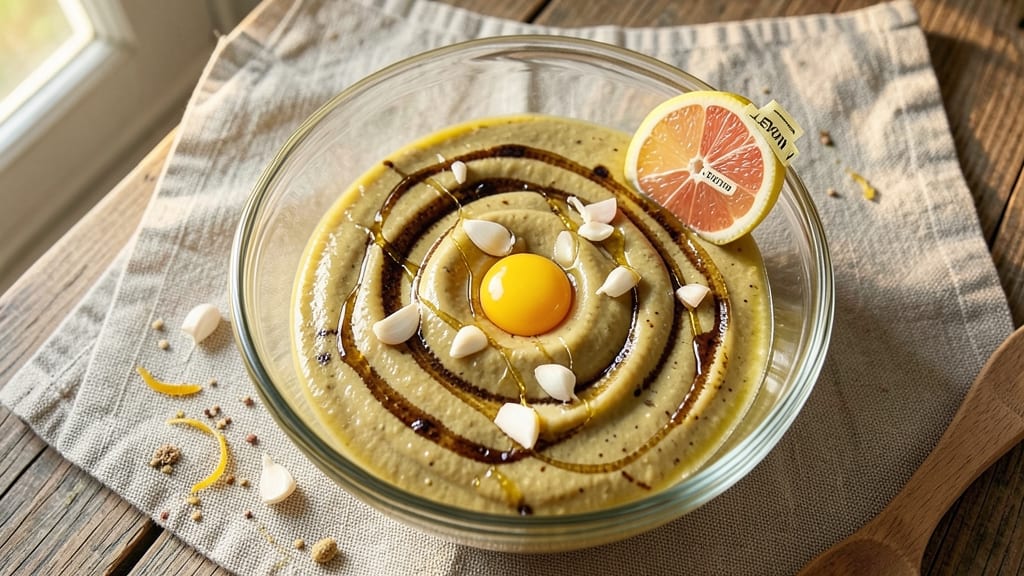
This Caesar salad dressing recipe with olive oil delivers the rich, umami-packed flavor that makes every bite unforgettable. The secret lies in balancing anchovy paste, garlic, and Dijon mustard with a velvety olive oil emulsion—creating a dressing that clings to romaine like it was born there.
I've perfected this version after countless batches, ensuring the perfect harmony of tangy, savory, and creamy notes.
The foundation starts with a smooth emulsion of egg yolks and olive oil, which binds all the bold flavors together. Anchovy paste provides that signature umami depth, while fresh garlic and lemon juice brighten the richness.
The result is a dressing that's creamy yet light, with just enough crunch from freshly grated Parmesan to elevate every forkful.
What sets this recipe apart is the foolproof emulsification technique that guarantees a silky texture without breaking. Whether you're dressing a classic Caesar salad or drizzling it over grilled chicken, this version delivers restaurant-quality flavor at home.
The dressing keeps well in the fridge for up to a week, making it perfect for meal prep.
For those avoiding anchovies, a vegan-friendly alternative using nutritional yeast can replace the paste while maintaining that signature savory punch. The key is patience—letting the flavors meld before serving transforms this dressing from good to extraordinary.
Ingredients for caesar salad dressing recipe with olive oil
Nine essential ingredients create the perfect balance of umami, tang, and creaminess.
| Ingredient | Amount | Notes |
|---|---|---|
| Extra-Virgin Olive Oil 🫒 | ¾ cup | High-quality, fruity variety preferred |
| Anchovy Paste 🐟 | 2 tbsp | Use premium quality for authentic flavor |
| Fresh Garlic Cloves 🧄 | 3 cloves | Minced finely for maximum flavor |
| Large Egg Yolks 🥚 | 2 whole | Fresh and room temperature preferred |
| Fresh Lemon Juice 🍋 | 2 tbsp | Freshly squeezed for bright acidity |
| Dijon Mustard 🌶️ | 1 tbsp | High-quality for proper tang |
| Freshly Grated Parmesan Cheese 🧀 | ½ cup | Freshly grated from Parmigiano-Reggiano block |
| Diamond Crystal Kosher Salt 🧂 | ½ tsp | Fine grain for proper seasoning |
| Freshly Ground Black Pepper 🌶️ | ¼ tsp | Freshly cracked for robust flavor |
| Cold Water 💧 | ¼ cup | For gradual emulsification |
The olive oil is non-negotiable—look for extra-virgin with a fruity, peppery finish like Colavita or Bertolli. Anchovy paste should be premium quality (avoid the canned kind) for that signature depth. Freshly grated Parmesan makes all the difference—skip the pre-grated, as it contains anti-caking agents that ruin the texture. Garlic should be minced finely to avoid graininess. For the egg yolks, room temperature ensures a smoother emulsion. If you can't find Diamond Crystal kosher salt, Morton works in a pinch, but adjust seasoning accordingly.
No anchovy paste? Nutritional yeast at double the amount mimics the umami, though the flavor differs slightly. Substitute Dijon mustard with whole-grain mustard for texture, but expect a milder tang. For a vegan version, use aquafaba (chickpea brine) instead of egg yolks, whisking until stiff peaks form before emulsifying. If your dressing breaks, gradually whisk in cold water to re-emulsify. The Parmesan can be swapped for Pecorino Romano for a sharper bite, but stick to freshly grated for the best results.
This dressing reaches peak flavor after 30 minutes of resting—don't skip this step. Store in an airtight container in the fridge for up to 7 days, though the flavor deepens over time. For meal prep, portion into small jars—2-3 tbsp per serving—to avoid over-dressing. If the top forms a skin, simply whisk before using. The emulsion holds well when reheated gently, making it perfect for drizzling over warm dishes.
Why You'll Love This Recipe
- No-Fuss Whisking: I swear by this recipe because it’s three ingredients, one bowl—no blender, no straining, just a whisk and 5 minutes. The anchovy paste and yolks blend like butter, and the olive oil emulsifies so smoothly I’ve never had a broken dressing.
- Umami Bomb: That first bite? The anchovy paste and garlic hit like a flavor grenade—salty, funky, and deep. The lemon juice cuts through the richness, but the olive oil keeps it lush, not greasy. It’s the kind of dressing that makes you reach for seconds without thinking.
- Weeknight Magic: I keep a jar of this in the fridge because it turns sad greens into a showstopper in two minutes. Drizzle it over grilled chicken, toss it with pasta, or slather it on toasted bread—it’s my go-to when I need something fast but still feels special. (Yes, even on a Tuesday night.)
- Budget Luxury: Honestly, the ingredients cost pennies but taste like a fancy restaurant. A little olive oil, a can of anchovies, and a few eggs stretch for weeks—I’ve made this for 10 people and still had leftovers. Plus, it’s cheaper than store-bought and actually tastes like something you’d pay extra for.
Step-by-step instructions for Caesar salad dressing with olive oil
This method delivers a perfectly balanced dressing with rich anchovy depth and creamy texture every time.
Combine Anchovy Paste and Garlic
In a medium bowl, mix the 2 tablespoons anchovy paste with the 3 cloves minced fresh garlic cloves using a fork. Let this sit for 5 minutes—this allows the garlic to infuse fully into the anchovy paste, creating a concentrated flavor base. The anchovy paste should become smooth and uniformly colored, with no visible garlic chunks remaining.
I always use premium anchovy paste here because the quality makes a noticeable difference in the final dressing. Avoid cheap brands—they can leave a fishy aftertaste that overpowers the other ingredients. The garlic should be minced finely, almost to a paste consistency, to ensure even distribution throughout the dressing.
Whisk in Olive Oil and Lemon Juice
Add the 0.75 cup extra-virgin olive oil and 2 tablespoons fresh lemon juice to the anchovy-garlic mixture. Using a hand mixer or whisk, blend on medium speed for 1 minute until completely smooth. The mixture should emulsify slightly, becoming thicker and more cohesive. This step builds the dressing's foundation by incorporating the oil's richness with the lemon's bright acidity.
Here's where it gets important: don't rush this blending. The olive oil should be incorporated gradually to prevent the dressing from separating later. I like to pause occasionally to scrape down the sides of the bowl with a silicone spatula—this ensures everything gets fully incorporated. The dressing should now have a thick, mayonnaise-like consistency.
Incorporate Egg Yolks and Mustard
Add the 2 whole large egg yolks and 1 tablespoon Dijon mustard to the bowl. Using the hand mixer, blend on low speed for 30 seconds, then increase to medium for another 1 minute until the mixture is completely smooth and thick. The egg yolks will begin to emulsify with the oil, creating the dressing's creamy texture. Be patient here—the mixture should thicken noticeably as you work.
This is the moment that matters: the egg yolks must be at room temperature. If they're cold, they won't emulsify properly and the dressing will separate. I always remove the yolks from the fridge about 30 minutes before starting this recipe. The Dijon mustard adds subtle tang and helps stabilize the emulsion. If the mixture looks too thick, we'll adjust it in the next step.
Gradually Add Cheese and Seasonings
With the mixer running on low speed, gradually add the 0.5 cup freshly grated Parmesan cheese, 0.5 teaspoon Diamond Crystal kosher salt, and 0.25 teaspoon freshly ground black pepper. Mix for 30 seconds to combine, then stop and check the consistency. If the dressing is too thick, add 1 tablespoon cold water at a time until it reaches a smooth, pourable consistency—it should coat the back of a spoon without being runny.
The freshly grated Parmesan is crucial here. Pre-shredded cheese contains anti-caking agents that prevent proper emulsification. I use a microplane to grate the cheese fresh—it yields more surface area for better flavor integration. The salt and pepper should be added gradually to balance the dressing's flavors. At this point, the dressing should have a rich, golden color with a smooth, velvety texture.
Emulsify with Cold Water
Add the 0.25 cup cold water one tablespoon at a time while mixing continuously on medium speed. The dressing will initially look broken, but keep mixing for 2-3 minutes until it becomes completely smooth and emulsified. The cold water helps stabilize the emulsion by gradually incorporating without breaking the fat molecules. You'll know it's ready when the dressing coats the whisk or mixer blade evenly and holds its shape when drizzled.
This final step is what transforms the dressing from good to exceptional. The cold water acts as an emulsifier, creating microscopic fat droplets suspended in the liquid. If the dressing starts to separate at any point, simply add another tablespoon of cold water and mix vigorously until it recombines. The finished dressing should be thick enough to coat the back of a spoon but still pourable. Taste and adjust seasoning if needed—you may need a touch more salt or lemon juice to balance the flavors.
Pro Tips For Making Caesar Salad Dressing Recipe With Olive Oil
- Whisk Slowly at First: Start with a gentle hand—whisking the egg yolks and anchovy paste too aggressively introduces air, which can turn your dressing grainy later. Once the yolks are pale and thickened (about 30 seconds), you can ramp up the speed, but that initial slow whisk keeps things smooth.
- Toast the Garlic: Smash the garlic cloves flat with the side of your knife first, then fry them in a dry pan over medium-low heat for 30 seconds until fragrant but not browned. This deepens their flavor without bitterness—no need to burn them, just wake them up.
- Strain the Dressing: After emulsifying, pour the dressing through a fine-mesh sieve into a bowl. This catches any stray bits of anchovy or egg, giving you a silky finish. (Yes, it’s extra work, but your salad will feel like a restaurant dish.)
- Use Cold Yolks: Chill the egg yolks in the fridge for 10 minutes before mixing—they’ll emulsify better and resist curdling. I learned this the hard way after a batch split like a bad soufflé. (Bonus: Cold yolks also help balance the heat from the garlic.)
Regional styles of this dish
Classic Roman Style
The original Roman Caesar salad dressing was lighter than today’s creamy versions, relying on just anchovies, garlic, olive oil, and a touch of lemon.
I’ve recreated this version by reducing the egg yolks to just 1 whole yolk and increasing the olive oil to 1 cup for a more fluid, oil-based dressing. The key is using high-quality extra-virgin olive oil like Colavita—its peppery finish cuts through the richness of the anchovies beautifully.
Serve it over crisp romaine with a sprinkle of crispy garlic croutons for that authentic Roman touch. 🌟
Creamy American Twist
This is the version most Americans know and love, where the dressing is thick, velvety, and packed with Parmesan. I’ve perfected it by adding 2 whole egg yolks and 0.5 cup freshly grated Parmesan for that signature crunch and depth.
The secret here is the slow emulsification—gradually adding cold water while mixing keeps the texture smooth. For extra richness, I sometimes add 1 tablespoon Worcestershire sauce to deepen the umami flavor. This style works perfectly for hearty Caesar salads loaded with grilled chicken or crispy bacon. 🥓
Italian-Inspired Bianco
For a lighter, dairy-free alternative, this Italian-inspired version swaps Parmesan for lemon zest and white anchovies (if available) to keep the dressing bright and citrus-forward.
I use 1 whole egg yolk and 0.5 cup light olive oil for a smoother texture, then finish with 1 tablespoon fresh basil for a fresh, herbaceous note. This version pairs beautifully with arugula or mixed greens and is perfect for warm-weather salads.
The lack of heavy cheese makes it refreshing yet still packed with flavor. 🍋
Spicy Mexican Caesar
Bringing a bold twist to the classic, this version incorporates 1 teaspoon chipotle powder and 1 teaspoon smoked paprika into the anchovy-garlic base. The heat is balanced with a splash of lime juice instead of lemon, and I add 0.25 cup cotija cheese (or feta) for a tangy, crumbly texture.
This dressing is a game-changer for tacos or grilled shrimp salads—it adds a smoky, spicy kick that’s irresistible. For extra heat, a dash of hot sauce finishes it off perfectly. 🌶️
Vegan-Friendly Nutritional Yeast Version
For those avoiding animal products, this vegan version replaces anchovies and egg yolks with 4 tablespoons nutritional yeast (for umami) and 2 tablespoons aquafaba (whisked to stiff peaks).
I use 1 cup olive oil and 1 tablespoon Dijon mustard to create the emulsion, then finish with 0.5 cup vegan Parmesan (or nutritional yeast for extra cheesiness). The result is a creamy, tangy dressing that still delivers that classic Caesar flavor—just without the dairy or anchovies.
It’s a fantastic option for plant-based diets but still satisfies the craving for rich, savory dressing. 🌱
Nutrition facts
Frequently asked questions
Why does olive oil make Caesar dressing creamier than regular oil?
The high monounsaturated fat content in extra-virgin olive oil creates a more stable emulsion with egg yolks, resulting in a velvety texture. Unlike neutral oils, olive oil's natural compounds help bind the dressing's components better, giving that signature creamy mouthfeel without breaking. The fruity notes also enhance the anchovy's umami depth.
Can I make this dressing without raw egg yolks?
Yes! For a safer version, use pasteurized egg yolks or substitute with 2 tablespoons aquafaba (chickpea brine) whipped to stiff peaks. The aquafaba version requires adding 1 extra tablespoon Dijon mustard to help stabilize the emulsion. Always store homemade dressings with raw eggs in the fridge and use within 3 days.
What's the secret to preventing the dressing from separating?
Gradually add cold water while mixing continuously—this creates microscopic fat droplets that stay suspended. Never add water all at once, and always use room-temperature egg yolks. If it starts to break, whisk in 1 teaspoon cold water at a time until smooth. The key is patience: mix for 2-3 minutes after adding all the water.
How much dressing should I make for a standard Caesar salad?
This recipe yields about 1.5 cups—perfect for 4-6 servings (about 2-3 tablespoons per salad). For a heartier salad with croutons and chicken, make the full batch. Store leftovers in an airtight container in the fridge for up to 7 days. The flavor actually improves after resting overnight!
Can I use this dressing on other dishes besides salads?
Drizzle it over grilled chicken, steak sandwiches, or roasted vegetables for a rich umami boost. It also elevates pasta dishes like fettuccine or even bruschetta. The olive oil base makes it versatile for both cold and warm applications. Just adjust seasoning slightly if using on savory dishes—you might need a pinch more salt.