
Salads
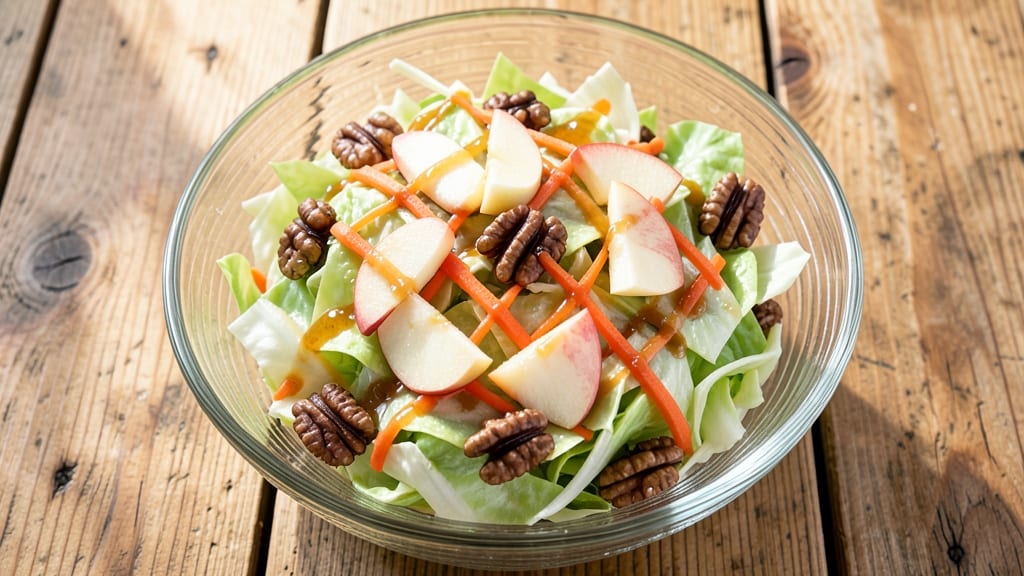
This cabbage, carrot, and apple salad recipe delivers crunchy sweetness that balances fresh vegetables with a tangy apple-cider vinaigrette—perfect for vegan meals or light lunches.
The secret lies in the texture contrast: crisp cabbage, shredded carrots, and tender apples create satisfying bites, while the dressing ties everything together with warm, spiced notes. I developed this recipe after years of testing salads that stayed fresh for days while maintaining vibrant flavors.
The beauty of this salad is its simplicity—just a handful of ingredients that come together in 15 minutes with no cooking required. Thinly sliced cabbage and carrots keep their crispness, while sweet apples add natural sweetness that pairs beautifully with the apple-cider vinaigrette.
The dressing, made with apple cider vinegar, maple syrup, and Dijon mustard, adds depth without overpowering the fresh vegetables.
What makes this salad truly special is how it transforms simple ingredients into a restaurant-quality dish. The combination of textures—crunchy, soft, and slightly tangy—creates a satisfying bite, while the dressing enhances the natural sweetness of the vegetables.
It’s hearty enough to serve as a main dish but light enough for a side, making it incredibly versatile for any meal.
Whether you're meal prepping for the week or preparing a quick lunch, this salad holds up beautifully. The flavors deepen over time, making it even more delicious when served the next day. Garnish with toasted nuts or fresh herbs for added texture and freshness. Let’s get started!
Ingredients for cabbage carrot and apple salad
Fresh vegetables meet tangy dressing in this vibrant vegan salad—simple yet restaurant-worthy.
| Ingredient | Amount | Notes |
|---|---|---|
| Green Cabbage 🥬 | 4 cups | Shredded, outer leaves removed |
| Carrots 🥕 | 2 medium | Shredded or julienned |
| Apples 🍎 | 2 medium | Honeycrisp or Fuji, thinly sliced |
| Apple Cider Vinegar 🍏 | ¼ cup | Raw, unfiltered preferred |
| Maple Syrup 🍯 | ¼ cup | Grade B for deeper flavor |
| Dijon Mustard 🍯 | 1 tbsp | High-quality, no sugar added |
| Extra-Virgin Olive Oil 🫒 | ¼ cup | Light, fruity variety |
| Ground Cinnamon 🌿 | ½ tsp | Freshly ground preferred |
| Sea Salt 🧂 | ½ tsp | Fine grain preferred |
| Fresh Thyme Leaves 🌿 | ¼ cup | Chopped, stems removed |
| Toasted Walnuts 🥜 | ½ cup | Chopped, for garnish |
The cabbage and carrots are the backbone of this salad—green cabbage provides crisp texture while carrots add natural sweetness. For the best quality, look for firm, heavy cabbage heads with no yellowing leaves. Pre-shredded bags work in a pinch, but whole cabbage lasts longer and stays crunchier. Organic carrots from the produce section at Whole Foods or Trader Joe's have the sweetest flavor, but conventional carrots work fine. Thinly slice the apples just before serving to prevent browning—Honeycrisp or Fuji varieties hold their shape best after cutting. If you can't find fresh thyme, dried thyme at one-third the amount works, though fresh has superior aroma.
No apple cider vinegar? White wine vinegar or lemon juice creates a similar tang, though the flavor profile shifts slightly. Substituting maple syrup with agave nectar or date syrup keeps it vegan, though maple's caramel notes are ideal. For the dressing, Dijon mustard adds depth—if you only have yellow mustard, reduce to 1 tsp. The olive oil should be light and fruity, not peppery. California Early Harvest or Colavita brands are excellent choices. Walnuts can be swapped for pecans or almonds, though walnuts provide the best crunch. Toasting the nuts enhances their flavor—spread them on a baking sheet at 350°F for 8-10 minutes, then chop while still warm.
This salad keeps beautifully for 4-5 days in an airtight container in the fridge. The dressing separates slightly, so give it a good shake before serving. For meal prep, store the vegetables and dressing separately until ready to combine—this preserves the crispness. The apples will soften over time, so add them last if making ahead. Garnish with fresh thyme or extra walnuts just before serving to maintain presentation. If the cabbage wilts, toss it with a splash of cold water and drain well before serving—it'll crisp right back up.
Why You'll Love This Recipe
- No-Sharp-Knife Night: I swear by this one when I’m too tired to julienne—just thinly slice the cabbage with a big knife and a little elbow grease. The shredded carrots and diced apples go in even faster, and suddenly you’ve got a salad that looks way fancier than it took to make.
- Sweet-Tart Magic: That apple cider vinegar and maple syrup combo? It’s the secret weapon. The vinegar cuts through the cabbage’s bite while the maple syrup caramelizes just enough to make every bite taste like autumn in a bowl. Honestly, I’ll take this over dressing any day.
- Lunchbox Legend: Between us, this salad holds up perfectly for days—no soggy lettuce here. Pack it in jars or containers for work lunches, potlucks, or even a picnic. My kids actually eat it cold or at room temp, which means less fuss for me.
- Pantry Staple Power: You’re already using things you have—no weird ingredients, no last-minute grocery runs. A little vinegar, a drizzle of maple, and whatever fruit or veggies are hanging around. It’s the kind of recipe that makes me feel smart for not overcomplicating things.
Step-by-step instructions for cabbage, carrot, and apple salad
A perfect balance of textures and flavors comes together with precise prep and assembly.
Prepare the Vegetables for Maximum Crunch
Start with the green cabbage by removing any outer leaves and cutting the head in half from stem to core. Peel away the tough outer leaves until you reach the crisp white inner leaves. Using a sharp chef's knife, slice the cabbage into thin, even strips about ¼-inch wide. I like to work in batches—place the sliced cabbage in a large mixing bowl as you go to prevent wilting.
Next, peel the carrots and slice them into thin julienne strips using a mandoline or sharp knife. For the apples, choose firm varieties like Honeycrisp or Fuji and slice them into ⅛-inch thick pieces. Toss the sliced apples immediately in a bowl of ice water to prevent browning while you finish prepping the other ingredients. This step preserves their crisp texture and vibrant color in the final salad.
Combine Vegetables and Season Lightly
In a large mixing bowl, combine the 4 cups shredded green cabbage, 2 medium shredded carrots, and the sliced apples (drained from the ice water). Gently toss everything together with your hands or a large spoon, being careful not to bruise the delicate cabbage leaves. The goal here is even distribution without compacting the vegetables.
Sprinkle the mixture with 0.5 teaspoon ground cinnamon and 0.5 teaspoon sea salt, massaging it lightly into the vegetables. This initial seasoning enhances their natural sweetness and prepares them to absorb the dressing. Let the vegetables sit for 5 minutes while you prepare the vinaigrette—this allows the spices to meld slightly with the raw flavors.
Whisk Together the Apple-Cider Vinaigrette
In a small bowl, whisk together the 0.25 cup apple cider vinegar and 0.25 cup maple syrup until fully combined. Add the 1 tablespoon Dijon mustard and continue whisking until smooth. This combination creates the perfect balance of tangy, sweet, and slightly peppery notes that will elevate the salad.
Slowly drizzle in the 0.25 cup extra-virgin olive oil while whisking continuously. The dressing should emulsify into a smooth, creamy texture. Taste and adjust seasoning if needed—you might want to add a pinch more salt or a splash of vinegar to suit your preference. The dressing should coat the back of a spoon without being overly thick.
Toss and Garnish for Perfect Presentation
Pour the vinaigrette over the vegetable mixture and toss gently but thoroughly to ensure even coating. The salad should glisten slightly from the dressing, indicating proper distribution. Let it sit for 10 minutes at room temperature to allow the flavors to meld together. This resting period is crucial for developing the salad's depth of flavor.
Just before serving, stir in the 0.25 cup chopped fresh thyme leaves and the 0.5 cup toasted walnuts. The thyme adds an aromatic depth, while the walnuts provide a satisfying crunch that contrasts beautifully with the tender cabbage and crisp apples. Toss one final time to distribute the garnishes evenly throughout the salad.
Pro Tips For Making Cabbage Carrot And Apple Salad
- SHRED CABBAGE FIRST: I learned this the hard way—cabbage releases water when chopped, and if you toss it in raw, your salad turns soggy by lunchtime. Shred the cabbage at least 15 minutes before mixing so excess moisture evaporates. (Yes, even if you’re impatient like me.)
- PEEL CARROTS THIN: Thick carrot peels make this salad look amateur. Use a sharp knife to shave off just the outer layer—leave the inner orange intact for color and crunch. Skip the peeler; it’s slower and leaves uneven strips.
- ACIDIFY APPLES IMMEDIATELY: Apples brown fast, and no one wants a sad, gray salad. Toss sliced apples with a teaspoon of apple cider vinegar right after cutting, then let sit 5 minutes before adding other ingredients. It keeps them crisp and bright.
- BALANCE VINEGAR TO SYRUP: Start with equal parts vinegar and syrup (1:1 ratio), then taste. If it’s too sharp, add a splash more syrup; if it’s cloying, a dash of vinegar fixes it. Adjust in small increments—this salad’s magic is in the contrast, not the sweetness.
Common mistakes when making great cabbage carrot and apple salad
Over-Shredding Cabbage
Thinly sliced cabbage loses its crisp texture quickly, so avoid shredding it too finely. Aim for ¼-inch wide strips using a sharp knife or mandoline—anything thinner will turn soggy when tossed with dressing.
I’ve found that working in batches and keeping the cabbage in a bowl prevents wilting while you prep other ingredients. 🥬
Skipping the Ice Water Bath
Apples oxidize rapidly after cutting, turning brown and losing their crispness. Immediately toss sliced apples in ice water for 5-10 minutes to preserve their color and texture. Drain well before adding to the salad—this simple step makes a huge difference in presentation and crunch. 🍎
Using Dull Knives
A dull knife crushes vegetables, making them mushy and unappetizing. Invest in a sharp chef’s knife or mandoline for clean, even slices. I keep my knives honed with a Wüsthof whetstone—it’s worth the small effort for better results. Always slice cabbage and carrots against the grain for maximum texture.
Over-Tossing the Salad
Aggressive tossing bruises the cabbage leaves, causing them to wilt and release bitter juices. Gently fold the vegetables with your hands or a large spoon, just until the dressing is evenly distributed. The salad should hold its shape when served—over-mixing is a common rookie mistake. 💫
Ignoring the Resting Time
Letting the salad sit for 10 minutes after tossing allows flavors to meld and dressing to absorb evenly. Skipping this step means missing out on the depth of flavor that comes from letting the ingredients "breathe." I promise, patience here pays off—it’s the secret to restaurant-quality salads at home.
Substituting Ingredients Without Adjusting
Swapping ingredients like vinegar or sweetener without adjusting ratios can throw off the balance. For example, using lemon juice instead of apple cider vinegar changes the flavor profile entirely.
If substituting, taste the dressing before tossing and adjust the acidity or sweetness accordingly. Always keep the 1:1 ratio of vinegar to syrup for harmony.
Nutrition facts
Frequently asked questions
Can I use red cabbage instead of green?
Yes, red cabbage works beautifully and adds a stunning purple hue to the salad! The flavor is slightly sweeter and more robust than green cabbage, so you might want to reduce the maple syrup in the dressing by 1 tablespoon to balance the sweetness. Shred it the same way—thin strips preserve both color and texture perfectly.
How long can I store this salad before serving?
This salad keeps well for 4-5 days in an airtight container in the fridge. Store the vegetables and dressing separately until ready to combine to maintain crispness. The apples will soften over time, so add them fresh when serving. The flavors actually deepen after a day, making it even more delicious the next day!
What if I don't have apple cider vinegar?
No problem! Use white wine vinegar or lemon juice as substitutes—they'll create a similar tang. For a more apple-like flavor, add ½ teaspoon ground cinnamon to the dressing. If using lemon juice, reduce the maple syrup slightly since it's more acidic. Always taste and adjust before tossing with the vegetables.
Can I make this salad ahead of time for meal prep?
Absolutely—it's perfect for meal prep! Prepare all components separately: chop and store the vegetables in one container, and make the dressing in another. When ready to eat, combine everything and toss with fresh thyme and walnuts. This method keeps the cabbage crisp for up to 3 days, while the dressing stays fresh for 5 days.
Why does my cabbage get soggy?
Soggy cabbage usually means over-shredding or over-tossing. Aim for ¼-inch strips and avoid aggressive mixing—gentle tossing preserves texture. Also, never store the salad dressed for more than a few hours; always combine ingredients right before serving to maintain that perfect crunch.