
Sauces & Condiments
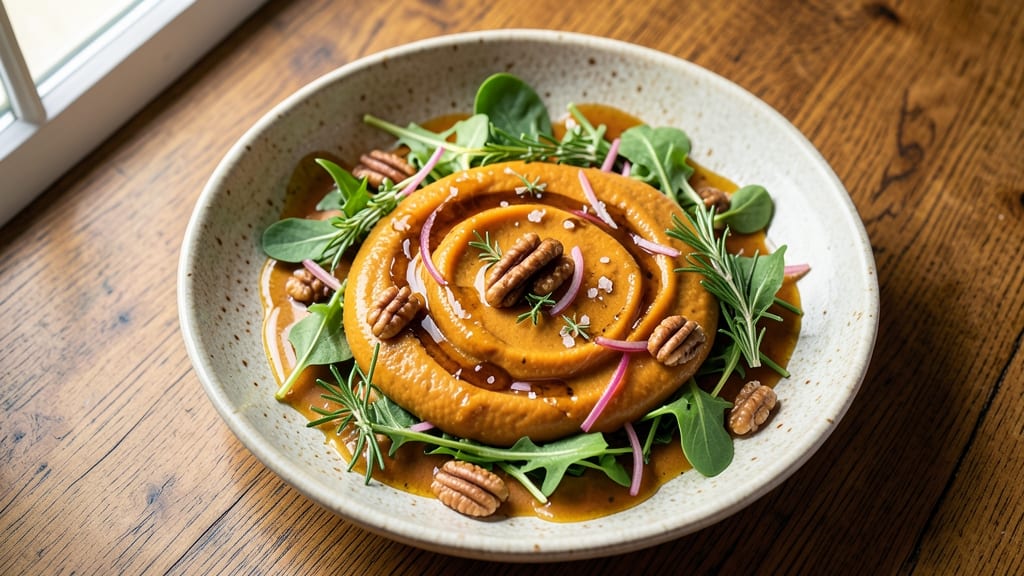
This butternut squash salad dressing recipe transforms humble ingredients into a velvety, caramel-rich sauce that elevates every salad from ordinary to extraordinary. The secret lies in roasting the squash first—this deepens its natural sweetness and adds a subtle smokiness that pairs perfectly with bright herbs and tangy vinegar.
I developed this after craving a dressing with more depth than standard vinaigrettes, and it quickly became my go-to for fall and winter salads.
The dressing starts with a purée of roasted butternut squash, which forms the creamy base that replaces traditional mayo or yogurt.
Combined with apple cider vinegar, olive oil, and a blend of fresh herbs like thyme and rosemary, it creates a balance of sweet, savory, and herbal notes that work equally well on kale salads, grain bowls, or even roasted vegetables.
The texture is rich yet light, with just enough body to coat greens without weighing them down.
What makes this dressing truly versatile is its ability to adapt to dietary preferences—skip the honey for a vegan version, or add a splash of lemon juice for extra brightness. It keeps beautifully in the fridge for up to a week, making it perfect for meal prep.
Once you taste the way roasted squash transforms a simple dressing into something sophisticated, you’ll never go back to store-bought again.
The best part? This dressing takes just 15 minutes to make and requires only 6 ingredients, yet it delivers restaurant-quality flavor.
Whether you drizzle it over a hearty winter salad or use it as a dip for crusty bread, its warm, earthy notes will make every bite feel like a cozy autumn embrace.
Ingredients for butternut squash salad dressing
Six simple ingredients create this velvety dressing that tastes like autumn in a jar.
| Ingredient | Amount | Notes |
|---|---|---|
| Medium Butternut Squash 🎃 | 1 whole | Peeled, cubed, roasted until tender |
| Extra-Virgin Olive Oil 🫒 | ½ cup | High quality, fruity variety |
| Apple Cider Vinegar 🍎 | ¼ cup | Brut or aged for complexity |
| Fresh Thyme Leaves 🌿 | ¼ cup | Stems removed, loosely packed |
| Fresh Rosemary Sprigs 🌿 | ⅛ cup | Finely chopped, stems removed |
| Pure Maple Syrup 🍁 | 2 tbsp | Grade B for richer flavor |
| Sea Salt 🧂 | 1 tsp | Fine grain preferred |
| Freshly Ground Black Pepper 🌶️ | ½ tsp | For subtle heat balance |
The squash is everything here—choose a medium-sized one (about 2-3 lbs) for perfect texture. Roast it at 400°F until caramelized, then blend until completely smooth. Trader Joe's often has pre-cut squash that saves time, but whole squash tastes better. Skip the skin—it's tough and adds bitterness. For extra depth, let the roasted squash cool slightly before blending. I always make double batches because this dressing disappears fast—especially when paired with roasted Brussels sprouts or kale salads.
No maple syrup? Agave nectar or honey works in a pinch, though maple's caramel notes are ideal. Fresh herbs are non-negotiable for that bright pop, but dried thyme at half the amount gets you close if you're in a bind. The olive oil matters—use something peppery and fruity (like California Early Harvest) rather than mild. For a tangier dressing, add an extra tablespoon of vinegar. And if you're making this ahead, store the roasted squash in the fridge overnight—it develops even more flavor.
This dressing keeps for 7 days in the fridge, sealed tightly in a jar. The texture thickens as it sits, so stir in a splash of water before using. For extra shelf life, pour a thin layer of olive oil on top before sealing. Freezes beautifully for 3 months—just thaw in the fridge overnight. I always make a big batch because it's perfect for meal prep. The flavor actually improves after the first day as everything melds together.
Why You'll Love This Recipe
- Foolproof Roasting: I swear by roasting the squash whole—just score the skin, drizzle with olive oil, and bake until tender. No peeling, no mess, and the caramelized edges? Absolute magic.
- Herb-Infused Depth: That thyme and rosemary simmered in the dressing? It’s not just flavor—it’s warmth in a bottle. The vinegar cuts through the richness, but the herbs make it feel like a cozy hug for your greens.
- Dressing for Days: Make a big batch and keep it in the fridge for up to a week. Toss it over kale, roasted veggies, or even grilled chicken—it’s my go-to for lazy mornings and last-minute dinners alike.
- Budget Brightener: Butternut squash is cheaper than most veggies this time of year, and you’re using the whole thing—peel, seeds, even the leftover roasted flesh. (Yes, I blend scraps into soup later.) Frugal? Yes. Delicious? Ridiculously.
Step-by-step instructions for roasted butternut squash dressing
Here's how to transform simple ingredients into a dressing with caramelized depth and bright herb notes.
Roast the Butternut Squash Until Caramelized
Preheat your oven to 400°F and line a baking sheet with parchment paper. Spread the peeled and cubed butternut squash in a single layer, leaving space between pieces. Drizzle with 1 tablespoon of the extra-virgin olive oil and sprinkle with ½ teaspoon of sea salt. Roast for 25-30 minutes, stirring once halfway through, until the edges are golden brown and the squash is tender when pierced with a fork.
This roasting step is crucial—it develops the deep, caramelized flavor that sets this dressing apart. The squash should smell sweet and toasty when done. Let it cool completely before processing, about 10 minutes, to make blending easier.
Blend the Roasted Squash with Herbs and Vinegar
Transfer the cooled roasted squash to a food processor or blender. Add the 0.25 cup fresh thyme leaves, 0.125 cup finely chopped fresh rosemary sprigs, 0.25 cup apple cider vinegar, and 2 tablespoons pure maple syrup. Pulse until the mixture is smooth, scraping down the sides as needed. With the motor running, slowly drizzle in the remaining 0.33 cup extra-virgin olive oil until fully incorporated.
Here's the thing—blending the herbs directly with the roasted squash infuses their flavors into the dressing rather than just adding them as garnishes. The vinegar and maple syrup will balance the richness of the squash, creating a harmonious sweet-tart profile. Taste as you go and adjust the vinegar or maple syrup if needed.
Season and Strain for Silky Texture
Transfer the dressing to a bowl and stir in the 1 teaspoon sea salt and 0.5 teaspoon freshly ground black pepper. Let it sit for 5 minutes to allow the flavors to meld. Then, strain through a fine-mesh sieve into a clean jar or bowl, pressing gently on the solids to extract all the liquid. This step ensures a silky, herb-free dressing that coats salads beautifully.
If you prefer a slightly textured dressing, skip the straining step—but I find the smooth version works best for delicate greens. The dressing should have a vibrant orange hue from the roasted squash and a rich, aromatic scent. Store any leftovers in the refrigerator for up to 5 days, shaking well before use.
Pro Tips For Making Butternut Squash Salad Dressing
- ROAST THE SQUASH UNTIL SOFT: I used to stop roasting when the edges were caramelized, but that leaves you with a dressing that tastes like undercooked sweet potato. Aim for a fork-tender center—press it with a fork, and it should give way like mashed potatoes. If it’s still firm, another 10 minutes at 400°F will do the trick.
- STRAIN THE PUREE THOROUGHLY: Skip the food mill if you’re impatient, but don’t just blend and pour—thick strings of squash fiber will make your dressing clumpy. Use a fine-mesh sieve or cheesecloth, pressing with a spoon to squeeze out every last drop. Yes, it’s tedious, but your dressing will be silky smooth.
- BALANCE THE VINEGAR GRADUALLY: Apple cider vinegar is bold, and I’ve ruined dressings by dumping too much in at once. Start with 1 tablespoon, taste, then add another if needed—you can always adjust, but you can’t un-sour a dressing. The herbs should sing, not hide.
- FINISH WITH COLD OIL: Hot oil kills the bright, fresh notes of thyme and rosemary. Let your dressing cool to room temperature, then drizzle in the olive oil while whisking. The contrast makes the flavors pop, and you’ll notice the difference immediately. (I know, it feels counterintuitive.)
Dietary considerations for this butternut squash salad dressing
Vegan-Friendly Base
This dressing is naturally vegan—no dairy or eggs required! The roasted butternut squash purée replaces traditional mayo or yogurt, creating a creamy texture without animal products. The maple syrup adds sweetness while keeping it plant-based, and apple cider vinegar provides tanginess.
For extra richness, I sometimes add 1 tablespoon tahini to the blend for nutty depth. 🌱
Gluten-Free Guaranteed
All ingredients in this recipe are inherently gluten-free, making it perfect for those avoiding gluten. The extra-virgin olive oil, apple cider vinegar, and maple syrup are naturally gluten-free, and the herbs and spices are pure.
Always double-check labels on maple syrup if you're highly sensitive—some brands may process in facilities with gluten. This dressing is a safe choice for anyone with celiac disease or gluten intolerance.
Nut-Free Adaptation
While the recipe doesn't contain nuts, I understand some people avoid them due to allergies. The dressing’s texture comes from the roasted squash, not nuts, so no substitutions are needed. If you want to add nutty flavor without actual nuts, try 1 teaspoon sunflower seed butter instead of tahini.
Always verify your ingredients—some brands of maple syrup or vinegar may contain trace nut contamination.
Low-Sugar Options
For a lower-sugar version, reduce the maple syrup to 1 tablespoon and add 1 teaspoon Dijon mustard for extra tang. The mustard balances the sweetness while adding complexity.
If you prefer no added sweetener, omit the syrup entirely—the roasted squash’s natural sweetness will still shine. This adaptation works perfectly for those monitoring blood sugar levels.
Allergen Considerations
This dressing is free from the top 9 allergens (milk, eggs, fish, shellfish, tree nuts, peanuts, wheat, soy, and sesame). However, always check labels on maple syrup and olive oil for potential cross-contamination warnings.
For extra safety, I recommend using certified allergen-free brands like Annie’s for maple syrup or California Olive Ranch for olive oil. 💡
Nutrition facts
Frequently asked questions
Can I use canned pumpkin instead of butternut squash?
You can try it, but the flavor and texture will differ significantly. Canned pumpkin lacks the caramelized depth from roasting, so your dressing will taste more one-dimensional. If you must substitute, use 1 cup cooked and drained canned pumpkin (not pumpkin pie filling) and roast it briefly at 350°F for 10 minutes to develop some flavor. The result won't be as rich, but it'll work in a pinch.
How do I adjust the thickness of this dressing?
This dressing naturally thickens as it sits—stir in 1-2 tablespoons of water if it becomes too thick for your taste. For a thinner version right away, add 1 extra tablespoon of vinegar during blending. If it's too thin, simmer the dressing gently (uncovered) for 3-5 minutes to reduce the liquid slightly. Always taste as you go!
What herbs can I substitute if I don't have thyme or rosemary? Fresh sage or tarragon work beautifully as thyme substitutes, while parsley or cilantro add brightness instead of rosemary. For a different flavor profile, try ½ teaspoon dried marjoram (use half the amount of fresh herbs). If you're out of all herbs, a pinch of smoked paprika adds warmth. Just
Can I make this dressing without a food processor?
Use an immersion blender directly in a bowl or carefully mash the roasted squash with a potato masher. For the herbs, finely chop them by hand and whisk them into the squash purée. The texture will be slightly less smooth, but the flavor will still be fantastic. Just strain through a fine-mesh sieve afterward to remove any herb bits for a cleaner finish.
Why did my dressing turn out too sweet?
Roasting squash concentrates its natural sugars, so the maple syrup might have been overpowering. Next time, reduce it to 1 tablespoon and add ½ teaspoon Dijon mustard for tang. For an already-made dressing, balance the sweetness by adding 1 extra tablespoon of vinegar and a pinch more salt. Taste as you adjust—this dressing is very forgiving!