
Salads
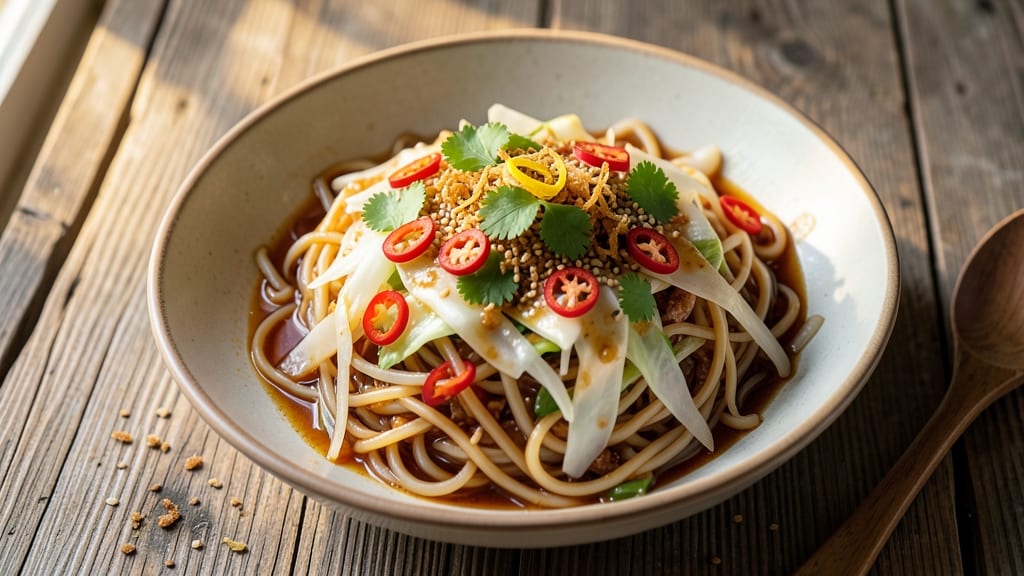
This Burmese noodle salad recipe delivers a perfect balance of tangy, sweet, and savory flavors that will transport you to Myanmar in every bite.
The star is a bright tamarind dressing that cuts through the rich textures of crispy peanuts, fresh herbs, and tender noodles—all coming together in a dish that's both refreshing and deeply satisfying.
What sets this recipe apart is the authentic technique of quickly frying the rice noodles until just crispy, then tossing them with a protein of your choice—whether that's shredded chicken, tofu, or even shrimp.
The tamarind dressing, made with lime juice, fish sauce, and a touch of palm sugar, is the secret to that signature Burmese tang that makes this salad irresistibly addictive.
By the time you're done assembling, you'll have a vibrant salad with layers of texture—crispy noodles, crunchy peanuts, and fresh herbs—all coated in that glossy, flavor-packed dressing.
It's the kind of dish that feels both elegant and effortless, perfect for a light lunch or a refreshing side to balance richer meals.
The beauty of this recipe is its flexibility—you can prep the dressing and protein ahead, then assemble everything just before serving. This means you'll spend minimal time in the kitchen while still delivering maximum flavor. Let's get started!
Ingredients for burmese noodle salad
Fresh herbs, crispy peanuts, and a tangy dressing that'll transport you to Myanmar.
| Ingredient | Amount | Notes |
|---|---|---|
| Rice Noodles 🍜 | 8 oz | Fresh or dried, medium width |
| Tamarind Paste 🍈 | ¼ cup | Unsweetened, for authentic tang |
| Lime Juice 🍋 | ½ cup | Freshly squeezed, bright flavor |
| Fish Sauce 🐟 | 2 tbsp | High-quality, Red Boat preferred |
| Palm Sugar 🍯 | 2 tbsp | Or light brown sugar |
| Vegetable Oil 🫒 | ½ cup | For frying noodles |
| Roasted Peanuts 🥜 | 1 cup | Crushed, for crunch |
| Fresh Cilantro 🌿 | ½ cup | Chopped, stems removed |
| Fresh Mint Leaves 🌿 | ¼ cup | Chopped, for brightness |
| Garlic Cloves 🧄 | 4 cloves | Minced, for aromatic base |
| Shallots 🧅 | 2 whole | Thinly sliced, for sweetness |
| Protein of Choice 🍗 | 1 ½ lb | Shredded chicken, tofu, or shrimp |
| Salt 🧂 | 1 tsp | Kosher or sea salt |
| Black Pepper 🌶️ | ½ tsp | Freshly ground |
| Chili Flakes 🔥 | 1 tsp | Optional, for heat |
The tamarind paste is non-negotiable for that signature Burmese tang—look for unsweetened versions at Asian markets or the bulk section at Whole Foods. If you can't find it, mango powder mixed with lime juice works in a pinch, though it's not identical. Fresh herbs like cilantro and mint are key for that bright finish; skip the dried stuff here. For the protein, shredded chicken is classic, but tofu or shrimp work beautifully too—just adjust cooking time accordingly. The rice noodles? Fresh ones (like those in the Asian aisle) fry up perfectly, but dried work too if you soak them first.
No tamarind? Substitute lime juice plus a splash of vinegar—it won't be the same, but it'll get you close. Running low on fish sauce? Soy sauce plus a pinch of sugar mimics the umami. The palm sugar can be swapped for light brown sugar or coconut sugar, though the flavor profile shifts slightly. As for the peanuts, cashews or almonds add a different crunch but still work. Pro tip: Toast your nuts separately for extra flavor—5 minutes in a dry pan does the trick. And if you're using tofu, press it first to avoid a soggy salad.
This salad tastes even better the next day—flavors meld beautifully—so make extra if you can. Store the dressing separately in the fridge for up to 5 days, and keep the noodles and protein in airtight containers. The herbs? Wrap them in damp paper towels and store them in a bag with a little air—they'll stay fresh for 3-4 days. When ready to serve, just toss everything together and garnish with extra herbs and peanuts. Leftovers? Reheat gently and add a splash of water to revive the crispiness.
Why You'll Love This Recipe
- No-Fuss Assembly: I swear by this recipe—just boil noodles, toss with dressing, and boom. No chopping mountains of herbs or frying anything; the tamarind and fish sauce do all the heavy lifting while you’re still deciding what to watch on TV.
- Tangy-Sweet Magic: That balance of salty fish sauce, bright lime, and sticky palm sugar? It’s like a party in your mouth. The tamarind paste adds this deep, funky richness that makes it taste way more complex than it is—honestly, I’ll take this over store-bought salad dressing any day.
- Lunchbox Hero: Between us, this is my go-to for packed lunches. The noodles stay chewy even after sitting overnight, and the dressing keeps things fresh. Add some shredded chicken or tofu, and it’s a full meal—no reheating required. (Yes, even on a Tuesday night.)
- Budget Meal Stretch: A bag of rice noodles and a jar of tamarind paste go a long way. I’ve made this for four people for under $10, and it still feels special. Plus, leftovers? They taste just as good cold the next day—perfect for when you’re too tired to cook.
Step-by-step instructions for Burmese noodle salad
Here's how to craft this vibrant, tangy-sweet salad with perfect texture and balance.
Cook and Prepare the Rice Noodles
Bring a large pot of water to a rolling boil and add the 8 oz rice noodles. Cook for 5-6 minutes until they're just tender but still slightly firm - they'll finish cooking in the dressing. Drain immediately and rinse under cold water to stop the cooking process. This prevents mushy noodles and keeps them separate for that signature salad texture.
Spread the drained noodles on a clean kitchen towel and gently pat dry. I like to fan them out in an even layer so they cool completely and absorb just enough moisture to prevent sticking. Let them sit for 10 minutes while you prepare the dressing - this cooling step is crucial for the perfect final texture.
Create the Tangy Tamarind Dressing
In a medium bowl, whisk together the 0.25 cup tamarind paste, 0.5 cup lime juice, 2 tbsp fish sauce, and 2 tbsp palm sugar until the sugar dissolves completely. The mixture should be smooth with a vibrant golden hue. This is where the authentic Burmese flavor comes together - the tamarind provides that signature tangy-sweet balance that makes this salad so special.
Taste the dressing and adjust the balance - if it needs more sweetness, add a pinch of palm sugar; if it needs more tang, add a splash of lime juice. The dressing should coat your tongue with both sweet and sour flavors simultaneously. This is your flavor foundation, so take your time getting it right before moving forward.
Prepare the Aromatic Base and Protein
Heat 0.25 cup vegetable oil in a large skillet over medium heat. Add the 2 whole shallots and 4 cloves garlic cloves, cooking for 2-3 minutes until the shallots turn golden and the garlic becomes fragrant. Remove from heat and let cool slightly - these aromatics will infuse the entire salad with depth.
While the shallots and garlic cool, prepare your 1.5 lb protein of choice. If using chicken, shred it into bite-sized pieces. For tofu, press and cube it. Shrimp should be cooked and chopped. Season the protein with 1 tsp salt, 0.5 tsp black pepper, and 1 tsp chili flakes if using. Set aside until ready to combine.
Assemble the Noodle Salad
In a large mixing bowl, combine the cooled noodles, prepared protein, and cooked shallot-garlic mixture. Pour the tamarind dressing over everything and toss gently but thoroughly to coat all components evenly. The noodles should be well-coated but still retain their individual texture - don't overmix or they'll turn mushy.
Add the 1 cup roasted peanuts, 0.5 cup fresh cilantro, and 0.25 cup fresh mint leaves. Gently fold these in just before serving to preserve their freshness and crunch. The peanuts should be evenly distributed throughout - this adds that essential crunchy texture that balances the soft noodles.
Serve Immediately for Best Results
Taste the salad and adjust seasoning if needed - you might want to add more lime juice for brightness or fish sauce for umami depth. The perfect Burmese noodle salad should have that perfect balance of sweet, sour, salty, and umami flavors with each bite.
Serve immediately while the noodles are still slightly warm and the dressing is fresh. The salad keeps well for 2-3 hours at room temperature, but the texture and flavors are at their peak right after assembly. Garnish with additional mint leaves and chili flakes if desired, and enjoy this vibrant, flavor-packed dish that's perfect for any occasion.
Pro Tips For Making Burmese Noodle Salad
- SOAK NOODLES UNTIL FLEXIBLE: I learned this the hard way—dry rice noodles are like stubborn kids, refusing to soften unless you give them time. Soak them in warm water for 15-20 minutes until they’re pliable but not mushy, then drain and rinse with cold water to stop cooking. Over-soaking turns them into a gluey mess, and nobody wants that.
- DILUTE TAMARIND PASTE FIRST: That thick tamarind paste is a beast if you try to mix it directly into the dressing. Save yourself from lumps by dissolving 1-2 tablespoons in a splash of warm water first—it blends smoother and cuts the bitterness. (Yes, even if you’re impatient like me.)
- BALANCE SALT AND SWEET: Fish sauce is salty, palm sugar is sweet, and lime juice is acidic—if you don’t adjust, one flavor will dominate. Taste as you go: start with half the fish sauce, then add sugar and lime gradually. The dressing should sing, not shout.
- COOL NOODLES BEFORE TOSING: Hot noodles in a cold dressing? That’s a recipe for a sad, watery salad. Rinse the drained noodles under cold water to cool them down first, then toss with the dressing. Your texture will stay perfect, and the flavors will marry better. (Your future self will thank you.)
Pro cooking tips for this dish
Noodle Texture Secrets
For that signature Burmese crunch, fry the noodles in batches for just 1-2 minutes per side in hot oil until they're golden and crispy. I use a wok or large skillet on medium-high heat with 1 tbsp neutral oil per batch—this prevents sogginess while creating that irresistible texture.
Work quickly to avoid overcrowding, or the oil will cool and make them greasy. 🔥
Dressing Balance
The tamarind-lime-fish sauce combo is all about layered flavor. Start with the tamarind paste dissolved in warm water (not hot) to prevent clumping. Then, taste as you go: 1 tsp lime juice for tang, ½ tsp fish sauce for umami, and ¼ tsp palm sugar for sweetness.
The dressing should be glossy and cling to the noodles—if it's too thick, add 1 tsp water at a time. Trust your taste buds here; there’s no "perfect" ratio. ✨
Protein Prep
For chicken or shrimp, cook proteins separately and season with ½ tsp fish sauce + ¼ tsp black pepper before adding to the salad. Tofu? Press it for 20 minutes in a towel, then cube and pan-fry until golden.
The key is even cooking—overcooked protein gets tough, while undercooked can be unsafe. I like mine just 165°F internal temp for chicken or 145°F for shrimp. 🌡️
Herb Freshness
Fresh herbs are non-negotiable—cilantro and mint should be chopped just before serving to preserve their vibrant color and aroma. I use a sharp chef’s knife and cut them into ¼-inch pieces, leaving some whole leaves for garnish.
If using dried herbs, reduce to ⅓ the amount (e.g., 1 tbsp dried mint instead of ¼ cup fresh), but fresh is always better. 🌿
Peanut Crunch
Toast your peanuts in a dry pan for 3-4 minutes until fragrant and lightly browned. Let them cool completely before crushing—this enhances their flavor and prevents the salad from getting oily. I crush them with a rolling pin or mortar and pestle for uneven bits, which add more texture.
Store extra crushed peanuts in an airtight container for up to 2 weeks. 🥜
Assembly Timing
Assemble the salad right before serving to keep the peanuts and herbs crisp. Toss the noodles, protein, and dressing first, then gently fold in the herbs and peanuts.
If prepping ahead, store components separately: dressing in a jar, noodles in a container, and herbs wrapped in a damp towel. Refrigerate for up to 24 hours, but the texture will soften slightly. 💡
Nutrition facts
Frequently asked questions
Can I make this Burmese noodle salad without tamarind?
Yes, but the flavor won't be authentic. For a substitute, mix ¼ cup lime juice with 1 tbsp vinegar (rice or apple cider) and 1 tsp sugar to mimic the tangy-sweet balance. The salad will taste more citrus-forward but still delicious—just not quite the same complex depth.
How do I keep the noodles from getting soggy?
Work fast and store components separately! Cook the noodles just until tender (5-6 minutes), rinse in cold water, and pat completely dry. For assembly, toss the noodles with dressing and protein first, then fold in herbs and peanuts last. If prepping ahead, refrigerate noodles and dressing separately and combine only before serving.
What's the best way to cook the protein for this salad?
For chicken or shrimp, cook separately until just done (165°F for chicken, 145°F for shrimp) and let cool before adding. For tofu, press for 20 minutes, cube, and pan-fry until golden. Season proteins with ½ tsp fish sauce + ¼ tsp black pepper before mixing—they should be warm but not hot when added to the salad.
Can I make this salad ahead of time?
but with a few tweaks! Store the dressing in a jar, cooked noodles in a container, and herbs wrapped in a damp towel in the fridge for up to 24 hours. When ready to serve, toss everything together and garnish with fresh herbs and peanuts. The texture will soften slightly, but flavors meld beautifully overnight.
Why does my dressing taste too salty?
Fish sauce is potent—start with 1 tbsp and taste as you go. If needed, balance with ½ tsp palm sugar or 1 tsp lime juice. The dressing should coat your tongue with sweet, sour, and umami—never just salt. For extra depth, add a pinch of white pepper to complement the flavors without adding saltiness.