
Salads
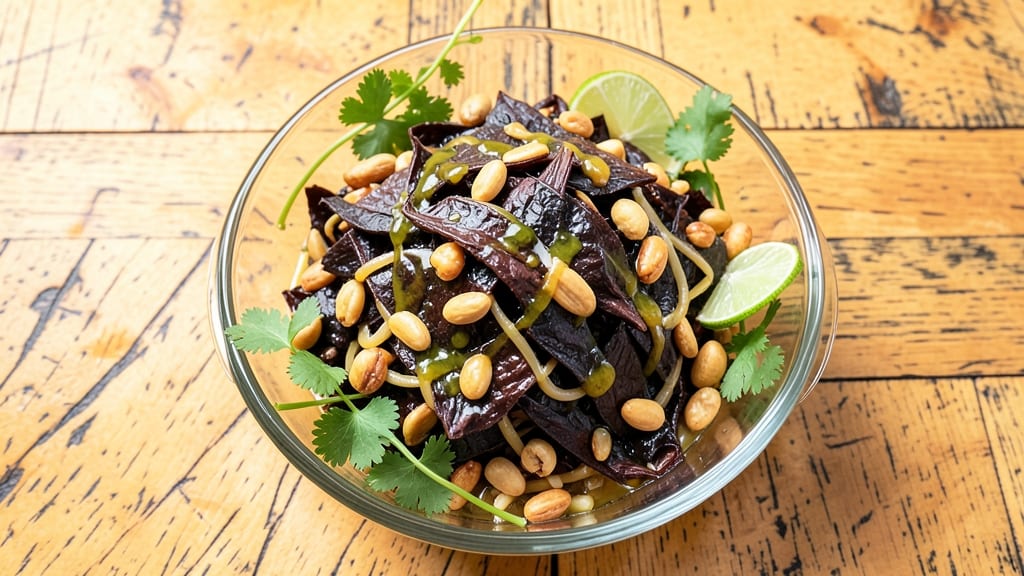
This Burmese fermented tea leaf salad delivers a bold explosion of umami, tang, and crunch that transforms simple ingredients into something extraordinary. The secret lies in fermented tea leaves—either homemade or store-bought—whose deep, complex flavor forms the heart of this dish.
I've perfected this recipe over years of experimentation, balancing earthy tea, sharp garlic, nutty sesame, and a bright lime dressing that cuts through the richness.
The beauty of this salad is its adaptability—traditionally served with fish or egg, but just as satisfying with tofu for vegetarians. The fermentation process (if starting fresh) takes about 7 days, but the result is worth every minute.
When ready, the tea leaves develop a tangy, almost vinegary depth that pairs perfectly with the crunchy peanuts and fresh herbs.
What you'll end up with is a vibrant, textured salad where every bite delivers layers of flavor—fermented tea leaves with their umami punch, garlic that lingers on the tongue, and a dressing that ties it all together. The peanuts add satisfying crunch, while the lime keeps things bright and refreshing.
Serve this salad as a main dish with steamed rice or as a side to complement grilled meats. The balance of flavors makes it equally at home in a bustling Burmese restaurant or your home kitchen. Let's get started!
Ingredients for burmese fermented tea leaf salad
Nine ingredients transform into a flavor-packed salad that's equal parts umami, tang, and crunch.
| Ingredient | Amount | Notes |
|---|---|---|
| Fermented Tea Leaves (Laphet Thoke) 🍃 | 1 cup | Homemade or store-bought (fermented 7+ days) |
| Roasted Peanuts 🥜 | ½ cup | Crushed or whole, unsalted preferred |
| Garlic Cloves 🧄 | 6 cloves | Minced, fresh for best flavor |
| Shallots 🧅 | 3 whole | Thinly sliced, about 0.3 cup |
| Fresh Cilantro 🌿 | ½ cup | Stems removed, chopped |
| Lime Juice 🍋 | ⅓ cup | Freshly squeezed, about 3 limes |
| Fish Sauce 🐟 | 2 tbsp | Red Boat brand preferred |
| Vegetable Oil 🫒 | 2 tbsp | For stir-frying shallots/garlic |
| Toasted Sesame Oil 🫒 | 1 tbsp | For finishing, not cooking |
| Sesame Seeds 🥜 | 1 tbsp | Toasted, for garnish |
| Salt 🧂 | ½ tsp | Adjust to taste |
| Steamed Jasmine Rice 🍚 | 2 cups | Cooked, for serving |
The fermented tea leaves are non-negotiable here. If making your own, start with high-quality black tea leaves (like Assam or Ceylon) and ferment for at least 7 days—longer equals more complex flavor. For shortcuts, Burmese markets or specialty Asian grocers carry pre-fermented laphet thoke. Look for leaves that smell tangy and slightly sour, not musty. The peanuts? Trader Joe's roasted unsalted are my go-to—they're affordable and consistently good. If you can't find them, toast your own at 350°F for 8-10 minutes until fragrant.
No fish sauce? Soy sauce plus a dash of sugar mimics the saltiness, though it won't have the same depth. Fresh garlic is a must—dried loses its punch. Shallots add sweetness, but red onion works in a pinch if you're in a hurry. The lime juice can be substituted with lemon, but it'll be slightly less bright. For a vegetarian version, skip the fish sauce entirely and boost the lime to 0.5 cup. Pro tip: Toast the sesame seeds in a dry pan for 2 minutes—they'll taste infinitely better than store-bought toasted seeds.
Fermented tea leaves keep in the fridge for up to 3 months once opened, but they'll lose some tang over time. Store them in an airtight container with a paper towel to absorb moisture. The dressing components (lime, fish sauce, oil) stay fresh for 1 week in the fridge, but the lime juice will mellow—add a pinch of salt to revive it. This salad tastes even better the next day as flavors meld. Double the recipe and store leftovers for quick lunches—it reheats beautifully when tossed with a splash of warm water.
Why You'll Love This Recipe
- No-Chop Salad: I swear by this—just tear those tea leaves by hand (no knife needed) and toss with the rest. The shallots and garlic get minced in seconds, and the peanuts? Buy them pre-roasted to save even more time.
- Umami Bomb: That fermented tea leaf punch is next level—tangy, funky, and just salty enough. The roasted peanuts add crunch, while the cilantro brightens it up like a little herb hug.
- Lunchbox Hero: Between us, this keeps perfectly for days in the fridge. Pack it in jars for work lunches or picnic spreads—it’s my go-to when I need something fresh but zero-effort.
- Pocketbook Performer: Fermented tea leaves are cheap, peanuts last forever, and you only need a handful of fresh herbs. Honestly, it’s one of those recipes where the ingredients stretch for multiple meals without breaking the bank.
Step-by-step instructions for Burmese fermented tea leaf salad
Here's how to balance funky, tangy, and crunchy flavors into a perfect umami-packed salad.
Stir-Fry Shallots and Garlic Until Fragrant
Heat the 2 tablespoons vegetable oil in a large skillet over medium heat. Add the 3 whole shallots and 6 cloves garlic cloves (minced), stirring constantly for 3-4 minutes until the shallots turn golden and the garlic releases its aromatic oils. You'll smell that irresistible sweetness—this is where the salad gets its depth of flavor.
Don't let the shallots burn. They should be golden brown but not crispy. If they start to darken too quickly, reduce the heat slightly. Once fragrant, remove the pan from heat and let the mixture cool for 2 minutes—this prevents the garlic from cooking further when we add the tea leaves.
Combine Tea Leaves, Peanuts, and Aromatics
In a large bowl, gently mix the 1 cup fermented tea leaves (Laphet Thoke) with the cooled shallot-garlic mixture. The tea leaves should look slightly wilted but still retain their texture. Add the 0.5 cup roasted peanuts and toss everything together with your hands or a spatula—this helps distribute the flavors evenly.
Here's the thing—fermented tea leaves have a strong, funky aroma that some people love and others find intimidating. If it smells too pungent, don't worry; the lime juice and fish sauce will balance it out beautifully. The peanuts add that satisfying crunch that keeps this salad from feeling too heavy.
Build the Dressing and Toss Everything Together
In a small bowl, whisk together the 0.33 cup lime juice, 2 tablespoons fish sauce, and 0.5 teaspoon salt. The mixture should be tangy and slightly salty—this is the base that ties all the flavors together. Pour this dressing over the tea leaf mixture and gently toss until everything is evenly coated.
Add the 0.5 cup chopped fresh cilantro and mix one more time. The cilantro brightens up the dish and adds a fresh contrast to the funky tea leaves. Taste a small portion at this point—you might want to adjust the fish sauce or lime juice to your preference. Remember, the flavors will mellow slightly as they sit.
Finish with Sesame Oil and Garnish
Drizzle the salad with 1 tablespoon toasted sesame oil and toss gently. This adds a nutty depth that complements the tea leaves perfectly. Sprinkle with 1 tablespoon toasted sesame seeds for extra texture and visual appeal. The sesame seeds should be toasted just until golden—if they're too dark, they'll taste bitter.
Serve immediately over 2 cups steamed jasmine rice while everything is still vibrant. The rice soaks up the dressing beautifully, creating a perfect balance between the crunchy salad and soft rice. This dish is best enjoyed fresh, so don't wait too long before serving.
Adjust and Enjoy
Taste one final time and adjust seasoning if needed. Some people prefer more fish sauce for extra umami, while others might want more lime juice for brightness. Remember, this salad is all about balance—funky tea leaves, tangy lime, salty fish sauce, and crunchy peanuts.
This salad is a flavor explosion in every bite. The fermented tea leaves provide that unique umami punch, the lime juice cuts through the richness, and the peanuts add just the right amount of crunch. Serve it as a side dish or even as a main course with extra rice if you're really hungry!
Pro Tips For Making Burmese Fermented Tea Leaf Salad
- CRUSH THE GARLIC: Use a mortar and pestle instead of mincing—this releases more flavor and keeps the garlic from turning bitter. I learned this the hard way after burning my mouth on over-minced garlic that had already started to brown in the bowl.
- ROAST PEANUTS UNTIL GOLDEN: Don’t stop at light brown—push them to a deep golden color for maximum crunch and nuttiness. I used to pull them out too soon, and the texture was always underwhelming. A hot, dry pan for 8-10 minutes does the trick.
- SOAK THE FERMENTED LEAVES: Give the laphet thoke a quick 10-minute soak in warm water before tossing it with the dressing. This softens the edges and mellows the sharpness without making the salad soggy—trust me, it makes a real difference.
- CHOP SHALLOTS FINE: Slice them paper-thin and separate into rings for even distribution. I used to chop them roughly, and the flavor got lost in the mix. A sharp knife and steady hand make this step worth the effort.
Creative variations of this dish
Spicy Heat Boost
If you love heat, add 1-2 tablespoons of chili crisp or 1 teaspoon of Burmese red chili powder to the dressing. I like to mix it with the fish sauce before tossing—this creates a slow-building heat that complements the funky tea leaves.
For extra kick, toss in ½ cup of pickled shallots (quick-pickle with lime juice and salt) alongside the fresh ones. 🌶️
Vegetarian Protein Swap
Skip the fish sauce entirely and replace it with 2 tablespoons of soy sauce plus 1 teaspoon of sugar for a vegetarian version. Add ½ cup of crispy tofu cubes (pan-fried in sesame oil) or ¼ cup of shredded coconut for texture.
The coconut adds a subtle sweetness that balances the tangy tea leaves beautifully.
Sweet and Tangy Twist
For a sweeter variation, stir in 1 tablespoon of palm sugar or honey into the dressing. This caramelizes slightly when tossed with the warm tea leaves, creating a delicious contrast.
I also like adding ¼ cup of shredded cabbage for extra crunch and a mild sweetness. Serve with a sprinkle of crushed peanuts on top for added texture.
Herb-Infused Variations
Swap out the cilantro for ½ cup of fresh mint leaves or thai basil to give the salad a different herbal profile. Mint adds a refreshing brightness, while Thai basil brings a subtle anise-like flavor.
For a more complex dish, mix 2 tablespoons of chopped lemongrass (finely minced) into the shallot-garlic stir-fry—it adds a citrusy aroma that pairs perfectly with the tea leaves.
Crunchy Add-Ins
For extra texture, toss in ¼ cup of toasted cashews or ½ cup of bean sprouts just before serving. The cashews add a buttery richness, while the bean sprouts provide a fresh, crisp bite.
If you're feeling adventurous, try adding ¼ cup of crispy fried shallots—they add a delightful crunch and a deep, savory flavor that elevates the dish. 🥜
Regional Adaptations
In Mandalay, this salad is often served with dried shrimp mixed into the tea leaves for extra umami. In Yangon, it’s common to add a spoonful of peanut butter to the dressing for a creamy, nutty depth.
For a modern twist, try adding avocado slices or pickled jalapeños to balance the funky flavors with something fresh and cooling.
Nutrition facts
Frequently asked questions
Can I use regular black tea instead of fermented tea leaves?
Not for this recipe—fermented tea leaves (laphet thoke) are essential for that signature funky, umami flavor. Regular black tea won't develop the same tangy depth. If you can't find fermented tea leaves, try making your own by fermenting high-quality black tea leaves for at least 7 days with a pinch of salt and lime juice.
How do I know if my fermented tea leaves are ready?
Ready leaves should smell tangy and slightly sour (like a mix of vinegar and mushrooms), not musty or overly pungent. The color should darken to a deep brown. If the aroma is too strong, let them ferment a few more days—they'll mellow as they develop. Store them in an airtight container with a paper towel to absorb excess moisture.
What's the best way to store leftover tea leaf salad?
Store in an airtight container in the fridge for up to 3 days, but the flavors meld best after 24 hours. The peanuts stay crunchy, but the tea leaves soften slightly. Refrigeration preserves the tangy brightness. If the salad seems too dry after reheating, toss with a splash of warm water or extra lime juice to revive it.
Can I make this salad without fish sauce?
Yes! For a vegetarian version, replace fish sauce with 2 tbsp soy sauce + 1 tsp sugar to mimic the saltiness and umami. Add extra lime juice (0.5 cup) to balance the flavors. The salad will still be delicious—just slightly less complex. If you're adventurous, try a spoonful of peanut butter in the dressing for a creamy twist!
Why does my salad taste too strong or bitter?
Over-fermented tea leaves or burnt shallots cause bitterness. Adjust by adding more lime juice (1-2 tbsp) to cut the funk, or mix in 1 tbsp honey to soften harsh flavors. If the shallots burned, remove them and stir in extra garlic or fresh herbs (like mint) to refresh the dish. Taste as you go—balance is key!