
Salads
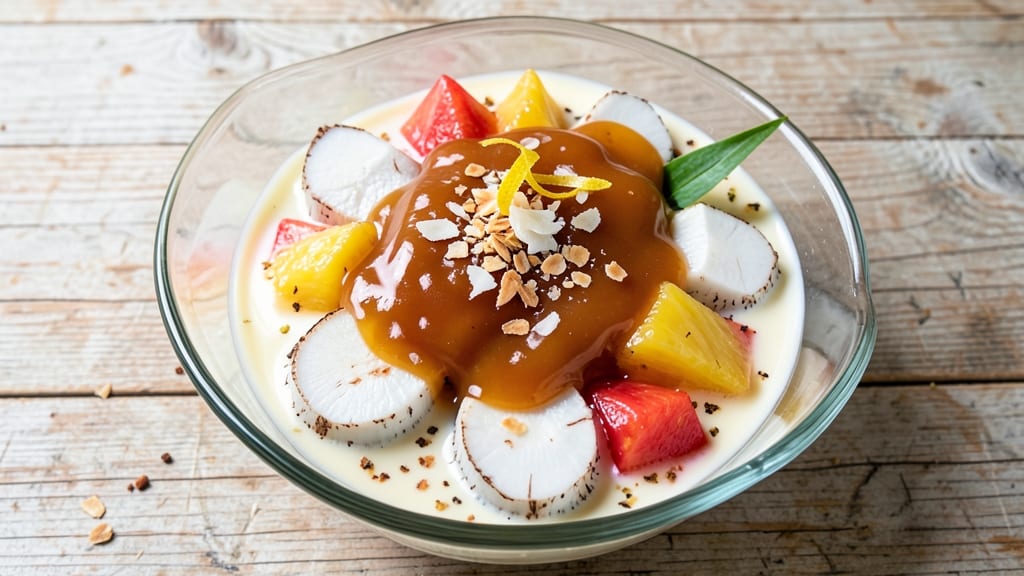
This buko salad recipe with ingredients and procedure delivers the perfect balance of chewy young coconut and creamy sweetness that's been a Filipino dessert staple for generations.
The secret lies in layering gelatin and coconut milk for that signature silky texture, while fresh fruits add vibrant pops of color and refreshing contrast. What makes this version special is the precise technique that ensures each bite has tender coconut pieces suspended in rich, velvety layers.
The recipe begins with preparing the gelatin base—simple but critical for achieving that restaurant-quality consistency. You'll work with young coconut (buko) that's been carefully drained and layered with sweetened condensed milk and coconut milk.
The chilling process transforms these ingredients into a cloud-like dessert where each spoonful delivers that perfect combination of textures and flavors.
By the time you serve this dessert, you'll have created something that looks as impressive as it tastes—creamy layers of coconut milk and gelatin surrounding chewy buko pieces and fresh fruit. The contrast between the cool, creamy dessert and the chewy coconut creates an experience that's both nostalgic and satisfying.
This is the kind of dessert that disappears quickly, leaving everyone asking for seconds.
Perfect for gatherings, potlucks, or treating yourself to a taste of Filipino comfort, this buko salad requires just a few key ingredients and simple steps. The preparation time is minimal, but the chilling allows flavors to meld beautifully. Here's everything you need to create this creamy masterpiece at home.
Ingredients for buko salad recipe with ingredients and procedure
Chewy coconut pieces and velvety layers—this dessert delivers pure Filipino comfort in every bite.
| Ingredient | Amount | Notes |
|---|---|---|
| Young Coconut (Buko) 🥥 | 2 cups | Freshly drained, cut into bite-sized pieces |
| Unflavored Gelatin 🍬 | 2 tbsp | Powdered, not instant |
| Hot Water 💧 | ½ cup | For dissolving gelatin |
| Sweetened Condensed Milk 🥛 | 14 oz | Standard can size |
| Coconut Milk 🥥 | 13 ½ oz | Full-fat canned variety |
| Fresh Pineapple 🍍 | 1 cup | Diced, small pieces |
| Fresh Mango 🥭 | 1 cup | Diced, ripe fruit |
| Fresh Kiwi 🥝 | 2 whole | Peeled, sliced into thin rounds |
| Granulated Sugar 🍚 | ¼ cup | Fine granulated preferred |
| Lime Juice 🍋 | 2 tbsp | Freshly squeezed |
| Shredded Coconut 🥥 | ¼ cup | Sweetened, toasted lightly |
| Vanilla Extract 🌸 | 1 tsp | Pure vanilla preferred |
The buko is the star, so pick the freshest young coconut you can find—look for bright white flesh with no brown spots. Asian markets often have pre-drained buko in cans, but fresh is worth the extra effort. For gelatin, Knockbox or Great Value powdered works perfectly. The canned coconut milk should be full-fat (none of that light stuff)—Goya or Dole are solid choices. If you can't find fresh pineapple or mango, frozen works too—just thaw and drain well.
No fresh kiwi? Substitute with more mango or papaya—just keep the total fruit volume at 2 cups. Running low on lime juice? Lemon juice at double the amount gets you close, though it's not quite the same. The shredded coconut can be swapped for toasted coconut flakes if that's what you've got. For extra richness, add 1/4 cup coconut cream to the gelatin mixture. And if you're feeling fancy, a splash of pandan extract adds that authentic Filipino touch.
This dessert needs time to set properly—at least 4 hours in the fridge, overnight is ideal. Store in an airtight container with parchment paper between layers to prevent sticking. Keeps for 3-4 days in the fridge, though it's best enjoyed within 24 hours of making. For parties, assemble in individual cups or glasses so guests can grab their own portions. The texture changes slightly after the first day—it becomes even creamier, almost like a mousse.
Why You'll Love This Recipe
- No-Chop Necessary: I swear by this—just slice the buko into chunks (no dicing, no fuss) and let the gelatin do the work. The only prep is shredding a few ice cubes for texture, and honestly? That’s it.
- Creamy Crunch Magic: That first bite—cool buko, jelly-like gelatin, and the thick coconut milk hugging every piece? It’s the kind of contrast that makes you pause mid-bite. The condensed milk ties it all together like a sweet, dreamy glue.
- Party in a Bowl: Between us, this is my go-to for potlucks, birthdays, or just because. It’s light enough for summer but satisfying enough for a crowd. Plus, the gelatin sets it up for easy serving—no reheating, no stress.
- Budget-Friendly Luxury: Sweetened condensed milk and coconut milk stretch far, and gelatin turns basic buko into something special. I’ve made this for under $5 and fed six people—leftovers? Even better the next day, if they last that long.
Step-by-step instructions for buko salad recipe
Here's how to create the perfect creamy buko salad with chewy coconut jewels and vibrant tropical flavors.
Prepare the Gelatin Base
In a small bowl, sprinkle the 2 tablespoons unflavored gelatin evenly over the ½ cup hot water. Let it bloom for 5 minutes—you'll see the gelatin granules absorb the liquid and swell. This step is crucial for creating that signature creamy texture that sets this dessert apart.
After blooming, gently whisk the mixture over low heat (or in a microwave-safe bowl) until completely dissolved. You want a smooth, translucent liquid with no visible particles. Transfer the dissolved gelatin to a heatproof container and set it aside to cool slightly—this prevents it from setting prematurely when mixed with the other ingredients.
Combine Creamy Ingredients
In a large mixing bowl, combine the 14 ounces sweetened condensed milk and 13.5 ounces coconut milk. Add the ¼ cup granulated sugar and 1 teaspoon vanilla extract, then whisk until fully incorporated. The mixture should be thick and smooth, with a rich, caramel-like consistency that forms the creamy foundation of your buko salad.
Gradually pour the cooled gelatin mixture into the milk blend while whisking continuously. This slow incorporation prevents the gelatin from setting too quickly. Once combined, add the 2 tablespoons lime juice and mix well. The lime juice brightens the flavors and balances the sweetness, creating that perfect tropical tang you crave in every bite.
Fold in Fresh Fruits
Gently fold in the 1 cup diced fresh pineapple, 1 cup diced fresh mango, and 2 whole peeled kiwi sliced into thin rounds. Use a spatula to mix just until the fruits are evenly distributed throughout the creamy base. Be careful not to overmix—you want the fruits to remain intact and visible, adding vibrant pops of color and texture to each spoonful.
This is where the magic happens: the contrast between the creamy coconut base and the juicy, slightly acidic fruits creates a symphony of textures and flavors. The kiwi's bright green color adds visual appeal, while its tartness cuts through the sweetness of the coconut and condensed milk.
Incorporate Buko and Shredded Coconut
Add the 2 cups bite-sized young coconut (buko) to the mixture and gently fold them in using a spatula. The buko should be evenly distributed but still visible—these chewy coconut jewels are the star of the dish. Finally, sprinkle in the ¼ cup toasted shredded coconut and fold it in last to preserve its texture.
Here's the thing—don't press down on the buko as you mix. The goal is to coat each piece lightly with the creamy mixture while keeping them firm and chewy. The buko should remain distinct, offering that delightful contrast between the soft creamy base and the firm, slightly crunchy coconut.
Chill and Set
Cover the buko salad with plastic wrap pressed directly onto the surface to prevent a skin from forming. Refrigerate for at least 4 hours—overnight is even better. This chilling time allows the gelatin to fully set, transforming the mixture from a thick liquid into a luscious, spoonable dessert with perfect texture.
When it's ready, you'll notice the buko pieces will be fully coated in the creamy mixture but still maintain their distinctive chewy texture. The pineapple, mango, and kiwi will have softened slightly but still retain their shape, releasing their juices into the creamy base with every bite. Serve chilled in individual bowls with an extra sprinkle of toasted shredded coconut on top for that final touch of texture and aroma.
Pro Tips For Making Buko Salad Recipe With Ingredients And Procedure
- CHILL THE GELATIN RIGHT: After mixing gelatin with hot water, pop it in the fridge for 10-15 minutes—not the freezer. I used to rush this and end up with grainy bits that ruin the silky texture. The goal is soft, pliable strands, not rubbery chunks.
- SCORE THE BUKO THIN: Use a sharp knife to slice the young coconut into ¼-inch thick rounds, then cut each round into 8 wedges. Thinner slices soak up the coconut milk better and keep the texture consistent. (Yes, it takes patience—skip this and you’ll get soggy chunks.)
- MEASURE CONDENSED MILK PRECISELY: Don’t eyeball the sweetened condensed milk—1 can (14 oz) is the sweet spot for 2 cups buko. Too much makes it cloying; too little leaves the salad dry. Weigh it if you’re paranoid (like me after burning sugar once).
- STIR THE MIXTURE LONG ENOUGH: After dissolving the gelatin, stir the entire buko mixture for 3-5 full minutes until the coconut milk and condensed milk fully emulsify. I learned this the hard way—uneven stirring leads to streaky, unappetizing layers. (A whisk helps.)
Creative variations of this recipe
Filipino-Style Buko Pandan
Swap out the vanilla for 1 teaspoon pandan extract and add ½ teaspoon pandan powder to the creamy base. This variation gives you that authentic Filipino bakery taste with its signature green hue and floral aroma.
I like using Goya brand pandan extract—it's widely available in Asian markets and gives the best flavor. The pandan complements the coconut beautifully, adding a subtle floral note that makes this dessert taste like a slice of heaven. 🌿
Mango-Sticky Rice Fusion
Replace half the condensed milk with 1 cup glutinous rice flour mixed with 1 cup coconut milk (cooked into a thick paste). This creates a sticky rice texture while keeping the buko salad's signature elements. I use Mae Ploy brand rice flour for the best consistency.
The result is a hybrid dessert where each spoonful has both creamy and chewy textures. Serve with extra mango slices on top for that Thai-Filipino fusion touch. 🍚
Chocolate-Dipped Buko
After chilling, dip each buko piece in melted dark chocolate (I use Ghirardelli 70% cocoa) before assembling. The chocolate adds a rich contrast to the creamy coconut base. For extra decadence, sprinkle crushed macadamia nuts on top.
This variation works especially well for chocolate lovers who want to keep the buko salad's texture while adding a new dimension of flavor. 🍫
Tropical Fruit Layered Version
Create a layered effect by alternating between the creamy base and fresh fruit slices in clear glasses. Start with a layer of the buko salad mixture, then add a layer of sliced papaya and passion fruit, followed by another layer of the creamy base.
Repeat until the glass is full, ending with a final layer of the buko salad. This presentation makes it perfect for parties and lets everyone see the beautiful tropical colors. 🍹
Coffee-Infused Variation
Add 1 tablespoon instant coffee granules dissolved in 2 tablespoons hot water to the gelatin mixture before combining with the creamy base. This adds a subtle coffee note that pairs surprisingly well with the coconut and tropical fruits.
I recommend using Starbucks instant coffee for a smooth, rich flavor. The coffee enhances the dessert's depth without overpowering the other ingredients. ☕
Vegan Adaptation
Replace the gelatin with 2 tablespoons agar-agar powder mixed with ½ cup water and heated until dissolved. Use coconut condensed milk (like So Delicious brand) instead of regular condensed milk.
This version keeps all the tropical flavors while making it suitable for vegans. The texture will be slightly firmer but still delicious. 🌱
Nutrition facts
Frequently asked questions
Can I use canned buko instead of fresh?
Yes, canned buko works perfectly—just drain it well to remove excess syrup. For the best texture, look for cans with "young coconut" labeled. Drain for 10 minutes and pat dry with paper towels before adding to the salad. The flavor is slightly sweeter than fresh, so you might reduce the sugar by 2 tablespoons if desired.
Why did my buko salad turn out too jelly-like?
This usually happens when too much gelatin is used or the mixture wasn't chilled properly. For perfect texture, stick to the 2 tablespoons gelatin measurement and ensure the final mixture reaches 40°F or below during chilling. If it's too firm, let it sit at room temperature for 10 minutes before serving to soften slightly.
What's the best way to store leftovers?
Transfer to an airtight container with parchment paper between layers to prevent sticking. Keeps for 3-4 days in the fridge, though texture becomes slightly softer after 24 hours. For longer storage, freeze for up to 1 month—thaw overnight in the fridge before serving. The gelatin may separate slightly when frozen, so stir gently before eating.
Can I make this without gelatin?
Yes! For a gelatin-free version, replace the gelatin with 2 tablespoons agar-agar (vegan) or 1 cup whipped coconut cream (for a lighter texture). The agar-agar method requires heating with water first, while coconut cream adds natural thickness. Note that the texture will be slightly different—more like a mousse than traditional buko salad.
How do I prevent the buko from turning brown?
Browning happens due to oxidation—prevent it by tossing the drained buko with 1 tablespoon lime juice right after draining. Also keep it submerged in cold water until ready to use. For extra protection, add ½ teaspoon vitamin C powder (common in Asian markets) to the buko water. This maintains the bright white color for up to 2 hours before mixing.