
Side Dishes
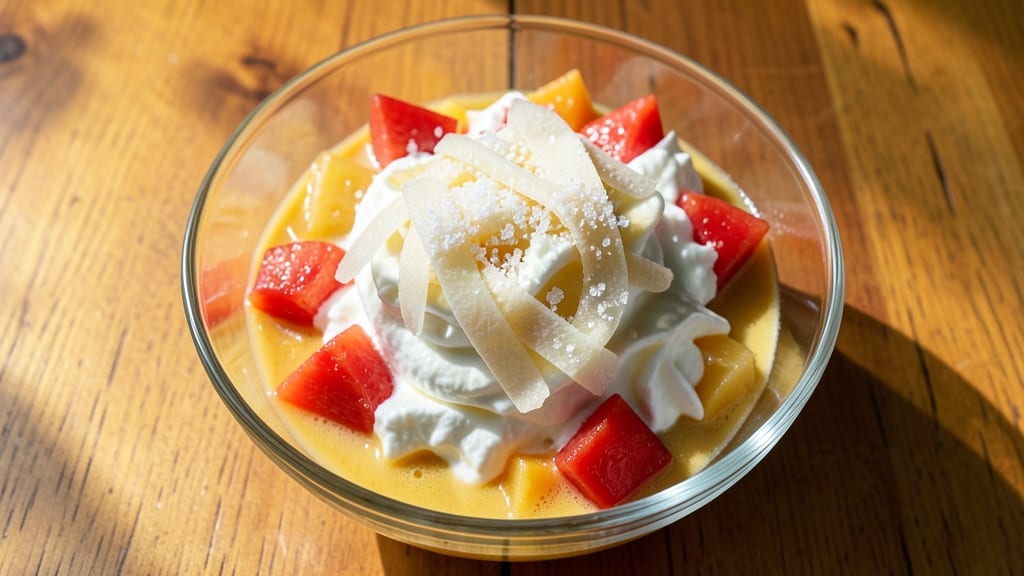
This creamy buko salad recipe Tagalog brings the beloved Filipino dessert-salad hybrid to your kitchen with its signature coconut crunch and velvety texture. 💛 The secret lies in properly shaving fresh nata de coco and layering it with sweetened condensed milk, coconut milk, and just the right amount of creaminess that makes every bite irresistible.
What sets this recipe apart is the traditional Tagalog technique of shaving the nata de coco into thin, delicate strands that soak up the creamy mixture perfectly. The combination of sweetened condensed milk and coconut milk creates that signature rich, caramel-like flavor that's both nostalgic and comforting.
It's vegetarian-friendly but includes dairy through the condensed milk and cream.
The result is a dessert-salad that's light yet satisfying, with each spoonful offering a perfect balance of textures—crunchy nata de coco, creamy coconut, and tender fruit pieces. This recipe delivers restaurant-quality results at home with minimal effort, making it perfect for gatherings or a sweet treat on its own.
Optional variations like adding ube halaya or cheese create exciting twists while keeping the dish authentically Filipino. Let's create this creamy masterpiece that's been a Filipino favorite for generations.
Ingredients for buko salad recipe tagalog
These ingredients transform simple pantry staples into Tagalog buko salad's signature creamy coconut crunch.
| Ingredient | Amount | Notes |
|---|---|---|
| Fresh Nata DE Coco 🥥 | 14 oz | Shaved into thin strands |
| Sweetened Condensed Milk 🥛 | 1 can | 14 oz can (standard size) |
| Coconut Milk 🥥 | 1 can | 13.5 oz can (full-fat preferred) |
| Heavy Whipping Cream 🧈 | ½ cup | Full-fat for best texture |
| Granulated Sugar 🍚 | ¼ cup | Adjust to taste |
| Pineapple Chunks 🍍 | 1 cup | Fresh or canned (drained) |
| Jackfruit Chunks 🍈 | 1 cup | Young green jackfruit, optional |
| Vanilla Extract 🌿 | 1 tsp | Pure vanilla preferred |
| Lemon Juice 🍋 | 1 tbsp | Freshly squeezed |
| Diamond Crystal Kosher Salt 🧂 | ¼ tsp | For balancing sweetness |
| Toasted Coconut Flakes 🥥 | ¼ cup | For garnish |
| Fresh Ube Halaya 🍠 | ½ cup | Optional for purple variation |
| Graham Cracker Crumbs 🍪 | ¼ cup | For rim garnish |
The nata de coco is non-negotiable—fresh, never frozen—and must be shaved into paper-thin strands for that signature texture. Asian markets carry the best quality, often pre-packaged in water. For the condensed milk, Dole or Carnation are reliable brands, but any quality canned version works. Coconut milk should be full-fat for that velvety mouthfeel; Thai Kitchen or Goya cans are widely available. The jackfruit adds a subtle tartness that balances the sweetness—young green jackfruit in water is ideal, but canned in brine works in a pinch. Toast your coconut flakes in a dry pan until golden for maximum aroma.
No fresh nata de coco? Substitute with shredded coconut soaked in coconut milk, though texture will differ. Swap pineapple for mandarin orange segments if preferred. For a dairy-free version, replace the heavy cream with full-fat coconut cream (though texture will be slightly lighter). The ube halaya is optional but adds that signature purple hue—Filipino markets sell it pre-made, or you can make your own with ube halaya powder. If your sweetened condensed milk tastes overly sweet, reduce the granulated sugar by half. The lemon juice brightens all the flavors—never skip this step—and the salt is crucial for balancing the sweetness.
Store the nata de coco in its water in the fridge for up to 3 days. The assembled salad keeps in the fridge for 4-5 days, though it's best enjoyed within 2 days for optimal texture. For serving, rim your glasses with graham cracker crumbs mixed with a bit of melted butter for that classic presentation. The ube variation stays vibrant for 3 days in the fridge if stored properly. Freezing isn't recommended as it alters the delicate textures, but you can freeze individual components like the fruit mixture separately if needed.
Why You'll Love This Recipe
- Here’s the magic: this salad actually tastes better the next day. The flavors meld, the nata de coco softens just enough, and you’ve got a no-fuss dessert ready in seconds. Budget-friendly? Absolutely—uses pantry staples and stretches for days.
- No-Chop Needed: I swear by this one—just slice the nata de coco into bite-sized pieces, dump in the condensed milk and coconut cream, and stir. That’s it. No peeling, dicing, or sautéing in sight.
- Creamy Cheat Code: Between us, the combo of sweetened condensed milk and heavy cream makes this dessert ridiculously smooth. The nata de coco soaks up the richness like a sponge, giving you that perfect balance of chewy and velvety every time.
- Party in a Bowl: Honestly, this is my go-to for birthdays, family gatherings, or even lazy Sundays. Serve it chilled in a big bowl—no plates needed—and watch everyone dig in. (Yes, even the picky eaters.)
Step-by-step instructions for buko salad Tagalog
This creamy, crunchy dessert comes together effortlessly with precise layering and timing.
👨🍳 Step 1: Prepare the Creamy Base
In a large mixing bowl, combine the 1 can sweetened condensed milk, 1 can coconut milk, and 0.5 cup heavy whipping cream. Whisk until completely smooth—this eliminates any lumps and ensures a silky texture. The mixture should look like thick, pale caramel.
Next, fold in the 1 cup pineapple chunks and 1 cup jackfruit chunks using a rubber spatula. Gently press the fruit into the cream to release its juices, which will help bind everything together. The fruit should be evenly distributed but still retain its shape—overmixing will create a mushy texture. Set this mixture aside while you prepare the nata de coco.
🥘 Step 2: Assemble the Nata DE Coco Layer
Drain the 14 oz fresh nata de coco thoroughly using a colander, pressing gently to remove excess water. Transfer the drained nata de coco to a large bowl and sprinkle evenly with 0.25 cup granulated sugar and 0.25 tsp kosher salt. Gently toss with your hands until the sugar and salt are evenly distributed throughout the strands.
This is where the magic happens: the sugar will begin to dissolve into the nata de coco's natural moisture, creating a subtle sweetness that balances the creamy base. Don't skip this step—it prevents a cloyingly sweet final product. The nata de coco should look lightly glazed but still retain its characteristic jelly-like texture.
🍳 Step 3: Combine and Layer the Dessert
Carefully fold the sugared nata de coco into the creamy fruit mixture using a gentle scooping motion. Work in batches if needed to avoid breaking the nata de coco strands. You want to distribute the nata de coco evenly throughout the mixture while preserving its signature crunch and delicate texture.
Here's the professional trick: add 1 tsp vanilla extract and 1 tbsp lemon juice to the mixture. The vanilla enhances the coconut flavor while the lemon juice brightens the overall taste, preventing the dessert from becoming too heavy. Stir gently just to incorporate—overmixing will turn the nata de coco into a pudding-like consistency.
🥗 Step 4: Add Final Touches and Chill
Divide the mixture evenly among 4 serving glasses (about 1 cup per glass). For an elegant presentation, sprinkle 0.25 cup graham cracker crumbs around the rim of each glass. This creates a beautiful border that adds texture contrast when you serve.
Cover each glass with plastic wrap and refrigerate for at least 4 hours, or preferably overnight. This chilling time is crucial—it allows the flavors to meld completely and the nata de coco to absorb the creamy mixture perfectly. The dessert should be served cold, with the nata de coco strands maintaining their signature crunch against the creamy backdrop.
🍽️ Step 5: Garnish and Serve
Before serving, gently swirl each glass to create a marbled effect between the creamy mixture and nata de coco strands. Top each serving with 0.25 cup toasted coconut flakes and 0.5 cup fresh ube halaya (if using) for a vibrant purple variation. The toasted coconut adds a delightful crunch that contrasts beautifully with the creamy texture.
Serve immediately with a long spoon for scooping. Each bite should deliver the perfect balance of creamy coconut, sweet pineapple, tender jackfruit, and the signature crunch of nata de coco. The lemon juice and salt in the mixture ensure the sweetness isn't overwhelming, while the vanilla adds depth to every spoonful.
Pro Tips For Making Buko Salad Recipe Tagalog
- Drain Nata Twice: Fresh nata de coco holds more water than you think—after draining, squeeze it gently in a clean kitchen towel or paper towels to remove excess moisture. This keeps your salad from turning into a watery mess, especially when mixing with coconut milk later.
- Mix Cold Cream: Chill your heavy whipping cream and coconut milk in the fridge for at least 30 minutes before adding them to the nata. Warm cream separates and makes the texture grainy, and nobody wants a sad, lumpy buko salad.
- Balance Sweetness Gradually: Start with half the sugar and condensed milk, taste, then adjust. I’ve ruined batches by dumping everything in at once—now I add it in stages. The nata absorbs flavors unevenly, so taste as you go.
- Use a Fork, Not Spoons: Gently fold the nata with a fork instead of a spoon to avoid crushing the delicate strands. A spoon mashes it into a paste, and you’ll end up with a pudding instead of a proper salad. Be gentle—this isn’t mashed potatoes.
Creative variations of this recipe
Classic Tagalog Style
For an authentic Tagalog experience, keep the recipe pure with just nata de coco, pineapple, and jackfruit as the fruit base. The traditional version relies on the natural sweetness of these ingredients balanced by the lemon juice and vanilla—no extra sugar needed.
Serve in chilled glass bowls with toasted coconut flakes on top for that nostalgic Filipino café vibe. 🥥
Ube-Inspired Purple Twist
Add 0.5 cup fresh ube halaya to the creamy base for a stunning purple variation. The ube's earthy sweetness pairs perfectly with coconut, creating a visually striking dessert. Swap 0.25 cup of the pineapple for ube jam if you want more vibrant color.
Garnish with extra ube swirls for an elegant presentation that still tastes authentically Filipino.
Cheesy Coconut Fusion
For a modern twist, fold in 0.5 cup crumbled cream cheese or queso de bola into the creamy base. The tangy cheese cuts through the sweetness beautifully while adding a luxurious texture.
Top with crushed Maria cookies instead of graham cracker crumbs for an extra crunch that feels like a dessert upgrade. This version works perfectly as a brunch item or party dessert.
Tropical Fruit Medley
Swap the jackfruit for 1 cup mango chunks or 1 cup lychee to create a tropical fruit salad version. The mango adds natural sweetness while lychee brings a floral note that complements the coconut perfectly.
For extra flair, add 1 tbsp lime zest to the mixture. This variation keeps the creamy texture while offering a refreshing summer twist.
No-Cook Version
For a quicker assembly, prepare the creamy base the night before and store it in the fridge. When ready to serve, simply layer with pre-shaved nata de coco (available pre-packaged at Asian markets) and chill for 2 hours.
This version is perfect for busy weeknights when you still want that restaurant-quality dessert experience. Just add the fruit mixture fresh to maintain the best texture.
Vegan Adaptation
Replace the sweetened condensed milk with coconut condensed milk (available at health food stores) and use full-fat coconut cream instead of heavy whipping cream. For the nata de coco, ensure it's vegan-friendly (some brands use gelatin).
The texture will be slightly lighter but still delivers that signature coconut crunch. Garnish with toasted coconut and fresh fruit for a plant-based version that's equally satisfying. 🌱
Nutrition facts
Frequently asked questions
Why does my buko salad turn watery after chilling?
The most common cause is overmixing the nata de coco or using too much coconut milk. The nata de coco should be gently folded into the creamy base—overworking it breaks the strands and releases excess moisture. Also, ensure you're using full-fat coconut milk (not light) and draining the nata de coco thoroughly before adding sugar. If it's still watery, add 1 extra tablespoon of sugar and chill for another 2 hours to help absorb the liquid.
Can I use frozen nata de coco instead of fresh?
Fresh nata de coco is essential for the signature crunch and texture. Frozen nata de coco loses its delicate strands and becomes mushy when thawed. If you can't find fresh, look for pre-shaved nata de coco in water at Asian markets—this is the next best option. Just ensure it's packed in water, not syrup, and drain it well before using.
How do I make buko salad without sweetened condensed milk?
For a lighter version, mix 1 cup coconut cream with 0.5 cup granulated sugar and 2 tablespoons cornstarch until smooth, then heat gently until thickened. Let it cool before combining with other ingredients. Alternatively, use coconut condensed milk (available at health food stores) for a dairy-free option. The texture will be slightly less rich, but the coconut flavor remains delicious.
What's the best way to store leftover buko salad?
Transfer leftovers to an airtight container and refrigerate for up to 4-5 days. For best texture, consume within 2 days as the nata de coco strands may soften over time. Avoid freezing—it alters the delicate texture of both the nata de coco and cream mixture. If storing for longer than 2 days, add an extra 0.5 teaspoon of lemon juice to prevent the fruit from browning.
Can I make buko salad ahead of time for a party?
Prepare the creamy base and fruit mixture 1 day ahead, then store in the fridge. On serving day, simply layer with fresh nata de coco (shaved just before assembling) and chill for 2-3 hours. This ensures the nata de coco stays crispy. For a no-fuss option, use pre-shaved nata de coco and assemble everything 4 hours before serving—just add the fruit mixture fresh to maintain texture.