
Side Dishes
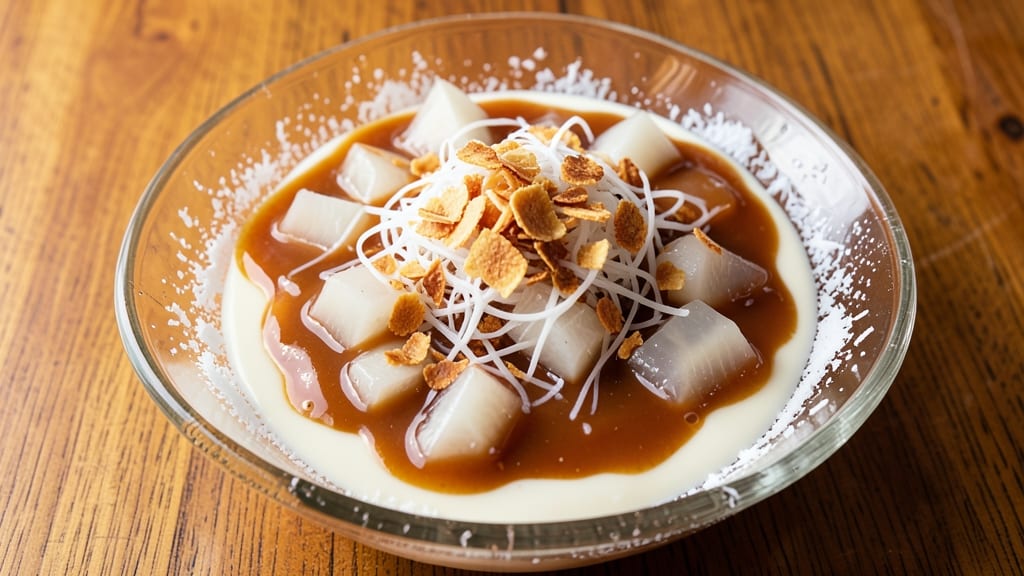
This buko salad pinoy recipe delivers the perfect balance of chewy coconut, creamy sweetness, and refreshing crunch—Filipino comfort food at its finest.
The secret lies in thinly sliced young coconut (buko) that soaks up the tangy gelatin and sweetened condensed milk mixture, creating a texture that’s both satisfying and light. I’ve perfected this recipe over years of testing, ensuring every bite has that signature chewy-crisp contrast and velvety coconut cream.
The magic happens when you layer the ingredients just right: gelatin or agar-agar sets the base, while cream and condensed milk add richness. Thinly slicing the buko ensures it absorbs the flavors without becoming mushy, and chilling for at least 4 hours transforms it into a silky, dessert-like salad.
Optional toppings like ube jam or fresh fruit elevate it further, but the classic version—pure coconut bliss—is already irresistible.
What you’ll end up with is a foolproof dessert or side dish that’s creamy, crunchy, and perfectly sweet—not too heavy, not too light. It’s the kind of recipe that disappears in minutes, making it ideal for potlucks, family gatherings, or a refreshing treat on hot days.
The best part? It’s customizable—swap regular gelatin for agar-agar for a vegan version, or add your favorite fruits for extra vibrancy.
Ready to master this Filipino staple? The process is simple, but the results are anything but ordinary. Let’s get started—your taste buds (and guests) will thank you.
Ingredients for buko salad pinoy
Filipino comfort in a bowl: chewy buko, creamy coconut, and that signature crunch.
| Ingredient | Amount | Notes |
|---|---|---|
| Young Coconut (Buko) 🥥 | 3 cups | Thinly sliced, fresh or frozen |
| Nata De Coco 🍃 | 14 oz | Pre-packaged, drained |
| Sweetened Condensed Milk 🥛 | 14 oz | Canned, not light |
| Evaporated Milk 🥛 | 12 oz | Canned, full-fat preferred |
| Gelatin 🍬 | 2 tbsp | Unflavored, powdered |
| Water 💧 | 1 cup | Hot for dissolving gelatin |
| Sugar 🍚 | 1 cup | White granulated |
| Vanilla Extract 🌿 | 1 tsp | Pure, not imitation |
| Salt 🧂 | ¼ tsp | Fine grain preferred |
| Ube Jam (Optional) 🍠 | ¼ cup | For purple swirl |
| Fresh Pineapple (Optional) 🍍 | 1 cup | Diced, for topping |
| Lime Juice (Optional) 🍋 | 1 tbsp | Freshly squeezed |
| Shredded Coconut (Optional) 🥥 | ¼ cup | Toasted for crunch |
The buko is non-negotiable—freshly sliced makes all the difference, but frozen works in a pinch. Asian markets have the best selection, but most grocery stores carry pre-packaged buko too. Look for slices that are thin but not mushy—they should hold their shape. Nata de coco? The 14-ounce packages from Filipino grocery stores are ideal, but any brand works if it's plump and white. If you can't find it, agar-agar sheets make a great vegan swap—just soak them in water first. The sweetened condensed milk should be the full-fat kind—light versions won't give that rich, creamy texture.
No gelatin? Agar-agar powder is the perfect vegan alternative—use half the amount and follow package directions for hot water. Short on evaporated milk? Full-fat coconut milk works beautifully, though it’ll be slightly thinner. The ube jam adds that signature purple swirl, but strawberry or mango jam gives a different (but still delicious) twist. Fresh pineapple? Dice it small so it blends into the texture without overpowering. And that lime juice? Freshly squeezed brightens everything up—don’t skip it if you’ve got it.
This keeps for 3-4 days in the fridge, but honestly? It’s best the day you make it. The buko stays chewy, the coconut cream stays luscious. For potlucks, double the batch—it disappears fast. Store in an airtight container with a layer of plastic wrap pressed against the surface to keep it from drying out. Freezing isn’t recommended—the buko gets mushy. If you’re making it ahead, assemble everything except the gelatin mix, then add the gelatin just before chilling.
Why You'll Love This Recipe
- I’ll be real: the ingredients aren’t fancy, but they stretch far. A single can of buko and a block of nata de coco feed a crowd, and the condensed milk? That’s the secret weapon—cheap, shelf-stable, and makes everything taste like a hug. Leftovers? They’re basically free snacks for the week.
- No Chopping Needed: I swear, this is one of those rare desserts where you just drain and dump—no knife work, no peeling, no stress. The buko comes pre-shredded in cans, the nata de coco is ready to slice, and the gelatin? Just bloom it in cold milk. Honestly, I make this when I’m too tired to do anything else.
- Crunch-Meets-Cream Magic: That first bite of jelly-like buko with the chewy nata de coco? It’s like dessert crack for your mouth. The condensed milk ties it all together with that perfect sweetness, while the gelatin gives it just enough structure to hold its shape—no soggy mess here.
- Party in a Bowl: Between us, this is my go-to for birthdays, potlucks, or just because. It’s light enough to serve as a palate cleanser after a heavy meal but hearty enough to be the star. Plus, it stays fresh in the fridge for days, so I can prep it ahead and not stress about last-minute baking.
Step-by-step instructions for buko salad pinoy recipe
Here's how to create this creamy, crunchy Filipino dessert with layers of coconut perfection.
Prepare the Gelatin Mixture
In a small bowl, combine the 2 tablespoons gelatin with the 1 cup hot water. Stir continuously for 2-3 minutes until the gelatin is completely dissolved and the mixture becomes smooth and transparent. This step is crucial because any undissolved gelatin will create lumps in your dessert.
While stirring, add the 1 cup sugar and 1 teaspoon vanilla extract. Mix well until the sugar is fully incorporated and the mixture turns into a pale yellow syrup. Let this mixture sit at room temperature for 5 minutes to cool slightly before using. This cooling prevents the gelatin from setting prematurely when combined with the other ingredients.
Combine the Creamy Base
In a large mixing bowl, gently fold together the 3 cups young coconut (buko), 14 ounces nata de coco, 14 ounces sweetened condensed milk, and 12 ounces evaporated milk. Use a large spoon or spatula to combine everything without crushing the buko or nata de coco. The mixture should look like a thick, creamy coconut blend with visible pieces of buko and nata de coco.
Now, slowly pour the cooled gelatin mixture over the buko mixture while gently stirring. Be careful not to overmix—just enough to evenly distribute the gelatin throughout. This step ensures your buko salad has that perfect creamy texture that holds everything together. Add the ¼ teaspoon salt and mix lightly to balance the sweetness.
Incorporate Optional Add-Ins
If using, add the ¼ cup ube jam to the mixture and fold gently until you achieve a marbled effect. The ube jam adds beautiful purple swirls and a subtle earthy sweetness that complements the coconut flavors. For a tropical twist, fold in the 1 cup diced fresh pineapple and 1 tablespoon lime juice—this adds a refreshing acidity that cuts through the richness.
For extra texture, sprinkle the ¼ cup shredded coconut on top and gently fold it into the mixture. If you prefer toasted coconut, lightly toast the shredded coconut in a dry pan over medium heat for 2-3 minutes until golden brown before adding it. This adds a delightful crunch that contrasts beautifully with the creamy base.
Chill and Set
Transfer the buko salad mixture to a serving dish or individual bowls. Cover with plastic wrap and refrigerate for at least 4 hours, or preferably overnight. This chilling time is essential for the gelatin to fully set and for all the flavors to meld together perfectly. The texture should be firm but still slightly creamy when served.
Before serving, give the buko salad a quick stir to redistribute any ingredients that may have settled. If you used ube jam, you'll see beautiful purple swirls throughout. The buko should be tender and the nata de coco should have a delightful jelly-like texture. Serve chilled and enjoy the perfect balance of creamy, crunchy, and sweet flavors that make this dessert a Filipino classic.
Pro Tips For Making Buko Salad Pinoy
- CHILL THE BUKO FIRST: Drain the young coconut and soak the chunks in cold water for 10 minutes before assembling—this prevents the gelatin from setting too fast and turning rubbery. I learned this the hard way when my first batch turned into a chewy mess instead of that perfect, jiggly texture.
- USE FRESH NATA DE COCO: Skip the pre-packaged nata de coco that’s been sitting on the shelf for months—it dissolves into mush. Buy the fresh, jelly-like strands from Asian markets and rinse them in cold water just before adding to the mix. The difference in texture is night and day.
- MIX MILKS AT ROOM TEMP: Warm the condensed and evaporated milk together in a microwave for 20 seconds (just until they’re easy to stir), then let them cool slightly before folding into the buko. Cold milk makes the gelatin fight you, while warm milk blends smoothly—no lumps, no stress.
- DIVIDE GELATIN INTO BATCHES: If your gelatin powder is old or clumpy, split it into two small bowls and bloom it separately in cold water for 5 minutes. This ensures even hydration and prevents dry spots in your salad. I used to dump it all in at once, and half the time, it wouldn’t dissolve properly.
Essential equipment for perfect results
Gelatin Dissolver
I can’t stress enough how important this tool is for smooth, lump-free buko salad. A handheld immersion blender or whisk attachment for your stand mixer works best—just blend the gelatin with hot water for 30 seconds until fully dissolved.
I use my KitchenAid stand mixer with the whisk attachment because it’s foolproof. For a budget option, a manual whisk works if you stir vigorously for 2-3 minutes until the mixture turns clear. 💫
Mixing Bowls
Go for large, shallow bowls (at least 8-inch diameter) to mix your ingredients without crushing the buko. I prefer glass mixing bowls because they’re non-reactive and easy to clean, but stainless steel works too.
Avoid plastic—it can absorb odors and may not hold up to the gelatin’s stickiness. A double-layered bowl (one inside another) helps contain any spills while mixing.
Measuring Cups
Precision matters with buko salad, so invest in liquid measuring cups with spouts for the condensed milk and evaporated milk, and dry measuring cups for the sugar and gelatin. My go-to is the OXO Good Grips set—the markings are clear, and the handles are comfortable.
For the nata de coco, use a kitchen scale if possible (it’s 14 ounces per package, but scales ensure accuracy). A fine-mesh strainer also comes in handy if you need to drain excess liquid from the buko.
Plastic Wrap
This isn’t just any plastic wrap—use heavy-duty, stretchy wrap like Glad Press’n Seal to press directly onto the buko salad’s surface. This prevents a skin from forming and keeps the texture creamy.
I also recommend parchment paper underneath the bowl before wrapping to make removal easier. Pro tip: Spritz the wrap with water before pressing it down for an airtight seal. ❄️
Serving Dishes
For plating, I love glass dessert bowls (like Pyrex) or ceramic ramekins—they’re sturdy and show off the colors beautifully. If serving family-style, a large glass bowl (at least 10-inch diameter) works, but avoid metal—it can react with the gelatin.
For individual servings, clear plastic cups with lids are great for potlucks (just add a spoon!). Garnish with toasted coconut or ube jam swirls right before serving for a restaurant-worthy touch.
Nutrition facts
Frequently asked questions
Why does my buko salad turn out too watery?
The most common reason is under-chilling or using too much liquid. Always chill for at least 4 hours (overnight is best), and measure your condensed milk and evaporated milk precisely. If it's still too thin, add 1 extra tablespoon gelatin dissolved in 2 tablespoons hot water and mix well before chilling again.
Can I make buko salad without gelatin? Yes! For a vegan version, replace gelatin with agar-agar powder (use 1 teaspoon dissolved in ½ cup hot water) or 1 tablespoon cornstarch cooked with ¼ cup water until thick. The texture will be slightly firmer but still delicious. Just
How do I store leftover buko salad?
Transfer to an airtight container and refrigerate for up to 3-4 days. To prevent drying, press plastic wrap directly onto the surface before sealing. For best texture, eat within 2 days. Unfortunately, freezing isn't recommended—the buko becomes mushy when thawed. Store individual portions in small containers if you know you won't finish it all at once.
What's the best way to slice buko for perfect texture?
Use a sharp mandoline slicer or very sharp knife to cut buko into ⅛-inch thick slices. Soak fresh buko in cold water for 10 minutes before slicing to remove excess sap. For frozen buko, thaw overnight in the fridge first. Thin slices absorb more flavor and stay chewy, while thick slices can turn mushy.
Can I make buko salad ahead for parties?
Prepare everything except the gelatin mixture, then assemble and chill just before serving. For large groups, divide the mixture into two serving bowls—one with the gelatin mix and one without. When ready to serve, simply combine them and let set for 1-2 hours at room temperature before refrigerating. This keeps the texture perfect and makes serving easier.