
Side Dishes
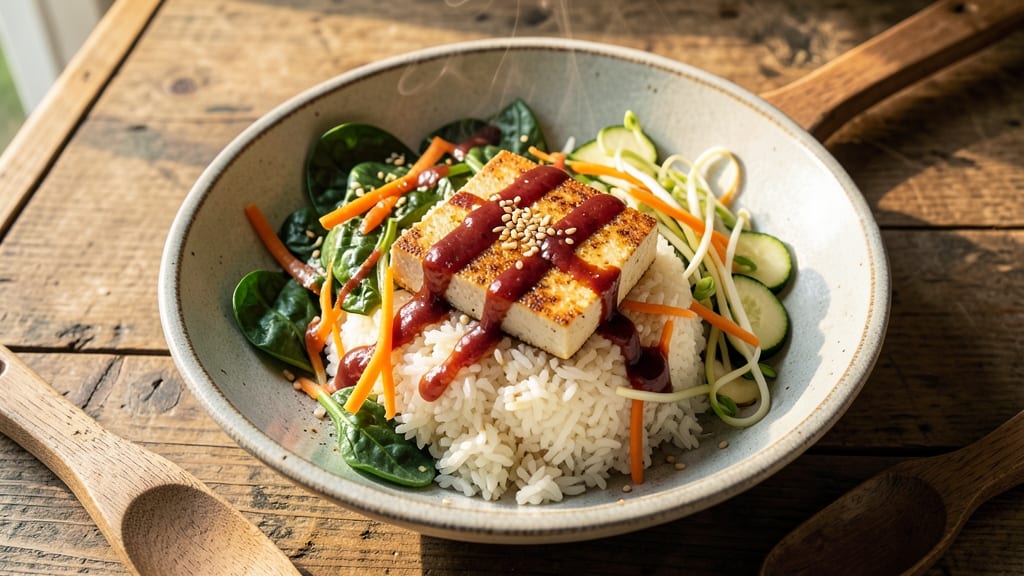
This bibimbap salad recipe transforms Korean-inspired rice bowls into a vibrant, spicy masterpiece that balances textures and flavors in every bite. The foundation starts with perfectly cooked short-grain rice, served warm in a hot stone bowl—a traditional technique that adds depth to the meal.
What sets this dish apart is the careful preparation of each component: crisp-tender vegetables, savory tofu or a runny fried egg, and a rich, spicy gochujang sauce that ties everything together.
The assembly is where the magic happens—layering sautéed spinach, julienned carrots, bean sprouts, and zucchini in a visually striking pattern before drizzling with the gochujang sauce.
The heat from the bowl melts the sauce into a creamy, spicy glaze that coats every ingredient, creating a harmonious blend of textures and flavors. This recipe stays true to Korean culinary traditions while offering flexibility for modern adaptations, like adding your choice of protein or adjusting the spice level.
What you’ll end up with is a dish that’s as beautiful as it is delicious—colorful, fragrant, and packed with layers of flavor. The crisp vegetables contrast with the soft rice and creamy sauce, while the spicy kick from the gochujang adds a satisfying warmth.
It’s the kind of meal that feels special yet simple enough to make for any occasion, from a cozy weeknight dinner to a gathering with friends.
Ready to experience the full bibimbap experience? Let’s get started with the ingredients and techniques that bring this dish to life.
Ingredients for bibimbap salad
The foundation of vibrant bibimbap starts with these fresh, carefully chosen ingredients for four servings.
| Ingredient | Amount | Notes |
|---|---|---|
| Short-Grain White Rice 🍚 | 1 ½ cups | Uncooked, jasmine or sushi rice preferred |
| Fresh Spinach 🌿 | 4 cups | Baby spinach works best |
| Carrots 🥕 | 2 whole | Julienned into thin strips |
| Bean Sprouts 🌱 | 2 cups | Fresh, not canned |
| Zucchini 🥒 | 1 whole | Julienned into thin strips |
| Extra-Firm Tofu 🍢 | 1 lb | Pressed and cubed |
| Gochujang Sauce 🌶️ | ½ cup | Korean fermented chili paste |
| Sesame Oil 🫒 | 1 tbsp | Toasted for aroma |
| Soy Sauce 🍶 | 3 tbsp | Low-sodium preferred |
| Sesame Seeds 🌾 | 1 tbsp | Toasted for garnish |
| Vegetable Oil 🫒 | 3 tbsp | For stir-frying |
| Garlic Cloves 🧄 | 4 cloves | Minced for sauce |
| Ginger Root 🌿 | 1 tbsp | Freshly grated |
| Salt 🧂 | 1 tsp | Diamond Crystal preferred |
| Black Pepper 🌶️ | ½ tsp | Freshly ground |
The rice is non-negotiable—jasmine or sushi rice delivers that signature stickiness and slight sweetness. Lundberg Farms or Koda Farms brands are my go-tos for consistent quality. For the vegetables, freshness matters most. Carrots and zucchini should be firm with no soft spots, and spinach should be vibrant green, not wilted. Bean sprouts? Look for the brightest, freshest bunches—they lose crispness fast. The tofu deserves special attention: extra-firm, non-GMO blocks press best, and brands like House Foods or Wildwood deliver reliable texture.
No gochujang? Substitute with 2 tbsp sriracha plus 1 tbsp soy sauce, though the depth won't be identical. Swapping zucchini for yellow squash works in a pinch, but the color contrast suffers. For the tofu, firm instead of extra-firm holds up better if pressed longer. Sesame oil? Toast it in a dry pan for 30 seconds before using—trust me, the aroma changes everything. The garlic and ginger should be freshly grated or minced; jarred versions lack the brightness needed for this dish.
Rice keeps 4-5 days in the fridge, but tofu and vegetables are best used within 2 days. Store the sauce separately in a sealed container—it'll last 3 months in the freezer. For meal prep, assemble bowls fresh but keep components separate until serving. The tofu can be pan-fried ahead and reheated gently. Portion sauce in small containers to prevent freezer burns.
Why You'll Love This Recipe
- No-Cook Prep Day: I swear by the "chop ahead" trick—just toss the spinach, carrots, and zucchini into a container the night before. The sprouts barely need effort, and the rice cooks in 15 minutes. Honestly, it’s the kind of meal that feels like a hug when you’re too tired to think.
- Crunchy-Creamy Magic: That first bite? The spinach wilts just enough to soak up the dressing while the carrots stay crisp, and the sprouts add this perfect snap. Between us, I’ve tried store-bought versions, and this homemade mix is in a whole other league—no sad, soggy textures here.
- Lunchbox Hero: Pack it in jars or containers, and you’ve got a lunch that’s actually exciting. My kids swap their usual PB&J for this—yes, even on a Tuesday night—and I love that it’s hearty enough for adults but still fun for little hands. The rice keeps it filling, the veggies make it nutritious, and the dressing ties it all together.
- Budget Meal Reinvented: Short-grain rice is cheap, spinach is a pantry staple, and carrots/zucchini last forever. I’ve made this for under $5 per serving, and it’s the kind of dish that stretches into leftovers without getting boring. Plus, if I forget to eat it all, it reheats like a dream—no dry rice here.
Step-by-step instructions for Korean-inspired rice bowls
Master this balanced, flavor-packed dish with precise techniques for vibrant vegetables and rich gochujang sauce.
Prepare the Short-Grain White Rice
Rinse the 1.5 cups short-grain white rice thoroughly under cold water until the water runs clear. This removes excess starch that would make the rice gummy. Drain completely in a fine-mesh strainer, then transfer to a pot with 2.5 cups water (use a 1:1.66 rice-to-water ratio for perfect texture). Bring to a boil over high heat, then immediately reduce to low heat, cover, and simmer for 15 minutes. Turn off the heat and let it steam, covered, for another 10 minutes. The rice should be tender with a slight bite—fluffy but not dry.
Here's the key: don't peek or stir during cooking. The steam needs to circulate freely. Once ready, fluff gently with a fork and spread evenly on a tray to cool slightly before assembling the bowls. Warm rice holds its shape better when combined with other components.
Cook the Vegetable Components Separately
Heat 1 tablespoon vegetable oil in a wok or large skillet over medium-high heat. Add the 2 whole carrots (julienned) and stir-fry for 2-3 minutes until they soften but retain a crisp texture. Remove and set aside. Repeat with the 1 whole zucchini (julienned) and 2 cups bean sprouts, cooking each for 1-2 minutes until just tender. Finally, wilt the 4 cups fresh spinach in the same pan for 30 seconds until just softened. Each vegetable should maintain its distinct color and texture—overcooking turns them mushy.
Work quickly to maintain high heat. The vegetables should be hot when you assemble the bowls—this prevents sogginess. Keep each component separate until serving to preserve their individual textures.
Prepare and Pan-Fry the Extra-Firm Tofu
Press the 1 lb extra-firm tofu between paper towels for 30 minutes to remove excess moisture. Cut into ½-inch cubes and heat 1 tablespoon vegetable oil in a non-stick skillet over medium heat. Add the tofu and cook for 5-6 minutes, turning occasionally, until golden brown on all sides. The tofu should develop a crisp exterior while remaining tender inside. Season immediately with ½ teaspoon salt and ¼ teaspoon black pepper while hot.
Don't overcrowd the pan—cook in batches if needed. The tofu releases water as it cooks, so avoid flipping too soon. This step builds the protein foundation of your bibimbap.
Make the Gochujang Sauce
In a small saucepan, combine the 0.5 cup gochujang sauce, 3 tablespoons soy sauce, 1 tablespoon freshly grated ginger root, and 4 cloves minced garlic. Heat over medium-low heat for 3-4 minutes, stirring constantly until the mixture is smooth and fragrant. Remove from heat and stir in 1 tablespoon toasted sesame oil. The sauce should be thick but pourable—adjust consistency with a splash of water if needed. Taste and balance the heat with a pinch more soy sauce if required.
This sauce carries the authentic Korean flavor profile. The ginger and garlic deepen the umami, while the sesame oil adds nutty aroma. Keep it warm until serving to enhance its aromatic qualities.
Assemble and Garnish the Bibimbap Bowls
Divide the cooked rice evenly among 4 bowls. Arrange the cooked vegetables, tofu, and any remaining components in neat piles on each serving. Drizzle generously with the warm gochujang sauce, then sprinkle with 1 tablespoon toasted sesame seeds divided among the bowls. The presentation should showcase the vibrant colors of each ingredient—this is as important as the taste in traditional bibimbap.
Serve immediately while everything is hot. The contrast of temperatures and textures—warm rice, crisp vegetables, tender tofu—creates the perfect bite. For an authentic experience, use a small bowl of the gochujang sauce on the side to adjust spice levels to taste.
Pro Tips For Making Bibimbap Salad
- STEAM THE SPINACH: Toss spinach with a pinch of salt and a splash of water, then microwave for 30 seconds—covered. This keeps it bright green and wilted just enough to hold shape, not turn into mush. I used to blanch it in boiling water, but this lazy method actually works better and saves you from a sink full of dirty water.
- CUT ZUCCHINI INTO STICKS: Thin, even matchsticks (about 1/8-inch thick) cook faster and hold their bite better than chunks. If you’re short on time, skip the spiralizer—just slice lengthwise into half-moons, then cut those into thirds. The texture stays crisp when tossed with sesame oil later.
- SALT THE CARROTS BEFORE COOKING: Toss shredded carrots with 1/2 teaspoon salt before stir-frying—it breaks down their fibers so they soften in half the time. I learned this the hard way after staring at a pot of rock-hard carrots for five minutes. Works for bean sprouts too, if you’re prepping them ahead.
- USE DAY-OLD RICE: Cold, slightly dry rice absorbs sauces better and doesn’t turn to glue when mixed. If you’re making bibimbap fresh, cook the rice the night before and refrigerate it uncovered for 30 minutes to speed up the drying. Trust me, the texture is worth the wait.
Dietary considerations for this recipe
Vegetarian-Friendly Base
This bibimbap recipe shines as a vegetarian powerhouse, relying on tofu as the protein foundation instead of meat. The extra-firm tofu absorbs flavors beautifully when pan-fried, delivering a satisfying texture that mimics traditional protein options.
I press it for 30 minutes to remove excess moisture—this ensures crisp edges and a tender interior that holds up perfectly in the bowl. 🍢
Gluten-Free Adaptations
For gluten-free diners, simply swap the soy sauce for tamari (a gluten-free alternative) in the gochujang sauce. I use San-J brand tamari—it has a richer flavor than some store brands.
Double-check your gochujang label too; some brands contain wheat. The rest of the recipe remains unchanged, keeping all the vibrant flavors intact while making it safe for gluten-sensitive guests. ✨
Nut-Free Considerations
While traditional bibimbap often includes sesame seeds, this recipe keeps it nut-free by using toasted sesame seeds as a garnish. If you're avoiding sesame entirely, skip them or replace with crispy fried shallots for a similar crunch.
The sauce remains nut-free as long as you avoid cross-contamination when handling sesame oil—just use a clean utensil for each ingredient. 🌾
Spice Level Control
Gochujang sauce packs serious heat, but you can easily adjust it. For milder heat, reduce the gochujang to 3 tablespoons and add 1 tablespoon honey to balance. For extra spice, add ½ teaspoon red pepper flakes to the sauce.
I like keeping it authentic but always offer a side bowl of plain rice for guests who prefer less heat. The key is balancing the sauce with the fresh, cool vegetables—this contrast makes the spice more enjoyable. 🌶️
Protein Swaps
Need more protein options? Swap the tofu for marinated tempeh (cut into cubes and pan-fried) or seitan for a meatier texture. For egg lovers, add a fried egg on top—this is a common bibimbap variation.
If using eggs, cook them just before serving so the yolk stays runny. Each swap keeps the dish balanced while offering different flavor profiles. 💡
Meal Prep Tips
Prep components ahead to save time: Cook the rice and sauce first, then store separately in airtight containers for up to 3 days. Reheat the sauce gently in a saucepan (don’t microwave—it loses texture). Keep the tofu and vegetables raw until serving to maintain crispness.
Assemble bowls fresh by reheating the sauce and tofu, then layering with pre-cooked veggies and rice. This keeps the dish vibrant and flavorful even when prepped in advance. ⏰
Nutrition facts
Frequently asked questions
Why do I need to cook the vegetables separately in bibimbap?
Cooking each vegetable separately preserves their individual textures and colors—spinach stays wilted but vibrant, carrots maintain crispness, and bean sprouts remain crunchy. This creates the perfect contrast when mixed with warm rice and sauce. Overcooking would turn everything mushy and lose the visual appeal that makes bibimbap so special!
Can I make bibimbap ahead of time?
Yes, but with smart prep! Cook the rice, sauce, and tofu first, then store them separately in airtight containers for up to 3 days. Keep vegetables raw until serving to maintain crispness. Reheat sauce gently in a saucepan (never microwave) and assemble fresh—this keeps the dish vibrant and flavorful. The key is never mixing components until the final moment!
How do I adjust the spice level in the gochujang sauce?
For milder heat, reduce gochujang to 3 tablespoons and add 1 tablespoon honey to balance. For extra spice, add ½ teaspoon red pepper flakes. Always keep a side bowl of plain rice handy for guests who prefer less heat. The sauce's heat should complement, not overpower, the fresh vegetables.
What's the best way to press extra-firm tofu for bibimbap?
Wrap the tofu block in paper towels, place it on a plate, and set a heavy object (like a cast-iron skillet) on top for 30 minutes. Flip and repeat for even pressing. This removes excess moisture so the tofu develops crisp edges when pan-fried. Never skip pressing—it makes all the difference in texture!
Can I use regular white rice instead of short-grain rice?
Short-grain rice is ideal because it stays sticky when mixed with sauce, creating that signature bibimbap texture. Regular white rice will be too dry and separate. If you must substitute, use arborio rice (like risotto rice) as a closer alternative. The rice-to-water ratio is also crucial—stick to 1:1.66 for perfect results!