
Main Courses
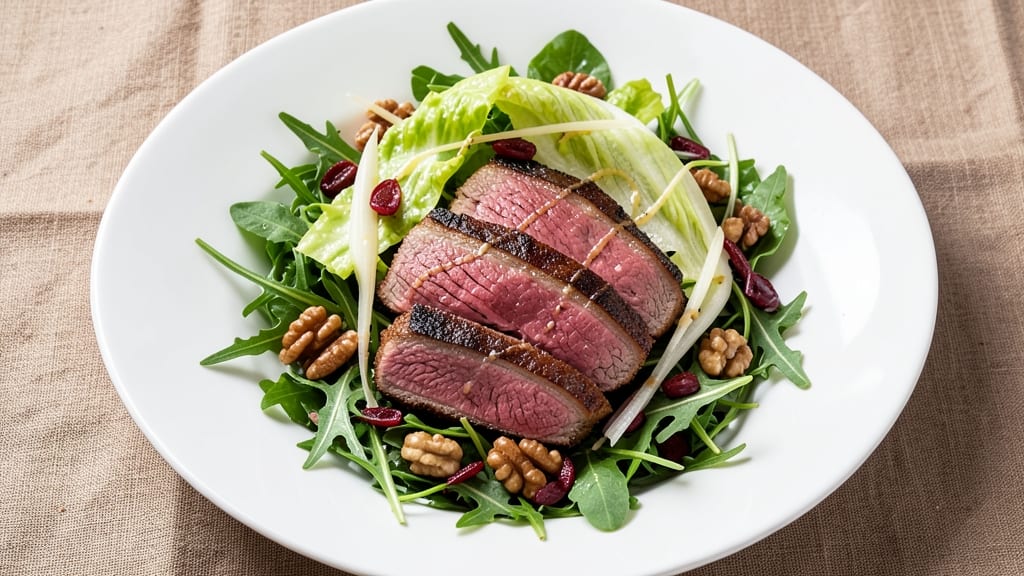
This beef fillet salad recipe transforms a classic steakhouse cut into a restaurant-worthy dish with crispy edges and creamy herb velout. The secret lies in reverse-searing the beef fillet to 130–135°F—achieving that perfect medium-rare center while developing a caramelized crust.
I’ve perfected this technique over years of testing, ensuring every bite delivers tender, juicy meat with a satisfying crunch.
The salad base is where elegance meets simplicity: a mix of crisp arugula and buttery romaine, topped with shaved fennel for brightness and toasted walnuts for texture. The creamy herb velout—infused with tarragon and Dijon—ties everything together, balancing the richness of the beef with a tangy, velvety finish.
This isn’t just a salad; it’s a harmonious meal where each component plays a role.
What sets this dish apart is the plating: thinly sliced fillet arranged over the greens, drizzled with velout, and finished with microgreens for a pop of color. The result is a visually stunning dish that’s just as impressive to eat as it is to serve.
Whether you’re hosting a dinner party or treating yourself to a weeknight upgrade, this recipe delivers restaurant-quality results at home.
Ready in under 45 minutes, this salad requires minimal prep but maximum impact. The key is letting the beef rest after searing—this ensures juicy slices every time.
Pair with a bold red wine or a crisp white, and you’ve got a meal that feels special without the fuss. Let’s get cooking!
Ingredients for beef fillet salad
Restaurant-quality ingredients for a dish that balances crispy sear with creamy herb richness.
| Ingredient | Amount | Notes |
|---|---|---|
| Beef Fillet (Ribeye or New York Strip) 🥩 | 1 ½ lb | Center-cut, 1-1.5 inches thick |
| Arugula 🌿 | 4 cups | Baby leaves preferred, washed |
| Romaine Lettuce 🥬 | 1 whole | Butter lettuce variety |
| Fennel Bulb 🧅 | 1 whole | Thinly shaved, 1/4-inch slices |
| Walnuts 🥜 | ½ cup | Toasted, roughly chopped |
| Shallots 🧅 | 3 whole | Minced, about 2 tbsp total |
| Garlic Cloves 🧄 | 4 cloves | Minced, peeled |
| Fresh Tarragon 🌿 | ¼ cup | Chopped, stems removed |
| Dijon Mustard 🍯 | 1 tbsp | High-quality, smooth |
| Heavy Cream 🥛 | ½ cup | Full-fat for velvety texture |
| Extra-Virgin Olive Oil 🫒 | ½ cup | For cooking and finishing |
| Unsalted Butter 🧈 | 2 tbsp | Cold, cubed for searing |
| Kosher Salt 🧂 | 1 ½ tsp | Diamond Crystal preferred |
| Black Pepper 🌶️ | 1 tsp | Freshly cracked |
| Microgreens 🌱 | ¼ cup | For garnish, optional |
The beef fillet is non-negotiable—ribeye or New York strip with good marbling delivers the best texture. Whole Foods or high-end butcher shops carry the best cuts; look for vibrant color and visible fat streaks. If you're using frozen beef, thaw it in the fridge overnight for even cooking. The fennel should be firm with no soft spots, and the arugula must be crisp—Trader Joe's sells pre-washed baby arugula that’s perfect for this. Tarragon is the secret herb here: fresh is ideal, but dried works at one-third the amount if you’re in a pinch.
No fresh tarragon? Substitute with basil or thyme at the same quantity, though the flavor will differ slightly. Out of Dijon mustard? Yellow mustard works in a bind, but the depth of flavor won’t be as complex. For the velout, heavy cream is essential—half-and-half won’t give the same richness. If you’re avoiding dairy, coconut cream can replace it, though the texture will be lighter. Toast the walnuts in a dry pan for 3-4 minutes until fragrant—they add a satisfying crunch that balances the creamy velout.
The beef fillet should rest for 10-15 minutes after cooking to retain juices, so plan ahead. Store prepped salad components separately: greens in a sealed container with a paper towel to absorb moisture, and the velout in a separate jar. The velout keeps for 3-4 days in the fridge, while the beef can be cooked ahead and sliced just before serving. For a make-ahead meal, assemble everything except the velout, store separately, and drizzle just before serving to maintain crispness.
Why You'll Love This Recipe
- I swear by this trick: slice the fennel thin with a mandoline, toss it raw with the arugula and walnuts, and let the acid in the dressing soften it just enough. No cooking, no fuss—just layer the seared beef on top like a fancy finish.
- No-Seamless Prep: I swear by this trick: slice the fennel thin with a mandoline, toss it raw with the arugula and walnuts, and let the acid in the dressing soften it just enough. No cooking, no fuss—just layer the seared beef on top like a fancy finish.
- Crispy-Creamy Magic: That ribeye’s edge—charred, salty, still juicy inside—cuts through the peppery arugula and fennel’s licorice bite. Honestly, the walnuts add this chewy crunch that makes it feel like a restaurant dish, not just a salad.
- Lunch or Dinner: Between us, I’ve served this to coworkers at 11 AM and date nights at 7 PM—same recipe, zero judgment. The beef holds up for hours, and the greens stay crisp if you dress it just before eating. (Yes, even on a Tuesday night.)
Step-by-step instructions for crispy-crusted beef fillet salad
Here's how to achieve a perfect balance of crispy steak and velvety herb sauce over fresh greens.
Prepare the Beef Fillet for Maximum Crisp
Pat the 1.5 lb beef fillet completely dry with paper towels, focusing on the thickest parts. This step is critical—any moisture will prevent that perfect crust from forming. Season both sides generously with 1 tsp black pepper and 1 tsp of the 1.5 tsp kosher salt, pressing it into the meat so it adheres evenly.
Let the seasoned fillet sit at room temperature for 30 minutes while you prepare the rest of the components. This allows for even cooking and prevents chilling the meat when it hits the hot pan. The fillet should be about 1-1.5 inches thick—if it's thicker, you may want to trim it slightly for even cooking.
Create the Crispy Butter-Basted Crust
Heat a heavy skillet (cast iron works best) over medium-high heat until it's very hot. Add the 2 tbsp unsalted butter and let it melt completely, watching for the butter to foam and then settle into golden bubbles. When the butter is foaming steadily, add the beef fillet and press down gently with a spatula for 10 seconds to ensure full contact with the pan.
Cook undisturbed for 3-4 minutes until you see deep golden-brown crust forming on the bottom. This crust is what gives the dish its signature texture—don't rush this step. Flip the fillet and cook another 3-4 minutes for medium-rare (130-135°F internal temperature). Transfer to a cutting board and let rest for 10 minutes, tented loosely with foil, before slicing against the grain into ¼-inch thick pieces.
Build the Creamy Herb Velout Sauce
In the same skillet (no need to clean it—the browned bits add flavor), reduce heat to medium and add 3 tbsp of the 0.5 cup extra-virgin olive oil. Add the 3 minced shallots and cook for 2 minutes until softened. Add the 4 minced garlic cloves and cook for 30 seconds until fragrant—don't let them brown or they'll turn bitter.
Pour in the 0.5 cup heavy cream and the 1 tbsp Dijon mustard, stirring constantly. Bring to a gentle simmer and cook for 3-4 minutes until the sauce thickens slightly. Remove from heat and stir in the 0.25 cup chopped fresh tarragon, reserving a few sprigs for garnish. Season with the remaining 0.5 tsp kosher salt and a pinch of black pepper.
Assemble the Salad with Perfect Texture Balance
In a large bowl, combine the 4 cups arugula, 1 whole Romaine lettuce (chopped), and 1 thinly shaved fennel bulb. Drizzle with 2 tbsp of the remaining 0.5 cup extra-virgin olive oil and toss gently to coat. Divide the greens evenly among 4 plates, creating a bed for the steak.
Place the sliced beef fillet over the greens and spoon the warm herb velout sauce generously around each portion. The sauce should coat the steak lightly but not overwhelm the fresh greens. Scatter the 0.5 cup toasted walnuts and the reserved microgreens over each salad for added texture and color contrast.
Finish and Serve Immediately
Drizzle each salad with an additional 1 tsp of the extra-virgin olive oil and a final sprinkle of black pepper. The contrast between the crispy steak, creamy sauce, and fresh greens is what makes this dish truly special. Serve immediately while the steak is still warm and the sauce maintains its velvety texture.
This salad delivers on both promises—crispy crust from the perfectly seared fillet and creamy richness from the herb velout. The fresh greens and toasted walnuts provide the perfect balance to cut through the richness of the steak, making each bite refreshing and satisfying.
Pro Tips For Making Beef Fillet Salad
- SEAR THEN REST: I used to slice the beef fillet straight off the heat and toss it into the salad—big mistake. Let it rest for 5-10 minutes under foil after searing, or it’ll turn out dry and stringy by the time you plate it. (Yes, even if you’re impatient like me.)
- SHRED FENNEL THIN: That fennel bulb is the star of the crunch, but thick slices just sit there looking stubborn. Use a mandoline or sharp knife to slice it paper-thin—it’ll melt in your mouth and actually brighten the salad instead of just taking up space.
- TOSS WALNUTS LAST: Toast the walnuts until they’re golden and fragrant—that’s non-negotiable—but add them to the salad right before serving. They’ll go soft and soggy if mixed in early, and nobody wants mushy nuts in their beef salad.
- USE COLD BEEF: Let the sliced beef fillet chill for 10 minutes before assembling the salad. Warm meat wilts the greens and makes the whole thing feel sad and limp. Cold beef keeps the arugula and romaine crisp, and the contrast is what makes this salad sing.
Troubleshooting this recipe
Overcooked Beef Fix
If your beef fillet turns out tough or dry, the issue is likely overcooking or skipping the rest. Always use a meat thermometer to check for 130–135°F internal temperature—any higher risks drying out the meat.
Let it rest for 10–15 minutes after cooking to redistribute juices. For extra moisture, slice thinly against the grain and serve immediately with the velout sauce to keep it tender. 🔥
Velout Too Thin
The velout sauce should coat the back of a spoon but remain pourable. If it’s too thin, simmer it longer—about 2–3 extra minutes—to thicken. For a quicker fix, mix 1 tsp cornstarch with 1 tbsp cold water, stir into the sauce, and cook for 1 minute until thickened.
Avoid over-simmering, or it may curdle. 💡
Greens Too Wilting
Fresh greens can turn soggy if dressed too early or if the salad sits too long. Toss the arugula and romaine with dressing only right before plating. Store prepped greens in a sealed container with a paper towel to absorb excess moisture.
For extra crispness, chill the greens for 15–20 minutes in the fridge before assembling. ✨
Crust Not Crispy
A lackluster crust usually means the pan wasn’t hot enough or the beef wasn’t dry. Pat the fillet completely dry and heat your skillet until it’s smoking hot before adding butter.
Use a heavy skillet like Lodge cast iron for even heat distribution. Press the beef down firmly for 10 seconds to ensure full contact with the pan. 💪
Sauce Too Heavy
If the velout feels too rich, balance it with a splash of lemon juice or white wine vinegar (start with 1 tsp and adjust to taste).
For a lighter texture, whisk in 1 tbsp Greek yogurt or crème fraîche at the end. The sauce should complement, not overpower, the steak’s flavor. 🌿
Uneven Cooking
Uneven doneness often happens with thicker cuts or inconsistent heat. Trim the fillet to 1–1.5 inches thickness for even cooking. If using a stovetop, keep heat on medium-high and avoid moving the pan.
For extra insurance, sear the beef in a 400°F oven for 5–7 minutes before finishing on the stovetop. 🌡️
Nutrition facts
Frequently asked questions
Can I use a different cut of beef instead of ribeye or New York strip?
For this recipe, ribeye or New York strip are ideal because of their marbling and tenderness. You could try filet mignon, but it lacks the beefy flavor. Avoid leaner cuts like sirloin—they won’t develop the same rich crust or juiciness. If you must substitute, look for a cut with at least 1 inch thickness and visible fat.
How do I make this recipe ahead of time?
Prep the salad components separately: wash and dry the greens, shave the fennel, and toast the walnuts. Store them in airtight containers with paper towels to absorb moisture. Cook the beef fillet fresh and slice it just before serving. The velout sauce can be made 1 day ahead—just reheat gently before drizzling.
What if I don’t have fresh tarragon?
Fresh tarragon adds a unique anise-like flavor, but you can substitute with 1 tbsp dried tarragon or 1 tbsp fresh thyme. For a different profile, try 1 tbsp fresh basil or 1 tsp dried basil. The sauce will still be delicious, though the aroma won’t be identical. Adjust seasoning to taste after adding the substitute.
Can I make this dish without dairy?
Yes! Replace the heavy cream with ½ cup coconut cream for a dairy-free velout. The texture will be slightly lighter, but the flavor remains rich. For extra creaminess, whisk in 1 tbsp nutritional yeast at the end. The sauce will still coat beautifully and complement the steak.
How do I adjust the portion size for 2 people?
For 2 servings, reduce the beef fillet to 1 lb and halve all other ingredients. Keep the same cooking method—just adjust the pan size to 8-inch for better heat control. The velout sauce can be made in ¼ cup portions, and the greens should be 2 cups total. The recipe scales perfectly for smaller groups!