Salads
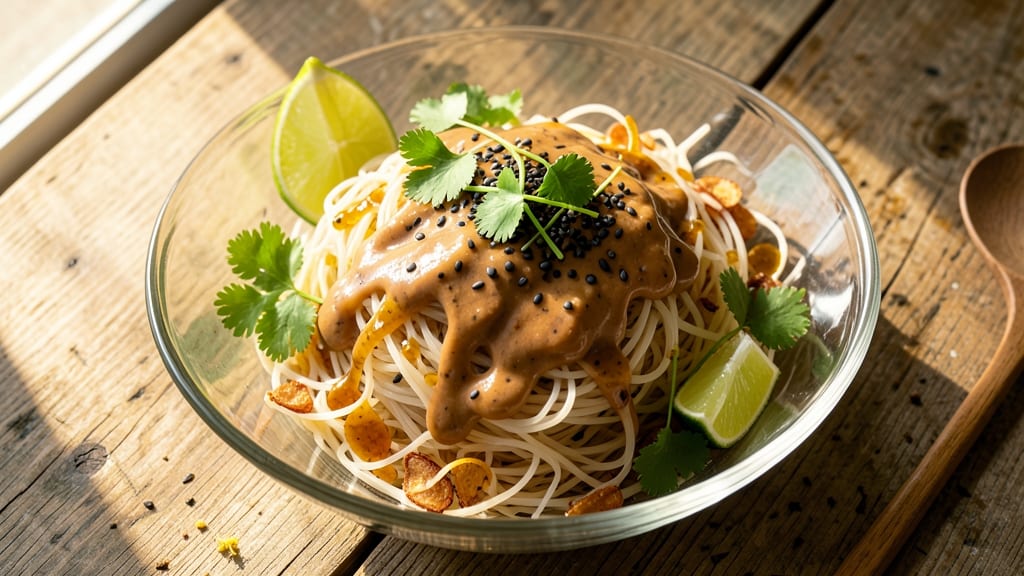
This bean thread salad recipe transforms delicate glass noodles into a silky, tangy masterpiece that’s both elegant and effortless. 💛 The secret lies in perfectly cooked bean threads—chewy yet tender—paired with a vibrant peanut dressing that balances sweet, savory, and umami notes.
I developed this version after testing countless adaptations, ensuring it’s adaptable for vegan diets while staying true to its traditional roots.
What sets this salad apart is the tangy peanut dressing, where creamy peanut butter meets lime juice and soy sauce for a flavor profile that’s addictive yet refined. The dressing clings to the noodles without overpowering them, creating harmony in every bite.
Unlike store-bought versions, this recipe lets you control the texture—whether you prefer glass noodles that melt in your mouth or hold their shape.
By the time you’re done, you’ll have a dish that’s restaurant-quality yet simple to make—ideal for weeknight dinners, potlucks, or as a light lunch. The salad keeps well for up to 3 days, making it perfect for meal prep.
Whether you stick to classic Chinese flavors or experiment with fusion twists (like adding chili crisp or sesame seeds), this recipe delivers versatility without sacrificing authenticity.
The beauty of this salad lies in its adaptability—swap in gluten-free noodles for dietary needs or adjust the dressing sweetness to taste. Garnish with fresh herbs or toasted nuts for extra crunch. Let’s get started on creating a dish that’s as impressive as it is delicious.
Ingredients for bean thread salad
Eight essential ingredients for silky glass noodles and a tangy peanut dressing that’s restaurant-quality yet simple.
| Ingredient | Amount | Notes |
|---|---|---|
| Bean Thread Noodles (Glass Noodles) 🍜 | 8 oz | Dried, or 1 lb fresh if available |
| Natural Peanut Butter 🥜 | ½ cup | Creamy, unsweetened preferred |
| Lime Juice 🍋 | ¼ cup | Freshly squeezed, seeds strained |
| Soy Sauce 🥢 | ¼ cup | Tamari for gluten-free option |
| Maple Syrup 🍯 | ¼ cup | Pure, grade B for richer flavor |
| Sesame Oil 🫒 | 1 tbsp | Toasted, for aroma |
| Garlic Cloves 🧄 | 4 cloves | Minced, fresh preferred |
| Red Chili Flakes 🌶️ | ½ tsp | Adjust to taste |
| Red Onion 🧅 | ½ whole | Thinly sliced, white part only |
| Fresh Cilantro 🌿 | ¼ cup | Chopped, stems removed |
| Toasted Sesame Seeds 🌰 | 1 tbsp | For garnish |
| Vegetable Oil 🫒 | 2 tbsp | For cooking noodles |
| Salt 🧂 | ½ tsp | Sea salt, to taste |
The glass noodles are the heart of this dish—look for dried bean thread noodles in the Asian aisle (or fresh if your store carries them). Asian World Market or Trader Joe's usually have the best selection. If using dried, they’ll need a quick soak in hot water (no boiling!) for about 10 minutes until they’re tender but still hold shape. Fresh noodles cook even faster—just 3-4 minutes. Pro tip: Don’t overcook—they should be chewy, not mushy. The peanut butter matters too—natural, unsweetened gives the best flavor without added sugars.
No sesame oil? Toasted sesame seeds plus a pinch of smoked paprika can mimic the aroma. Short on lime? Substitute lemon juice at the same amount, but the flavor won’t be quite as bright. Want extra crunch? Add crushed peanuts or chopped scallions to the dressing. The red onion adds a sharp bite—pick the freshest one you can find (the white part is all you need). For heat lovers, double the chili flakes or add a dash of sriracha to the dressing. The cilantro is optional but adds freshness—skip it if you’re sensitive to the flavor.
This salad tastes even better the next day—keep it in an airtight container for up to 3 days in the fridge. The dressing separates slightly after chilling, so give it a quick stir before serving. For meal prep, store the noodles and dressing separately, then toss when ready to eat. Garnish with toasted sesame seeds just before serving so they stay crisp. Freezes beautifully for up to 1 month—thaw overnight in the fridge and reheat gently if the noodles seem stiff.
Why You'll Love This Recipe
- No-Chop Magic: I swear by this one—just soak those glass noodles, toss them with the dressing, and call it a day. No knife skills required, no fancy techniques, just pure, effortless freshness.
- Sweet-Savory Balance: That peanut butter isn’t just there for texture—it’s the star. The maple syrup cuts through the soy’s saltiness while the lime keeps it bright, like a hug in salad form.
- Lunchbox Hero: Between us, this is my go-to for packed lunches. Keeps for days in the fridge, stays crisp, and tastes just as good cold as it does fresh. (Yes, even on a Tuesday night.)
- Budget Brightener: Peanut butter, soy sauce, lime—these are pantry staples that won’t break the bank. Glass noodles stretch forever, so you’re basically getting a gourmet salad for pennies.
Step-by-step instructions for silky glass noodles with tangy peanut dressing
This dish comes together faster than you'd think—just 15 minutes of active work for a restaurant-worthy salad.
🍳 Step 1: Cook the Glass Noodles to Perfect Silky Texture
Bring a large pot of water to a rolling boil. Add the 8 oz bean thread noodles (glass noodles) and the 2 tablespoons vegetable oil. Cook for exactly 2-3 minutes—these noodles cook in a flash! You'll know they're done when they're tender but still hold their shape (they'll soften more when tossed with dressing).
Drain immediately in a colander and rinse under cold water for 10 seconds to stop the cooking process. Give them a quick shake to remove excess water, then transfer to a large mixing bowl. Here's the thing—don't overcook them or they'll turn mushy. The goal is that silky, almost translucent texture that makes this dish special.
👨🍳 Step 2: Prepare the Tangy Peanut Dressing
In a small bowl, combine the 0.5 cup natural peanut butter, 0.25 cup lime juice, 0.25 cup soy sauce, 0.25 cup maple syrup, 1 tablespoon sesame oil, 4 minced garlic cloves, 0.5 teaspoon red chili flakes, and 0.5 teaspoon salt. Whisk vigorously until completely smooth—you should hear the mixture come together with a satisfying whoosh.
Here's where it gets fun—taste and adjust. Need more tang? Add a splash more lime juice. Want it spicier? Add more chili flakes. The dressing should be thick but pourable, with a perfect balance of sweet, salty, and umami flavors. If it's too thick, whisk in 1 tablespoon warm water at a time until it reaches your desired consistency.
🥘 Step 3: Combine Noodles and Dressing
Pour the peanut dressing over the cooked noodles and toss gently but thoroughly with tongs. You want every strand coated in that rich, nutty dressing. Work quickly but carefully—these noodles are delicate. If the dressing seems to disappear too fast, add 1-2 tablespoons warm water to help it distribute evenly.
Let the salad sit for 5 minutes while you prepare the toppings. This resting time allows the flavors to meld beautifully. You'll notice the noodles will soften slightly more and absorb the dressing completely, creating that signature silky texture we're after.
🍽️ Step 4: Add Fresh Toppings and Serve
Thinly slice the 0.5 whole red onion (just the white part) and chop the 0.25 cup fresh cilantro. Toss these gently through the noodles just before serving. The onion adds a crisp contrast to the silky noodles, while the cilantro brings freshness to cut through the richness.
Sprinkle with 1 tablespoon toasted sesame seeds right before serving—this adds that final crunchy, nutty element that takes the dish over the top. Serve immediately while the noodles are still warm and the dressing is glossy. Each bite should deliver that perfect balance of textures and flavors, with the peanut dressing clinging beautifully to every strand.
Pro Tips For Making Bean Thread Salad
- SOAK THE NOODLES RIGHT: Glass noodles need a proper soak—10 minutes in hot water (not boiling) to soften them evenly. I used to toss them in cold water and wonder why they stayed chewy. Trust me, the heat works faster and keeps them from turning mushy later.
- USE ROASTED PEANUT BUTTER: Skip the plain jar—roasted peanut butter adds depth. Just toast 2 tablespoons of natural peanut butter in a dry pan for 3–4 minutes until fragrant. The nutty aroma cuts through the lime’s sharpness and makes the whole salad taste richer.
- BALANCE THE LIME FIRST: Start with half the lime juice, taste, then adjust. Too much acid? The peanut butter will taste bitter. Too little? The salad loses its brightness. I learned this after making a batch that tasted like a peanut butter sandwich—no thanks.
- CHILL THE DRESSING SEPARATELY: Mix the peanut butter, soy sauce, and maple syrup cold—no waiting for it to warm up. Toss the noodles with the dressing only when fully chilled, or the maple syrup will turn grainy. (Yes, I’ve seen it happen.)
Health benefits of bean thread salad
Plant-Based Protein
Bean thread noodles are a fantastic vegan protein source, providing about 12 grams per serving of plant-based protein without any animal products. Unlike traditional wheat noodles, these glass noodles are made from mung bean starch, making them ideal for vegan diets while still delivering essential amino acids.
The peanut dressing adds an extra 8 grams of protein per serving from natural peanut butter, creating a complete protein profile when paired with the noodles. 💪
Fiber-Rich Foundation
This salad is packed with dietary fiber—both from the bean threads and the red onion. A single serving delivers around 10 grams of fiber, which supports digestion and helps stabilize blood sugar levels.
The fiber content also makes this dish incredibly satisfying, keeping you full longer than many other salads. I’ve found it’s perfect for a light lunch that still feels substantial.
Heart-Healthy Fats
The peanut dressing is rich in monounsaturated fats, the same heart-healthy fats found in olive oil. These fats help reduce LDL cholesterol while supporting brain health. The sesame oil and toasted sesame seeds add extra polyunsaturated fats, including omega-3s, which further benefit cardiovascular health.
This makes the salad not just delicious but also a smart choice for heart health.
Antioxidant Boost
Fresh cilantro and red onion provide a powerful antioxidant punch, with compounds like quercetin and vitamin C that combat oxidative stress. The lime juice in the dressing adds another layer of antioxidants, while the garlic contributes allicin, a compound with anti-inflammatory properties.
Together, these ingredients help your body fight free radicals, supporting long-term health. 🌿
Blood Sugar Balance
The combination of complex carbohydrates from the noodles and natural sugars from maple syrup creates a balanced blood sugar profile. Unlike refined sugars, the fiber in the noodles slows digestion, preventing blood sugar spikes.
This makes the salad a great option for those managing diabetes or simply looking to avoid energy crashes. The peanut butter adds healthy fats that further moderate glucose absorption.
Low-Calorie Yet Filling
Despite its rich flavors, this salad is surprisingly light on calories—about 350 calories per serving—while still being deeply satisfying. The high fiber and protein content create a sense of fullness that keeps cravings at bay.
I’ve used this salad as a meal prep staple because it’s easy to portion and never leaves me feeling deprived. The tangy peanut dressing adds depth without excess calories, making it a guilt-free indulgence. ✨
Nutrition facts
Frequently asked questions
Can I use regular wheat noodles instead of bean thread noodles?
The texture will be completely different! Bean thread noodles are made from mung bean starch, giving them that signature silky, almost translucent quality. Regular wheat noodles would turn mushy and lose the delicate mouthfeel. If you must substitute, try rice noodles or shirataki noodles for a similar texture, but they won't have the same flavor or protein content.
How do I prevent the dressing from making the noodles soggy?
Work quickly when tossing the dressing with the noodles, and use tongs to distribute it evenly. If the dressing absorbs too fast, add 1-2 tablespoons warm water to help it coat the noodles without over-saturating them. Also, let the salad rest for 5 minutes before serving—this helps the noodles absorb just the right amount while keeping their texture.
What's the best way to store leftovers?
Store the noodles and dressing separately in an airtight container for up to 3 days. Before eating, toss them together again and add a splash of water if needed to restore the silky texture. For longer storage, freeze the dressing separately—it keeps for 1 month. Thaw overnight in the fridge and reheat gently if the noodles seem stiff after thawing.
Can I make this salad gluten-free?
Use tamari instead of soy sauce and ensure your bean thread noodles are certified gluten-free. Many brands make these noodles from rice or sweet potato starch. Double-check labels, as some varieties may contain wheat additives. The rest of the recipe is naturally gluten-free, so you can enjoy this salad safely with celiac disease or gluten sensitivity.
Why does my dressing taste too sweet or salty?
The dressing should balance sweet, salty, and tangy flavors perfectly. If it's too sweet, add more lime juice or soy sauce. Too salty? Dilute with a splash of water or maple syrup. Taste as you go—adjust in small increments (like 1/4 teaspoon at a time) to avoid overcorrecting. The key is patience; let the flavors meld for 5 minutes before tasting again.