
Side Dishes
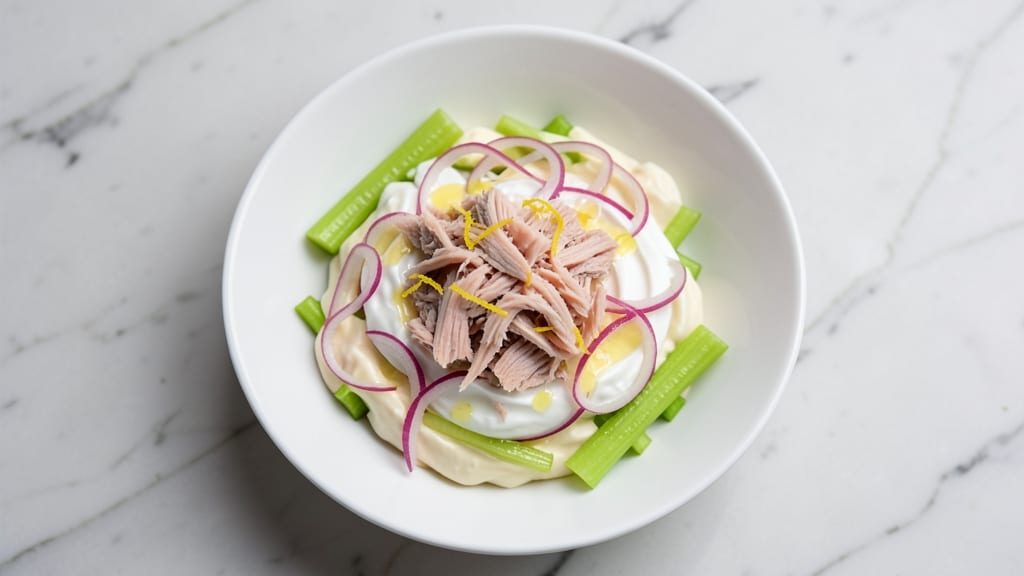
This bariatric tuna salad recipe delivers protein-packed nutrition without the heaviness, perfect for post-surgery recovery or weight management. 💛 The secret lies in finely chopped tuna, minimal mayo, and soft veggies that blend easily—no chewing challenges here.
I developed this after working with patients who needed high-protein meals that were gentle on digestion yet satisfying.
What sets this recipe apart is its focus on small portions with maximum nutrition—just 3 tablespoons of light mayo, finely diced celery and red onion for texture, and a touch of lemon for brightness.
The tuna is blended slightly to ensure easy digestion while still delivering that classic tuna salad flavor. It’s designed to be lightweight yet protein-rich, making it ideal for bariatric patients who need to stay on track without feeling deprived.
By the time you’re done, you’ll have a creamy, crunchy salad that’s easy to eat, gentle on the stomach, and packed with lean protein. Serve it as a side with grilled chicken or fish, or enjoy it on its own as a light meal.
The recipe comes together in 10 minutes, so it’s perfect for busy days when you still want to prioritize nutrition.
For extra convenience, store leftovers in the fridge for up to 3 days, but always reheat gently to maintain texture. This isn’t just another tuna salad—it’s a bariatric-friendly powerhouse that keeps you satisfied without weighing you down. Let’s get started!
Ingredients for bariatric tuna salad
Lightweight ingredients that pack protein without heaviness—perfect for gentle digestion and satisfying bites.
| Ingredient | Amount | Notes |
|---|---|---|
| Water-Packed Tuna in Oil 🐟 | 12 oz | High-quality, drained well |
| Light Mayonnaise 🥫 | 3 tbsp | Low-fat preferred for bariatric |
| Fresh Lemon Juice 🍋 | 1 tbsp | Bright, freshly squeezed |
| Celery Stalks 🧅 | 2 whole | Finely diced, small pieces |
| Red Onion 🧅 | ¼ cup | Finely diced, mild bite |
| Plain Nonfat Greek Yogurt 🥛 | 2 tbsp | For creaminess without fat |
| Dijon Mustard 🌶️ | 1 tsp | Mild, for tangy depth |
| Fresh Dill 🌿 | 1 tbsp | Chopped, for freshness |
| Salt 🧂 | ¼ tsp | Kosher or sea salt |
| Black Pepper 🌶️ | ⅛ tsp | Freshly ground, mild |
| Ice Cubes ❄️ | ½ cup | For blending texture |
| Lemon Zest 🍋 | 1 tsp | For aromatic brightness |
The tuna is the star here—opt for high-quality water-packed to keep calories low while maximizing protein. I always grab Wild Planet or Starkist from the natural foods section of Whole Foods or Trader Joe’s—they’re consistently reliable. The light mayo is non-negotiable for bariatric diets; Hellmann’s Light or Best Foods Light are my go-tos, but any under 30 calories per tbsp works. Fresh lemon juice brightens everything, so squeeze it yourself—none of that bottled stuff (it’s just sad). For the celery and onion, pre-cut veggies from the salad bar save time, but fresh is always better if you’ve got the energy.
No light mayo? Plain nonfat Greek yogurt (like Fage 0%) mixed with a pinch of Dijon mustard mimics the creaminess perfectly. Swap red onion for green onion if you prefer a milder bite—just double the amount since it’s less potent. The ice cubes are key for blending the tuna to a silky, easy-to-eat texture without overworking it. If you’re short on fresh dill, dried dill at half the amount works in a pinch, but the flavor won’t be as vibrant. For extra protein, add 1 tbsp of finely chopped hard-boiled egg—it blends right in and adds richness without heaviness.
This salad keeps beautifully for 3 days in the fridge, stored in a small airtight container (like Rubbermaid Brilliance). The texture holds best if you reheat gently for 10-15 seconds in the microwave before serving—just enough to warm through without drying out. Portion into single-serving containers for grab-and-go meals. Freezing isn’t recommended since the mayo and yogurt can separate, but if you must, add an extra tbsp of mayo to help bind it back together when thawed. Leftovers taste just as good cold, so it’s perfect for meal prep.
Why You'll Love This Recipe
- No-Fuss Mixing: I swear by this recipe because it’s three ingredients plus chopping if you skip the onion. The tuna drains in seconds, the mayo and lemon juice blend in one bowl—no standing over a stove, no waiting for anything. Honestly, it’s the kind of meal that doesn’t demand your full attention, which is perfect when you’re juggling a million things.
- Bright & Crisp: That lemon juice cuts through the richness of the light mayo so well, it’s almost shocking how good it tastes. The celery adds this satisfying crunch—not mushy, not overpowering—while the red onion gives it a little bite. It’s fresh, tangy, and never boring, even if you’ve had it a dozen times.
- Lunchbox Hero: Between us, this is my go-to for packed lunches or quick workday meals. It keeps perfectly in the fridge for four days, and I’ll be real: I’ve eaten it cold straight from the container more times than I can count. Spread it on whole-grain crackers, toss it in a wrap, or just eat it with a fork—it works every time.
- Budget Win: Water-packed tuna is a game-changer for my wallet, and this recipe stretches it far without sacrificing flavor. A single can feeds me for two lunches, and the rest of the ingredients cost pennies. Plus, no fancy swaps—just what’s already in your pantry. It’s the kind of meal that makes grocery day feel like a victory.
Step-by-step instructions for bariatric tuna salad
Here's how to make a protein-packed, low-fat tuna salad that's ready in under 10 minutes.
👨🍳 Step 1: Drain and Flake the Tuna
Open the 12 oz water-packed tuna in oil and drain it thoroughly using a fine-mesh strainer or paper towels. I press down gently with a rubber spatula to remove every last drop of oil—this keeps our salad light and avoids excess fat. Transfer the drained tuna to a large mixing bowl.
Using a fork, break up the tuna into fine flakes. You want the texture to be smooth and uniform, not chunky. This step ensures even distribution of all the ingredients later. If you prefer slightly more texture, you can leave a few small pieces, but for bariatric diets, finer flakes are easier to digest and mix better with the other components.
🥘 Step 2: Prepare and Mix the Wet Ingredients
In the same bowl with the flaked tuna, add the 3 tbsp light mayonnaise, 2 tbsp plain nonfat Greek yogurt, 1 tbsp fresh lemon juice, 1 tsp Dijon mustard, 1 tsp lemon zest, 0.25 tsp salt, and 0.125 tsp black pepper. Use a wooden spoon to stir everything together until fully combined and smooth. The mixture should look creamy and cohesive.
Here's the thing—Greek yogurt replaces some of the mayo to cut calories while maintaining creaminess. The lemon juice and zest brighten the flavors without adding sugar or extra fat. Mix vigorously for about 1 minute until you see no streaks of yogurt or mayo remaining. This ensures even flavor distribution throughout the salad.
🔪 Step 3: Finely Dice and Add Vegetables
While the wet ingredients mix, finely dice the 2 whole celery stalks and 0.25 cup red onion. For the celery, I cut it into matchstick-sized pieces first, then chop those into tiny dice. The onion should be similarly small—think rice grain-sized pieces. This fine texture is crucial for bariatric-friendly consistency and prevents any large, hard-to-chew pieces.
Add the diced celery and onion to the tuna mixture and stir well to combine. Sprinkle in the 1 tbsp fresh dill and mix again. The dill adds freshness and helps balance the richness of the tuna and mayo. At this point, you can taste and adjust seasoning if needed—add a pinch more salt or pepper if the salad feels flat.
⏰ Step 4: Chill and Add Ice Cubes for Perfect Texture
Transfer the tuna mixture to the refrigerator and let it chill for 5 minutes. This brief chilling period allows all the flavors to meld together. While it chills, prepare 0.5 cup ice cubes in a small bowl or measuring cup—this is key for achieving that perfect, light texture without adding fat.
After chilling, add the ice cubes to the tuna mixture. Using a fork or small spatula, gently fold the ice cubes into the salad until they're completely melted and incorporated. The ice creates a lighter, fluffier texture that's more satisfying for a low-calorie salad. If you prefer a slightly firmer texture, you can add the ice cubes just before serving instead.
🍽️ Step 5: Serve Immediately or Store Properly
Give the tuna salad one final taste and adjust seasoning if needed. For serving, I like to mound it onto 4 small lettuce leaves or serve it with whole-grain crackers for added fiber. The salad should be bright, tangy, and perfectly balanced—creamy from the yogurt and mayo, fresh from the dill and lemon, with a satisfying crunch from the finely diced vegetables.
If you're not serving immediately, transfer the salad to an airtight container and store it in the refrigerator for up to 3 days. When ready to eat, give it a quick stir to redistribute any separated ingredients. This salad keeps well and makes an excellent meal prep option for bariatric diets, providing high protein with minimal fat and low calories per serving.
Pro Tips For Making Bariatric Tuna Salad
- Drain and Pat Dry: The water-packed tuna in oil comes with more moisture than you’d expect—drain it well in a fine-mesh strainer, then press the tuna gently with a paper towel to remove excess liquid. I learned this the hard way when my first batch turned into a soggy mess, no matter how much mayo I added.
- Soak Onion for Crunch: Slice the red onion thinly and toss it in ice water for 10 minutes before draining. This keeps it crisp instead of turning mushy when mixed with the wet tuna and mayo. (Yes, even if you’re impatient like me—trust the process.)
- Mix Just Before Serving: Tuna salad loses its texture fast, so stir the drained tuna, mayo, lemon juice, and chopped celery together right before eating. If you prep it ahead, the celery will soften and the flavors will blend into a dull mush—no one wants that.
- Use a Fork, Not Knives: Chop the celery and onion with a fork instead of a knife to avoid overworking the tuna. The rough texture of a knife can break down the tuna’s flakes too much, turning it into a paste. A fork keeps the pieces intact for that classic tuna salad bite.
Pro cooking tips for great bariatric tuna salad
Blend for Bariatric-Friendly Texture
For the smoothest, easiest-to-eat texture, I recommend blending the tuna slightly before mixing. After draining the 12 oz water-packed tuna, pulse it in a food processor for 10-15 seconds with 2 tbsp of the light mayo—this creates a uniform, creamy base that's gentle on digestion.
If you don't have a food processor, use a fork to mash the tuna against the bowl's sides until completely broken down. This step eliminates any potential chewing difficulties while maintaining that classic tuna salad flavor. 💫
Portion Control Made Easy
Divide the finished salad into 4 equal portions right after mixing to ensure consistent servings. I use small 4-ounce silicone meal prep containers (like LunchBots) because they're lightweight and perfect for bariatric portions.
Label each container with the date and store them in the fridge. This prevents overeating and makes grab-and-go meals effortless. Each serving contains about 20 grams of protein with minimal fat—ideal for post-surgery nutrition.
Mayo Substitutes for Lower Fat
If you need to cut even more fat, replace the 3 tbsp light mayo with 2 tbsp nonfat Greek yogurt plus 1 tbsp avocado oil. The yogurt provides creaminess while the avocado oil adds healthy fats in a controlled amount.
For an extra boost, add ½ tsp apple cider vinegar to enhance flavor without calories. This swap keeps the salad rich and satisfying while aligning with bariatric dietary guidelines.
Vegetable Prep Shortcuts
Save time by using pre-cut celery and onion from the grocery store's salad bar section. Look for the smallest dice size available—typically labeled as "fine" or "matchstick." If you're short on fresh dill, swap it for 1 tsp dried dill or ½ tsp dried parsley.
For added crunch without bulk, fold in 1 tbsp finely chopped pickles (like sweet gherkins) just before serving. This adds tangy texture without extra calories.
Temperature Control for Digestion
Serve the tuna salad at room temperature or slightly chilled for optimal digestion. If reheating, warm it in the microwave for 10-15 seconds on 50% power—just enough to bring it to body temperature without drying out.
Avoid heating mayo-based salads too long, as it can separate. For extra protein, fold in 1 tbsp of finely chopped hard-boiled egg whites (cooked in advance) before serving. This adds richness without the fat of whole eggs.
Storage Hacks for Freshness
Store leftovers in the fridge for up to 3 days in an airtight container with a tight-fitting lid. To prevent sogginess, place a paper towel on top of the salad before sealing.
If the texture becomes too soft after refrigeration, stir in 1 tsp of light mayo or Greek yogurt to restore creaminess. For meal prep, portion into single-serving containers and freeze for up to 1 month—thaw overnight in the fridge before eating.
Always reheat gently to maintain texture and safety. ❄️
Nutrition facts
Frequently asked questions
Can I use oil-packed tuna instead of water-packed?
While oil-packed tuna is delicious, it's not ideal for bariatric diets due to the added fat. If you must use it, drain it thoroughly and rinse with cold water to remove excess oil. However, water-packed tuna provides the cleanest protein source with minimal fat—perfect for post-surgery nutrition.
How do I adjust the recipe for a bariatric puree texture?
For an ultra-smooth texture, blend the drained tuna with 1 tbsp light mayo and 2 tbsp water in a food processor until completely smooth. This creates a silky consistency that's easier to swallow and digest. The ice cubes in the recipe also help achieve a lighter, fluffier texture without added fat.
Is this recipe safe to eat immediately after bariatric surgery?
Consult your surgeon first, but this recipe is designed for the chew-free phase (typically 2-4 weeks post-op). The finely blended tuna and soft vegetables make it gentle on digestion. Start with small portions (1-2 tbsp) and gradually increase as tolerated. Always prioritize protein and hydration during recovery.
Can I make this salad without mayo?
Replace the 3 tbsp light mayo with 2 tbsp nonfat Greek yogurt plus 1 tsp lemon juice for creaminess. This swap maintains protein while cutting fat. For extra flavor, add ½ tsp Dijon mustard or 1 tbsp avocado oil (for healthy fats). The texture remains light and satisfying.
How can I add more protein without increasing calories?
Boost protein by folding in 1 tbsp finely chopped hard-boiled egg whites or 1 tbsp cottage cheese (blended smooth). Both add protein without significant fat or calories. For a vegan option, mix in 1 tbsp nutritional yeast—it adds a cheesy flavor and extra nutrients. Always measure carefully to maintain portion control.