
Sauces & Condiments
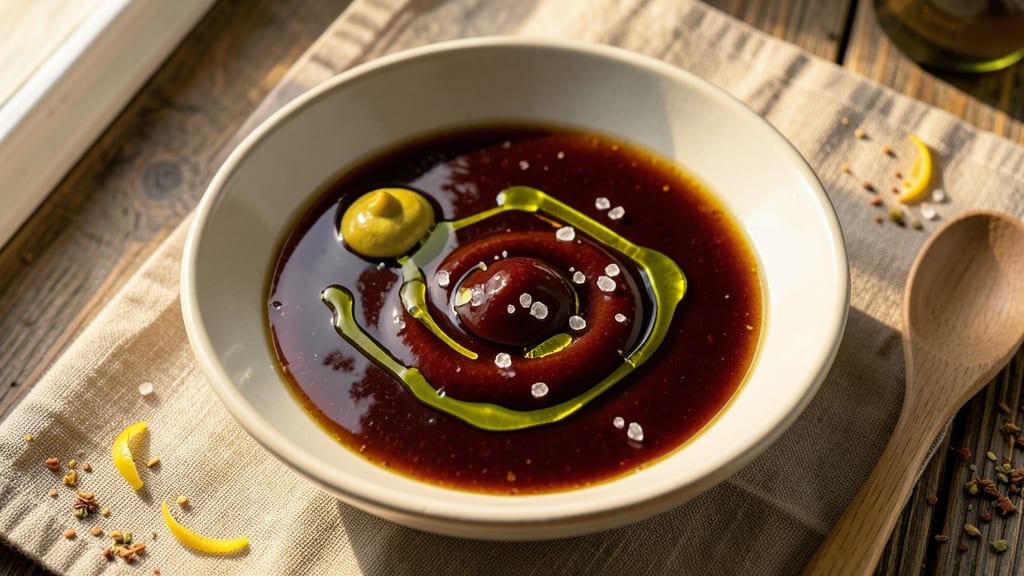
This balsamic reduction salad dressing transforms simple salads into gourmet masterpieces with its glossy, tangy-sweet glaze. 🌟 The secret lies in simmering balsamic vinegar until thick and syrupy, then balancing it with honey and a touch of Dijon mustard for depth.
I developed this recipe after years of experimenting with store-bought dressings that never quite hit the mark—this version delivers restaurant-quality flavor in just 15 minutes.
The magic happens when you reduce balsamic vinegar to a rich, concentrated syrup, then blend it with honey and mustard for a dressing that's both vibrant and complex. Unlike traditional vinaigrettes, this reduction adds a luxurious sheen and layers of flavor that elevate even the simplest greens.
The result? A glossy, tangy-sweet dressing that clings beautifully to lettuce, enhances roasted vegetables, and even brightens desserts.
What makes this dressing truly special is its versatility—drizzle it over arugula salads, toss it with roasted Brussels sprouts, or use it as a marinade for grilled chicken.
The reduction keeps for up to 2 weeks in the refrigerator, making it perfect for meal prep. With just 5 simple ingredients, you'll never need store-bought again.
For extra richness, finish with a swirl of olive oil before serving. This dressing is the ultimate shortcut to restaurant-quality flavor, and it's foolproof once you master the reduction technique. Let's get started!
Ingredients for balsamic reduction salad dressing
Five ingredients, all pantry staples—just simmer and swirl for restaurant-quality dressing.
| Ingredient | Amount | Notes |
|---|---|---|
| Balsamic Vinegar 🍷 | 1 cup | High-quality aged balsamic preferred |
| Honey 🍯 | ⅓ cup | Wildflower or clover variety |
| Dijon Mustard 🌶️ | 1 tbsp | Mild or strong, to taste |
| Extra-Virgin Olive Oil 🫒 | ½ cup | For finishing, high-quality |
| Diamond Crystal Kosher Salt 🧂 | ¼ tsp | Fine grain preferred |
The balsamic vinegar is non-negotiable here—aged balsamic from Trader Joe's or Whole Foods gives that deep, caramelized flavor. If you're using the cheaper stuff, reduce it longer to concentrate the flavor. Honey matters too—local wildflower has more complexity than store-brand. The Dijon mustard? Maille is the gold standard, but any good-quality jar works. For the olive oil, grab a bottle with a peppery finish—it'll cut through the sweetness beautifully.
No honey? Maple syrup works 1:1, though it's more pronounced. Skip the mustard? Add a pinch of black pepper for depth. Using light balsamic vinegar? Add 1 tsp balsamic glaze for extra richness. The salt is easy—Diamond Crystal is my go-to, but any fine kosher salt works. Pro tip: if your reduction isn't syrupy enough, simmer uncovered for another 5 minutes—just watch it like a hawk to avoid burning.
Store the reduced balsamic mixture in a clean jar with a lid—it keeps for 2 weeks in the fridge. The full dressing (with olive oil) lasts 5-7 days. I double the batch and keep it in the pantry for quick salad assembly. For extra shine, give it a quick whisk before using. This dressing is so versatile you'll find it in your fridge more than ketchup.
Why You'll Love This Recipe
- Five-Ingredient Magic: I swear by this combo—just heat the balsamic and honey until syrupy, then whisk in the mustard and olive oil. No fancy tools, no stress, and honestly? It’s the kind of dressing I make when I’m too tired to think.
- Sweet-Savory Balance: That honey cuts through the tangy balsamic while the Dijon mustard adds a sharp little kick. Drizzle it over greens, toss it with roasted veggies, or even slather it on grilled chicken—every bite is ridiculously good.
- Weeknight Workhorse: Between us, this is my go-to when I’m prepping salads for the week. Stays fresh in the fridge for days, and I’ve used it on everything from summer picnics to lazy Sunday brunches. No excuses for boring greens.
- Budget-Friendly Luxury: Good olive oil and aged balsamic might seem fancy, but a little goes a long way. I stretch this dressing over multiple meals, and the cost per serving? Less than store-bought junk. Plus, it tastes like I actually cooked something.
Step-by-step instructions for balsamic reduction salad dressing
Here's how to transform simple pantry staples into a luxurious, glossy glaze.
🔥 Step 1: Simmer the Balsamic Vinegar Until Syrupy
Pour the 1 cup Balsamic Vinegar into a small saucepan and place it over medium-high heat. Bring to a boil, then immediately reduce to medium-low heat to maintain a gentle simmer. This reduction process is where the magic happens—watch as the vinegar transforms from clear to deep amber, coating the sides of the pan with sticky glaze.
Simmer uncovered for 10-12 minutes until reduced by about half and thickened to a syrupy consistency. You'll know it's ready when it coats the back of a spoon smoothly and smells intensely sweet with caramelized notes. Be patient—rushing this step will leave you with a thin, vinegary dressing instead of a rich reduction. Stir occasionally to prevent burning, but don't over-stir or you'll create splatter.
🍳 Step 2: Add Honey and Mustard for Depth
Once the balsamic has reduced, remove the pan from heat and let it cool for 2 minutes—this prevents a sudden temperature shock when adding the honey. Stir in the 0.33 cup Honey and 1 tbsp Dijon Mustard using a silicone spatula. The honey will melt instantly, creating a thick, glossy paste that combines the tangy sweetness of balsamic with floral honey notes and the subtle bite of mustard.
Return the pan to low heat and stir continuously for 1-2 minutes until everything is fully incorporated. You're looking for a smooth, velvety texture with no visible streaks of honey. Here's the thing—if you see any graininess, it means the mixture isn't fully emulsified. Just keep stirring gently; the heat will help everything blend perfectly. The Dijon mustard acts as an emulsifier, ensuring the oil will blend later without separating.
🥘 Step 3: Temper the Mixture with Olive Oil
With the pan still on low heat, very slowly drizzle in the 0.5 cup Extra-Virgin Olive Oil while whisking vigorously. The key here is patience—add the oil drop by drop at first, then in a thin stream, allowing each addition to fully incorporate before adding more. You'll see the mixture transform from thick paste to a glossy, pourable consistency.
Continue whisking for 2-3 minutes until completely smooth and emulsified. The dressing should coat the back of your spoon without feeling greasy. If it starts to look too thick, add 1 teaspoon water at a time until it reaches your desired consistency. Real talk: this is where many homemade dressings fail. If you rush the oil incorporation, you'll end up with a separated dressing. Take your time—it's worth it for that silky texture.
⏰ Step 4: Season and Cool to Room Temperature
Remove the pan from heat and stir in the 0.25 tsp Diamond Crystal Kosher Salt. Taste immediately—you'll notice the balance between sweet, tangy, and salty flavors. Adjust the salt if needed, but remember that the balsamic and honey already contribute significant flavor. Let the dressing cool to room temperature, stirring occasionally. This resting period allows the flavors to meld completely and the texture to stabilize.
Once cooled, the dressing should have a glossy sheen and a syrupy consistency that clings beautifully to greens and vegetables. For best results, store in an airtight container in the refrigerator for up to 2 weeks. Before using, give it a good stir—sometimes dressings thicken further when chilled. If it becomes too thick, thin it with a splash of water or a drizzle of olive oil. This dressing works wonders on arugula salads, caprese salads, or even drizzled over grilled vegetables for added depth.
Pro Tips For Making Balsamic Reduction Salad Dressing
- Simmer Slow and Steady: I learned this the hard way—cranking the heat too high turns your balsamic into vinegar syrup faster than you can say "salad disaster." Keep it at a gentle simmer (tiny bubbles, just breaking the surface) for 10-15 minutes. This lets the flavors meld without burning, and you’ll end up with that glossy, complex reduction instead of bitter vinegar punch.
- Use Real Balsamic Vinegar: That cheap "balsamic glaze" in a bottle? Skip it. For this dressing, actual aged balsamic vinegar (the dark, thick stuff) has depth and caramel notes that shortcut syrups can’t replicate. If you’re pinching pennies, at least use a high-quality balsamic vinegar—your taste buds (and future salads) will notice the difference.
- Whisk in the Mustard Last: I used to dump the Dijon in with the vinegar and honey first, but that’s a flavor trainwreck. The mustard’s sharpness needs to marry with the olive oil at the end, when everything’s warm. Add it just before emulsifying, and you’ll get a smoother, more balanced dressing—not a mustardy afterthought.
- Balance the Salt Early: Diamond Crystal kosher salt is lighter than table salt, so don’t eyeball it. Taste your reduction before adding the mustard and oil—you’ll need about ½ teaspoon per cup of liquid. Trust me, your salad won’t taste flat, and you won’t have to play "fix-it" later with extra salt after the dressing’s done.
Wine and beer pairings for this balsamic reduction salad dressing
White Wine Pairings
This dressing's tangy-sweet balance makes it a perfect match for crisp white wines. I always reach for a dry Italian Pinot Grigio—its bright acidity and citrus notes cut through the richness beautifully.
A Vermentino from Sardinia also works wonders, with its mineral finish complementing the balsamic's depth. Avoid anything too oaky or overly sweet, as those flavors will clash with the dressing's complexity. 🍷
Light Red Wine Options
If you prefer red, opt for light-bodied varieties like Pinot Noir or Chianti. The Pinot Noir's earthy undertones enhance the dressing's caramelized notes, while Chianti's acidity mirrors the balsamic's tang.
I've found that a Sangiovese-based Chianti (like Ruffino) adds an extra layer of harmony with its cherry notes. Serve chilled to highlight both the wine and dressing.
Sparkling Wine Elevation
For a festive twist, pair with Prosecco or Cava. The bubbles cleanse your palate between bites, letting the dressing's flavors shine. A dry Prosecco (like La Marca) balances the sweetness perfectly, while Spanish Cava adds a crisp, citrusy contrast.
This combo is ideal for summer salads or as an aperitif with bruschetta. 🥂
Beer Pairings
A Belgian witbier (like Hoegaarden) is my go-to beer pairing—its coriander and orange peel notes complement the honey's floral sweetness. For a lighter option, try a German Helles Lager (such as Weihenstephaner), which won't overpower the dressing's tang.
Avoid heavy stouts or IPAs, as their bitterness can compete with the balsamic's depth.
Non-Alcoholic Options
For a refreshing non-alcoholic match, serve with sparkling apple cider or ginger beer. The effervescence enhances the dressing's glossy texture, while the ginger beer's spice adds a subtle kick.
A cucumber-mint infused water also works beautifully, letting the dressing's flavors take center stage. Perfect for brunch or light lunches! 💧
Nutrition facts
Frequently asked questions
Can I make this dressing without honey?
Yes! Swap the honey for 1/3 cup maple syrup or 2 tbsp agave nectar for a vegan option. For a more complex flavor, try 1 tbsp balsamic glaze plus 1 tbsp date syrup. The key is maintaining the same 1:3 ratio of sweetener to reduced balsamic to balance the tang. Just remember maple syrup has a stronger flavor—start with less and adjust to taste.
Why did my dressing separate?
Separation usually happens when oil is added too quickly or the mixture isn't fully emulsified. To fix it, whisk in 1 tsp Dijon mustard or 1 tsp lemon juice while adding 1 tbsp water at a time until smooth. For future batches, always add oil drop by drop while whisking vigorously over low heat. The mustard acts as an emulsifier—never skip it if you're oil-sensitive!
How can I use this dressing beyond salads?
This versatile glaze works as a marinade for grilled chicken or shrimp, a glaze for roasted vegetables, or even a drizzle over pasta or pizza. For extra richness, brush it on baked brie before melting or use it as a dip for fresh mozzarella. The reduction also makes an elegant finishing touch for desserts like panna cotta or berry tarts—just reduce the honey slightly to 2 tbsp for balance.
Can I make this dressing ahead of time?
The reduced balsamic mixture keeps for 2 weeks in the fridge, and the full dressing lasts 5-7 days. For meal prep, store the reduced balsamic in a jar and mix with honey/mustard just before using. The flavors actually improve overnight as they meld. Pro tip: Freeze the reduced balsamic in ice cube trays—thaw and use as needed for single servings without waste!
What's the difference between this and balsamic vinaigrette?
This recipe creates a thick, syrupy reduction (like a glaze) rather than a traditional vinaigrette. While vinaigrettes are thin and immediately pourable, this dressing has a glossy, clinging texture that enhances presentation. The reduction process caramelizes the balsamic, giving it deeper flavor and a richer mouthfeel. For a vinaigrette version, reduce the balsamic to 1/4 cup and whisk with 1/2 cup olive oil and 1 tbsp vinegar.