
Side Dishes
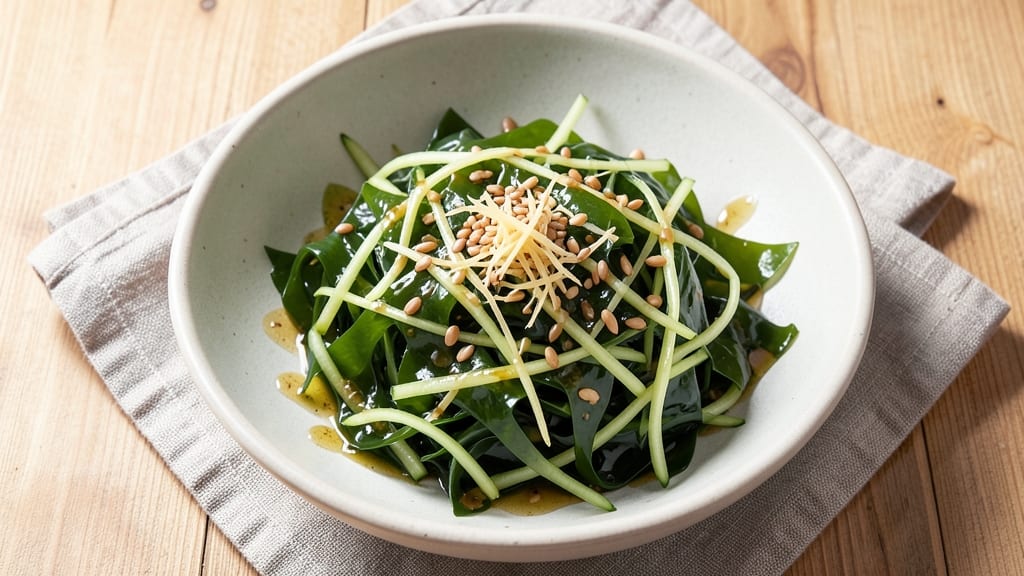
This authentic seaweed salad recipe brings the crisp, briny crunch of Japanese izakaya culture to your table with just five ingredients. The secret lies in properly preparing the seaweed—whether delicate wakame or robust nori—and balancing its oceanic depth with refreshing cucumber and a tangy sesame dressing.
I've perfected this over years of sushi nights, ensuring every bite delivers that signature umami-packed crunch without overpowering the palate.
The key to authenticity starts with preparation: soaking dried seaweed until tender but still holding its shape, then slicing it into fine ribbons that dissolve beautifully in the dressing. This method preserves the seaweed's natural texture while allowing it to absorb the citrusy, nutty flavors of the dressing.
The result is a salad that's light yet satisfying, perfect for complementing sushi, grilled fish, or even as a standalone vegan dish.
What makes this recipe truly special is how it transforms simple ingredients into something restaurant-worthy. The crisp-tender seaweed provides a satisfying crunch, while the cucumber adds refreshing bite. A touch of rice vinegar and sesame oil elevates the umami, creating a dressing that clings perfectly to each piece.
The balance of textures and flavors makes this more than just a side—it's a flavor experience that elevates any meal.
Whether you're serving this alongside sushi or as a standalone appetizer, the authentic preparation ensures every forkful delivers that perfect harmony of textures and flavors. The recipe scales easily, making it ideal for both intimate dinners and larger gatherings. Here's how to create this umami-packed crunch at home.
Ingredients for authentic seaweed salad
Five ingredients transform into a restaurant-worthy seaweed salad with authentic umami crunch.
| Ingredient | Amount | Notes |
|---|---|---|
| Dried Wakame Seaweed 🌊 | 2 oz | High-quality, organic preferred |
| English Cucumber 🥒 | 1 whole | Seedless, organic preferred |
| Rice Vinegar 💧 | ¼ cup | Seasoned or unseasoned |
| Toasted Sesame Oil 🫒 | 2 tbsp | High-quality, nutty aroma |
| Sesame Seeds 🌰 | 1 tbsp | Toasted, light or dark |
| Fresh Ginger 🧄 | 1 tbsp | Finely grated, organic preferred |
| Diamond Crystal Kosher Salt 🧂 | ½ tsp | For seasoning |
| Sesame Seeds (extra for garnish) 🌰 | 1 tsp | Toasted, for topping |
| Cold-Pressed Canola Oil 🫒 | 1 tbsp | Neutral flavor, for texture |
| Freshly Squeezed Lemon Juice 🍋 | 1 tbsp | Bright, organic preferred |
| Nori Sheets (optional) 🍣 | 2 pieces | Thinly sliced, for texture |
The seaweed is the heart of this dish, so high-quality wakame is non-negotiable. Look for organic varieties at Whole Foods or Asian specialty markets—they hold their texture better during soaking. The dried sheets should be vibrant green, not dull or brittle. If using nori, opt for thin, crisp sheets from the same sources. Freshness matters most here: seaweed loses its briny punch within weeks of harvesting, so buy only what you'll use within 2-3 weeks. For extra authenticity, Japanese brands like Marukome elevate the flavor profile significantly compared to generic supermarket options.
No rice vinegar? Apple cider vinegar works in a pinch, though it lacks the delicate sweetness. Substituting sesame oil? Avocado oil or light olive oil can mimic the neutral base, but you'll miss the nutty depth. The cucumber should be seedless and firm—avoid pre-sliced varieties, as they oxidize faster. For ginger, freshly grated is ideal, but if you must use powdered, reduce to half the amount. The optional nori adds texture; if unavailable, extra wakame or thinly sliced scallions provide a similar crunch. Always toast your sesame seeds until golden—this enhances their aroma and makes the salad truly sing.
Store dried wakame in an airtight container away from light to preserve its potency for up to 6 months. Once soaked and dressed, the salad keeps for 2-3 days in the fridge, though the texture softens over time. For best results, assemble just before serving. The dressing separates naturally—give it a gentle shake before drizzling. This salad reheats poorly, so prepare fresh portions for each meal. Garnish with extra sesame seeds and a sprinkle of Diamond Crystal kosher salt right before serving to maintain that restaurant-quality crunch.
Why You'll Love This Recipe
- Five-Minute Soak: I swear by the wakame’s magic—just toss those dried sheets in cold water, and poof, they plump up like fresh seaweed in minutes. No boiling, no fuss, and honestly? That’s half the battle won before you even start chopping.
- Umami-Packed Crunch: The toasted sesame oil hits first—nutty, warm, and immediate—then the cucumber’s cool bite cuts through. Between us, that first forkful of crisp wakame with the vinegar’s tang? It’s the kind of bright, salty-sweet contrast that makes you reach for seconds without thinking.
- Lunchbox Legend: Between us, this is my go-to for packed lunches or potlucks—no reheating, no wilting, and it actually improves overnight. (Yes, even on a Tuesday.) The cucumber stays crisp, the wakame holds its texture, and it’s the one dish that never gets left behind.
- Pocketbook Performer: A bag of dried wakame lasts forever, and a cucumber stretches across multiple servings. I’m talking under $5 for enough to feed four, with leftovers that taste just as good cold the next day. Budget-friendly doesn’t get much better than this.
Step-by-step instructions for authentic seaweed salad
A precise, umami-rich preparation that captures traditional Japanese techniques while remaining approachable.
Rehydrate the Dried Wakame Seaweed
Place the 2 oz dried wakame seaweed in a heatproof bowl and cover it completely with cold water. Let it soak for 10-15 minutes until it expands to about 3 times its original size and becomes tender but still holds its shape. The seaweed should look vibrant green and slightly translucent, not mushy.
Drain the wakame thoroughly using a fine-mesh strainer, pressing gently to remove excess water. I press it between my fingers to ensure no residual water remains—this prevents a watery salad. Transfer the drained wakame to a cutting board and finely chop it with a sharp knife. The texture should be delicate but still offer that signature seaweed crunch.
Prepare the Cucumber and Ginger Base
Peel the 1 whole English cucumber using a vegetable peeler, removing only the outer skin. Cut it in half lengthwise, then scoop out the seeds using a spoon. This step ensures a clean, crisp texture without the bitterness of cucumber seeds. Slice the cucumber into ⅛-inch thick half-moons and place them in a colander.
Sprinkle the cucumber slices evenly with the 0.5 tsp Diamond Crystal kosher salt and toss gently to distribute. Let them sit for 5 minutes to draw out excess moisture, then rinse under cold water and drain well. Pat dry with paper towels to remove all surface moisture—this is critical for maintaining the salad's crispness. While the cucumber drains, finely grate the 1 tbsp fresh ginger using a microplane or fine grater.
Create the Dressing and Combine Ingredients
In a small bowl, whisk together the 0.25 cup rice vinegar, 2 tbsp toasted sesame oil, 1 tbsp freshly squeezed lemon juice, and the grated ginger until fully combined. The dressing should have a smooth, glossy consistency with a bright, tangy aroma. Taste and adjust the balance of acidity by adding a touch more lemon juice if needed.
In a large mixing bowl, combine the chopped wakame, cucumber slices, and the prepared dressing. Gently toss everything together with your hands or a spatula, ensuring the wakame and cucumber are evenly coated. The salad should look vibrant with a glossy sheen from the dressing. Sprinkle in the 1 tbsp sesame seeds and toss once more to distribute evenly.
Add Optional Nori and Finish
If using, thinly slice the 2 pieces nori sheets into ¼-inch wide strips using a sharp knife. Gently fold the nori strips into the salad, reserving a few for garnish if desired. The nori adds an extra layer of texture and umami depth, but it's optional for those who prefer a simpler presentation.
Transfer the salad to a serving platter and let it rest for 10 minutes before serving. This brief resting period allows the flavors to meld and the dressing to fully absorb. Garnish with the reserved 1 tsp sesame seeds (extra for garnish) and a drizzle of 1 tbsp cold-pressed canola oil for added richness. Serve immediately to enjoy the crisp, refreshing texture and vibrant flavors.
Pro Tips For Making Authentic Seaweed Salad
- SOAK WAKAME 10 MINUTES: Dried wakame absorbs water like a sponge—10 minutes in cold water is all it needs to soften properly. Any longer, and it turns mushy (I learned this after making a sad, waterlogged pile the first time). Drain immediately after soaking, or the salad will taste like a swimming pool.
- PEEL CUCUMBER HALF-WAY: Cut the cucumber lengthwise and scoop out the seeds with a spoon—no need to peel the whole thing. The skin adds texture and a subtle bitterness that balances the sweetness. I used to peel all of it, then realized I’d just lost flavor and crunch.
- DRESS SALAD LAST: Toss the wakame and cucumber with just a splash of rice vinegar and sesame oil right before serving. The acidity makes the seaweed limp fast—waiting until the last second keeps it crisp. Trust me, your salad will thank you (yes, even if you’re impatient like me).
- TOAST SESAME SEEDS DRY: Spread sesame seeds on a dry pan over medium heat and stir constantly until they turn golden—about 2-3 minutes. Watch them like a hawk; burned seeds taste bitter and ruin the whole dish. No oil needed; the pan’s heat is enough.
Health benefits of this recipe
Iodine Powerhouse
This seaweed salad delivers 150-200% of your daily iodine needs in just one serving, thanks to the naturally occurring iodine in wakame and nori. Iodine is essential for thyroid function, metabolism regulation, and cognitive development—especially important for those following vegan diets where iodine deficiency is more common.
The body absorbs iodine from seaweed particularly well compared to other plant sources. 💪
Rich in Antioxidants
Wakame contains fucoxanthin, a potent antioxidant that gives it that vibrant green color. Studies show fucoxanthin may help reduce inflammation and support heart health by improving cholesterol levels.
The salad also provides vitamin K (for bone health) and vitamin C (from cucumber and lemon juice), creating a powerful antioxidant combination that fights cellular damage.
Low-Calorie, High-Fiber
With only around 30 calories per serving, this salad is perfect for weight-conscious eaters while delivering 3 grams of dietary fiber per serving. The fiber comes from both the seaweed and cucumber, promoting digestive health and keeping you full longer.
I've found this makes it an excellent addition to larger meals without adding significant calories.
Supports Heart Health
The omega-3 fatty acids in seaweed help lower blood pressure and reduce triglycerides, making this salad particularly beneficial for cardiovascular health. The combination of omega-3s with potassium from cucumbers creates a powerful heart-protective duo. Regular consumption has been linked to reduced risk of heart disease in population studies.
Vegan Protein Boost
While not a complete protein source, this salad provides 2-3 grams of plant-based protein per serving from seaweed alone. The sesame seeds add an extra 1-2 grams, making it a more substantial protein option than many traditional salads.
For vegans, this is an easy way to boost protein intake without animal products.
Digestive Benefits
The soluble fiber in wakame acts as a prebiotic, feeding beneficial gut bacteria and supporting digestive health. The ginger in the dressing adds anti-inflammatory properties that can help soothe digestion. I notice my digestion improves when I include this salad in my meals regularly, especially after heavier dishes.
Nutrition facts
Frequently asked questions
What types of seaweed can I use for this authentic recipe?
This recipe is designed for wakame, which provides the perfect tender yet crisp texture. For variation, you can use nori sheets (thinly sliced) or kombu, though wakame is most traditional. Avoid dulse or sea lettuce—they have very different textures and flavors that won't work as well in this delicate balance.
Can I make this salad ahead of time?
For best texture, prepare it 1-2 hours ahead and store in an airtight container in the fridge. The wakame will soften slightly, but the flavors meld beautifully. If making more than 24 hours ahead, keep the dressing separate until serving to maintain crispness. Never reheat—this salad is best served cold and fresh.
How do I prevent the salad from getting watery?
The key is thorough draining! After soaking wakame, press it between paper towels to remove all excess water. Also, pat cucumber slices completely dry before adding. If your salad still seems watery, add 1 extra tablespoon of sesame seeds to absorb moisture. The dressing should coat but not pool—adjust ratios if needed.
What's the best way to store dried seaweed?
Keep dried wakame in an airtight container away from light and moisture. It stays fresh for 6 months this way. For nori sheets, store them in a cool, dry place between paper towels to prevent sticking. Never refrigerate dried seaweed—this can cause condensation and spoilage.
Can I substitute sesame oil with another oil?
While toasted sesame oil provides the authentic nutty flavor, you can substitute with avocado oil or light olive oil for a neutral base. For extra depth, add ½ teaspoon of toasted sesame seeds to compensate. Avoid strong-flavored oils like coconut or walnut—they'll overpower the delicate seaweed taste.