
Side Dishes
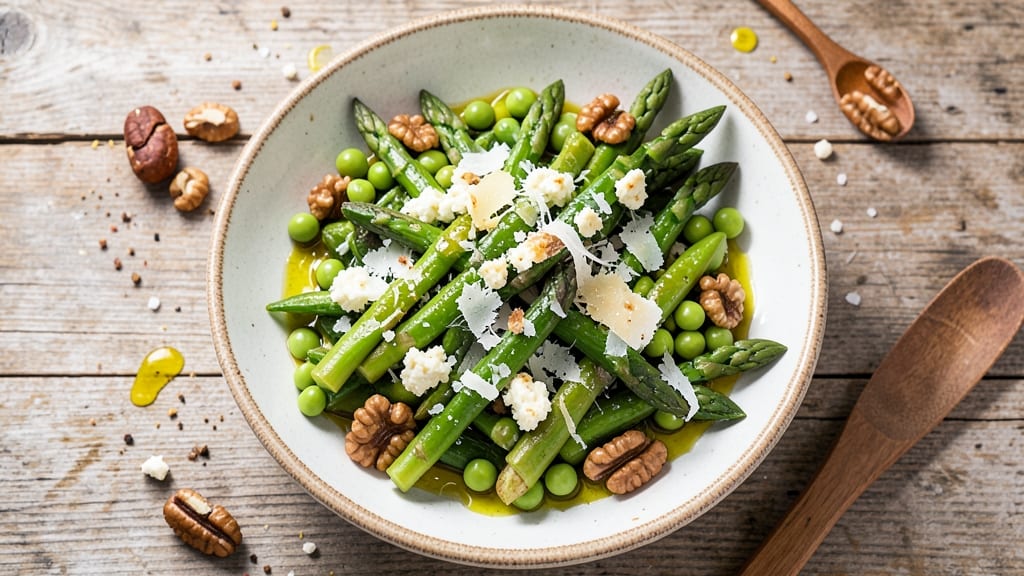
This asparagus salad recipe idea transforms simple spring vegetables into a restaurant-worthy side with crisp florets and bright lemon-herb vinaigrette. The secret lies in blanching the asparagus just right—achieving tender-crisp texture that holds up perfectly under the tangy dressing.
I developed this recipe during peak asparagus season when I wanted something lighter than pasta but still substantial enough to stand alongside grilled meats.
What sets this salad apart is the balance of textures: bright, crisp asparagus spears paired with creamy goat cheese and crunchy toasted nuts. The lemon-herb vinaigrette cuts through the richness while enhancing the natural sweetness of the asparagus.
Ready in just 20 minutes, this salad delivers professional results without requiring advanced techniques—ideal for weeknight dinners or special occasions.
The dressing is where the magic happens—a zesty combination of lemon juice, Dijon mustard, and fresh herbs that clings beautifully to the asparagus. Tossed with fresh peas and shaved Parmesan, this salad becomes a complete springtime celebration.
The flavors develop even better when served slightly chilled, allowing all components to meld perfectly.
This recipe works equally well as a light main course for vegetarians or as an elegant side dish for grilled chicken, fish, or steak. The ingredients are simple yet transformative, proving that even humble asparagus can become a showstopper with the right technique. Let's get started!
Ingredients for asparagus salad recipe ideas
Bright spring flavors and crisp textures transform humble asparagus into an elegant salad side.
| Ingredient | Amount | Notes |
|---|---|---|
| Fresh Asparagus Spears 🌱 | 1 ½ lb | Trimmed and woody ends removed |
| Fresh Peas 🌱 | 1 cup | Shelling peas or frozen thawed |
| Goat Cheese 🧀 | 4 oz | Soft, crumbled variety preferred |
| Parmesan Cheese 🧀 | ½ cup | Freshly shaved or finely grated |
| Walnuts 🥜 | ½ cup | Toasted and roughly chopped |
| Extra-Virgin Olive Oil 🫒 | ¼ cup | Light, fruity variety |
| Fresh Lemon Juice 🍋 | 3 tbsp | Freshly squeezed |
| Dijon Mustard 🍯 | 1 tbsp | Mild or strong variety |
| Fresh Chives 🌿 | 2 tbsp | Finely chopped |
| Fresh Dill 🌿 | 2 tbsp | Finely chopped |
| Honey 🍯 | 1 tsp | Light floral variety |
| Diamond Crystal Kosher Salt 🧂 | ½ tsp | Fine grain preferred |
| Freshly Ground Black Pepper 🌶️ | ¼ tsp | Freshly cracked |
The asparagus is the star, so choose bright green, firm spears with tightly closed tips—those are the sweetest. Whole Foods and local farmers markets often carry the freshest varieties during peak season. If using frozen peas, thaw and drain them thoroughly to avoid a watery salad. For the goat cheese, Havarti or chèvre work beautifully, but avoid overly tangy varieties that might overpower the delicate asparagus. The walnuts should be toasted just until fragrant—about 5 minutes in a dry skillet—for maximum flavor without bitterness. If you're short on time, pre-toasted nuts from Trader Joe's are a solid shortcut.
No fresh dill? Fresh parsley or tarragon works in a pinch, though dill's anise-like quality is ideal here. Substituting honey with maple syrup keeps it vegan while adding a subtle earthiness. For the dressing, if you're missing Dijon mustard, whole-grain mustard thinned with lemon juice provides a similar depth. The Parmesan can be swapped for Pecorino Romano for a sharper bite, but stick with freshly grated—pre-shredded contains anti-caking agents that make the cheese taste dull. If you prefer a nut-free salad, toasted pumpkin seeds add a similar crunch with a different flavor profile.
Blanched asparagus stays crisp for up to 2 days in the fridge when stored in an airtight container with a paper towel to absorb moisture. The dressing can be made a day ahead and stored separately, which actually lets the flavors meld beautifully. For serving, assemble the salad just before eating to maintain that perfect crunch. If prepping ahead, store the dressing and cheese separately and toss everything together right before serving. The flavors develop even better when chilled for 30 minutes before eating, allowing all components to harmonize.
Why You'll Love This Recipe
- No-Chop Needed: I swear by this trick—just trim the asparagus ends and snap the tough bits off (no knife required). The peas? Straight from the pod or frozen—thawed in cold water while I dress the salad. Honestly, it’s the kind of recipe that makes me feel like I’ve earned my lunch break.
- Creamy Crunch Magic: That first bite—warm asparagus with the slight bite of toasted walnuts, crumbled goat cheese melting just enough, and Parmesan shavings adding salty depth? It’s the kind of flavor combo that makes me reach for seconds without thinking. The peas add sweetness that balances everything perfectly.
- Lunchbox or Party Table: Between us, this salad is my go-to for potlucks and my kids’ school lunches. Pack it in a jar for work—layers of asparagus, peas, and cheese stay fresh for days. Or serve it at room temp for gatherings, and it still tastes like you slaved over it. (Spoiler: No one will guess how easy it was.)
- Budget Bright Spot: Fresh asparagus is pricey, but this recipe stretches it—use half the spears for roasting, save the rest for salads all week. Goat cheese? A little goes a long way. Walnuts? Buy them in bulk and toast a big batch for other dishes. I’ve made this for under $12 and fed four people plus leftovers. Solid math.
Step-by-step instructions for crisp florets with lemon-herb vinaigrette
Transform fresh asparagus into crisp, vibrant florets with this bright, herb-infused salad.
Blanch and Shock the Asparagus
Fill a large pot with 2 quarts of water and bring to a rolling boil. Trim the woody ends from the 1.5 lb fresh asparagus spears by bending each spear until it snaps naturally—discard the broken ends. Add the asparagus to the boiling water and blanch for 1 minute and 30 seconds until the bright green color brightens slightly but remains vibrant.
Immediately drain the asparagus and transfer it to a large bowl filled with ice water for 5 minutes. This shock treatment stops the cooking process and preserves the crisp texture. Drain again and pat thoroughly dry with paper towels. The asparagus should be bright green and firm to the touch—this ensures they'll hold their shape when tossed with the dressing.
Toast the Walnuts and Prepare the Peas
While the asparagus cools, spread the 0.5 cup walnuts on a dry baking sheet and toast in a 375°F oven for 6-8 minutes until fragrant and golden. Watch them closely—they burn quickly. Remove from the oven and let cool for 2 minutes, then roughly chop with a chef's knife. The toasted walnuts add a satisfying crunch and nutty depth to the salad.
If using fresh peas, shell them now. If using frozen peas, thaw them in a colander under warm running water for 1 minute. Drain well and set aside. The peas should be bright green and slightly crisp—this ensures they complement the asparagus texture rather than becoming mushy.
Assemble the Lemon-Herb Vinaigrette
In a small bowl, whisk together the 0.25 cup extra-virgin olive oil, 3 tbsp fresh lemon juice, 1 tbsp Dijon mustard, 1 tsp honey, 0.5 tsp Diamond Crystal kosher salt, and 0.25 tsp freshly ground black pepper until fully emulsified. The dressing should be smooth and slightly thickened from the mustard and honey.
Stir in the 2 tbsp finely chopped fresh chives and 2 tbsp finely chopped fresh dill until evenly distributed. Taste and adjust seasoning if needed—add a pinch more salt or a splash of lemon juice for balance. The vinaigrette should be bright, tangy, and well-balanced, with the herbs adding freshness that complements the asparagus.
Combine and Garnish the Salad
In a large serving bowl, gently toss the blanched asparagus, 1 cup fresh peas, and toasted walnuts with half of the vinaigrette. Reserve the remaining dressing for serving. The asparagus should be coated evenly but still retain its crisp texture—avoid over-tossing to prevent bruising.
Crumbly the 4 oz goat cheese and 0.5 cup freshly shaved Parmesan cheese over the salad, then gently fold in just enough to distribute evenly. Garnish with additional fresh chives and dill. Serve immediately with the reserved dressing on the side for those who prefer a lighter touch. The salad should be vibrant, with a perfect balance of textures and flavors.
Pro Tips For Making Asparagus Salad Recipe Ideas
- Trim Asparagus at an Angle: Blunt ends slide right off the cutting board—no need for a knife. Instead, snap them cleanly by holding the spear at the base and bending until they break naturally. This saves time and keeps your fingers safe.
- Toast Walnuts Until Golden: Don’t just toss them in raw—they’ll taste bland. Heat a dry pan over medium-low and stir walnuts for 3–4 minutes until fragrant and just starting to brown. Watch them like a hawk; they burn faster than you’d think.
- Blanch Peas for Crisp-Tender Bite: Straight from the pod, peas taste mealy. Shock them in boiling water for 30 seconds, then ice bath for 1 minute. Drain well—this keeps them bright green and holds their shape when tossed with the salad.
- Crumbles Over Creamy: Skip the goat cheese chunks—they’ll make the salad too heavy. Instead, press the log through a fork or pulse briefly in a food processor for a fine, even crumble. It melts into the dressing better and coats every bite.
Storing and reheating this recipe
Fridge Storage Tips
Store blanched asparagus in an airtight container with a paper towel to absorb excess moisture. Keep it refrigerated at 40°F or below for up to 2 days—this preserves the crisp texture perfectly. I like to portion the peas and walnuts separately to maintain their individual textures.
The dressing can be stored separately in a small jar for up to 3 days, which actually enhances its flavor as the ingredients meld. 🌱
Freezer Preservation
For longer storage, blanch the asparagus as directed, then spread it on a baking sheet to freeze solid (about 1 hour). Transfer to a freezer-safe bag, squeeze out excess air, and store for up to 3 months.
The peas can be frozen raw in their pods—they’ll thaw beautifully when added to the salad. When reheating, toss frozen asparagus in boiling water for 1 minute, then shock in ice water before draining. 🧊
Reheating Methods
For stovetop reheating, place the salad components in a skillet over medium-low heat with 1 tablespoon of water to steam. Cover for 3-4 minutes, then toss with a splash of fresh lemon juice to revive the flavors.
Microwave reheating works too—cover with a damp paper towel and heat for 1-2 minutes on 50% power, then finish with extra dressing. 🔥
Reviving Wilted Asparagus
If your asparagus loses crispness, don’t toss it! Toss the spears in 1 tablespoon of water and microwave for 20 seconds, then drain and pat dry. The heat shock often restores their snap.
For the dressing, simply whisk in ½ teaspoon of lemon juice and a pinch of salt to brighten the flavors. This trick works wonders for bringing back that fresh-from-the-market crunch. ✨
Make-Ahead Strategy
Prep the dressing and cheese components the night before—store them separately in the fridge. When ready to serve, simply toss the chilled asparagus, peas, and walnuts with the dressing and sprinkle with cheese.
This approach lets the flavors develop overnight while keeping the asparagus crisp. I always assemble the salad just before serving to maintain that perfect texture contrast. 💡
Nutrition facts
Frequently asked questions
Can I substitute white asparagus in this recipe?
White asparagus works beautifully and has a slightly sweeter, milder flavor. Use the same blanching time (1 minute 30 seconds) and shock method to maintain crispness. The pale color contrasts nicely with the bright green peas and herbs, creating a stunning visual presentation.
How do I adjust the recipe for a vegan version?
Swap the goat cheese for vegan feta or crumbled tofu, and use nutritional yeast instead of Parmesan. For the dressing, replace honey with maple syrup> and ensure your Dijon mustard is vegan. The walnuts and peas remain perfectly vegan-friendly components.
What's the best way to make this salad nut-free?
Replace the walnuts with toasted pumpkin seeds or sunflower seeds for a similar crunch. Toast them in the same way (375°F for 6-8 minutes) until fragrant. These seeds add a different but equally satisfying texture while keeping the salad nut-free.
Can I use this asparagus salad as a main dish?
Yes! To make it heartier, add ½ cup cooked quinoa or ½ cup chickpeas for extra protein. Serve with a side of crusty bread or a protein like grilled shrimp to create a complete meal. The salad's bright flavors stand up well as a main course.
Why did my asparagus turn mushy after blanching?
This usually happens from overcooking or improper shocking. Stick to 1 minute 30 seconds max for blanching, and use ice water immediately to stop the cooking process. Also, make sure your asparagus is fresh—older spears become softer more quickly.