
Salads
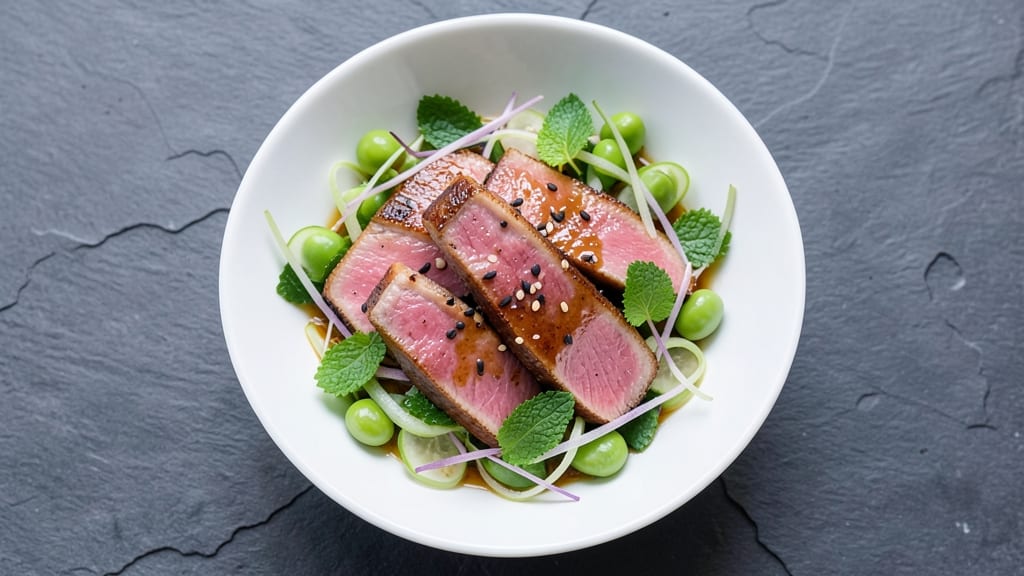
This Asian tuna steak salad delivers restaurant-quality flavors with just 15 minutes of active prep time. The secret lies in perfectly searing ahi tuna to medium-rare for that ideal sesame-glazed crust, then balancing it with crisp cucumbers, cooling mint, and a tangy soy-ginger dressing.
I developed this dish after realizing how often fresh tuna gets overcooked at home—this method guarantees tender centers every time.
The foundation begins with a simple yet flavorful marinade that enhances the tuna's natural richness without overpowering it. While the tuna sears in a hot pan, you'll prepare the salad base—cooling cucumber ribbons, fresh edamame, and crisp scallions—that provide the perfect contrast to the warm protein.
The dressing ties everything together with a bright combination of rice vinegar, sesame oil, and a touch of honey.
What makes this salad truly special is the textural contrast: the crispy, caramelized edges of the tuna steak against the cool, refreshing salad components. The final touch—a sprinkle of toasted sesame seeds and fried shallots—adds depth and visual appeal that elevates this dish from ordinary to extraordinary.
This recipe proves you don't need complicated techniques to create an impressive meal.
Perfect for lunch meetings or summer entertaining, this salad comes together faster than takeout but tastes like you've spent hours in the kitchen. The best part? Each component can be prepped ahead, making it ideal for busy weekdays. Let's get started on creating your own Asian-inspired masterpiece.
Ingredients for asian tuna steak salad
Restaurant-quality tuna salad with a perfect sesame-glazed crust and cooling cucumber-mint bite.
| Ingredient | Amount | Notes |
|---|---|---|
| Ahi Tuna Steaks 🐟 | 1 ½ lb | Sushi-grade, 1-inch thick slices |
| Persian Cucumbers 🥒 | 3 whole | Thinly sliced into ribbons |
| Fresh Mint Leaves 🌿 | ½ cup | Finely chopped, stems removed |
| Shelled Edamame 🌱 | 1 cup | Lightly steamed, cooled |
| Scallions 🧅 | ¼ cup | Thinly sliced, white and green parts |
| Sesame Seeds 🌰 | 2 tbsp | Toasted, for garnish |
| Fried Shallots 🧅 | 2 tbsp | Store-bought or homemade |
| Rice Vinegar 🍶 | 3 tbsp | Seasoned preferred |
| Sesame Oil 🫒 | 1 ½ tbsp | Toasted, for flavor |
| Honey 🍯 | 1 tbsp | Wildflower preferred |
| Soy Sauce 🥢 | 1 ½ tbsp | Low-sodium preferred |
| Fresh Ginger 🌿 | 1 tbsp | Finely grated, peeled |
| Vegetable Oil 🫒 | 2 tbsp | High smoke point for searing |
| Salt 🧂 | 1 tsp | Diamond Crystal kosher |
| Black Pepper 🌶️ | ½ tsp | Freshly cracked |
The ahi tuna is non-negotiable here—it needs to be sushi-grade for perfect texture. Grab yours from the seafood counter at Whole Foods or your local fishmonger, asking for 1-inch thick slices cut fresh. If you're prepping ahead, store the raw tuna in the coldest part of your fridge, wrapped in a paper towel, and use within 24 hours. For the Persian cucumbers, look for ones that are crisp and vibrant green—the regular grocery store kind works, but farmers' market cucumbers add that extra crunch. Fresh mint is a game-changer, so don't grab the dried stuff unless you're desperate. Trader Joe's has the best pre-washed mint bundles, or snip your own from a fresh bunch.
No sesame seeds? Toasted poppy seeds or crushed peanuts work in a pinch, though the flavor won't be identical. Short on edamame? Shelled peas or thinly sliced bell peppers keep the dish fresh and crunchy. The dressing can be made ahead—just store it in a sealed jar in the fridge for up to 5 days, shaking before use. For the fried shallots, if you can't find them at the Asian market, quick-pickle thin shallot slices in rice vinegar for 30 minutes—they won't be crispy, but they'll add a nice tang. The ginger should be peeled and grated fresh (no jars of pre-minced ginger here—it's too strong). And if you're avoiding honey, maple syrup or agave works in a 1:1 ratio, though the flavor will shift slightly.
This salad is best served immediately after searing the tuna, but you can prep the salad components up to 4 hours ahead—just keep them separate until assembly. The tuna's crust forms in seconds, so have everything ready before you start cooking. Store any leftovers in an airtight container for up to 2 days, though the tuna will get slightly firmer. For a make-ahead hack, assemble the salad without the tuna, store it in the fridge, and sear the tuna fresh when you're ready to serve. The sesame oil and rice vinegar dressing can also be prepped in advance and stored for 1 week in the fridge.
Why You'll Love This Recipe
- No-Seize Sear Magic: That perfect crispy edge on the tuna? It’s all about the high-heat sear—just 2 minutes per side in a screaming-hot pan. No flipping, no stress, and honestly, the way the mint and scallions cling to those edges after tossing? Worth every second.
- Minty Crunch Bomb: Between us, that fresh mint isn’t just garnish—it’s the secret weapon. The bright, cool punch cuts through the richness of the tuna like a knife, while the Persian cucumbers add that addictive crunch. (Yes, even my picky teen finishes his bowl.)
- Lunchbox Hero: Pack this the night before, and you’ve got a protein-packed lunch that still feels fancy. The edamame holds up, the tuna stays tender, and the dressing? Just toss it in a jar—no soggy lettuce in sight. My go-to when I need something that doesn’t involve reheating sad desk leftovers.
- Budget-Friendly Luxe: Ahi tuna sounds expensive, but here’s the trick: use just 2 steaks for a meal that feeds four. The rest of the ingredients—cucumbers, edamame, scallions—are all under $5 at the store. Suddenly, you’re eating restaurant-quality without the sticker shock. (I call it “fakeout fancy.”)
Step-by-step instructions for Asian tuna steak salad
Here's how to create a perfect balance of smoky seared tuna and refreshing cucumber-mint base.
Prepare the Cucumber-Mint Base
Use a mandoline or sharp knife to slice the 3 whole Persian cucumbers into thin ribbons, working quickly to prevent browning. The slices should be delicate enough to melt in your mouth but sturdy enough to hold their shape. Transfer them to a large mixing bowl and immediately sprinkle with the 0.5 cup finely chopped fresh mint leaves and 0.25 cup sliced scallions.
Add the 1 cup lightly steamed and cooled shelled edamame to the bowl. Gently toss everything together just until combined - you want to preserve the individual textures rather than mash them. This cooling base will contrast beautifully with the warm, seared tuna we'll prepare next.
Create the Sesame-Glazed Marinade
In a small bowl, whisk together the 3 tbsp rice vinegar, 1.5 tbsp sesame oil, 1 tbsp honey, 1.5 tbsp soy sauce, and 1 tbsp finely grated fresh ginger. This marinade will create that signature umami-sweet balance we're after. Taste a small amount - it should be perfectly balanced between tangy, sweet, and savory with a subtle ginger kick.
Set aside 2 tbsp of this marinade for later use. The remaining 1 tbsp will be used to baste the tuna during searing. The reserved portion will become our finishing sauce to drizzle over the completed dish.
Sear the Ahi Tuna Steaks to Perfection
Pat the 1.5 lb Ahi tuna steaks completely dry with paper towels - moisture is the enemy of a perfect sear. Heat 2 tbsp vegetable oil in a heavy skillet over high heat until it shimmers. Working in batches if needed, add the tuna steaks and sear for exactly 2 minutes per side for medium-rare, or until the exterior develops a beautiful mahogany crust.
During the last 30 seconds of searing, carefully brush the reserved 1 tbsp marinade over each steak. This creates that signature glaze while keeping the interior perfectly tender. The tuna should be warm through the center but still slightly springy to the touch - it will continue cooking slightly when sliced.
Assemble the Final Salad
Using a sharp knife, slice each tuna steak into 1-inch thick pieces against the grain. Arrange these warm tuna slices over the cucumber-mint base, letting them rest for just 1 minute to absorb the cooling flavors. Drizzle the remaining 2 tbsp marinade over the top and immediately sprinkle with the 2 tbsp toasted sesame seeds and 2 tbsp fried shallots.
Gently toss everything together just until the tuna is lightly coated in the remaining sauce. The contrast between the warm, smoky tuna and the cool, refreshing cucumber-mint base creates a perfect balance of textures and temperatures. Serve immediately while the tuna is still warm through the center.
Garnish and Serve with Confidence
Season each serving with a pinch of the 1 tsp salt and 0.5 tsp black pepper right before serving. The salt will enhance all the flavors while the pepper adds a subtle heat that cuts through the richness of the tuna. For presentation, arrange the salad on a large platter and garnish with additional fried shallots and sesame seeds.
This dish serves 4 beautifully, with each portion featuring that perfect balance of textures and flavors. The key to success lies in the precise timing - the tuna must be seared just before serving to maintain its perfect medium-rare doneness while the cooling cucumber base keeps everything refreshing.
Pro Tips For Making Asian Tuna Steak Salad
- SEAR THE TUNA HOT: Ahi tuna’s texture hinges on a screaming-hot pan—no exceptions. Heat your cast iron or stainless steel until a drop of water evaporates instantly, then sear the steaks for 20-30 seconds per side max. Overheating turns them rubbery, but too cool makes them mushy; trust your pan’s heat, not the clock.
- SLICE CUCUMBERS THIN: Persian cucumbers should be paper-thin—no thicker than 1/8-inch slices. Use a sharp knife and cut against the grain for crispness that lasts. Thick slices get soggy fast, and nobody wants a sad, limp salad base.
- SALT THE TUNA AFTER: Seasoning before cooking draws out moisture and ruins the sear. Instead, hit the tuna with a pinch of flaky salt right after removing it from the pan—it’ll stick better and keep the edges crisp. (Yes, even if you’re impatient like me.)
- CHILL EDAMAME FIRST: Warm shelled edamame loses its snap and turns pasty. Toss them in ice water for 10 seconds before draining, then pat dry. The cold shock keeps them crisp, and your salad won’t turn into a sad, limp pile. (Trust me, I’ve learned this the hard way.)
Storing and reheating this dish
Tuna Storage Safety
Store raw ahi tuna steaks in an airtight container on the bottom shelf of your fridge, wrapped in a paper towel to absorb any moisture. Use within 24 hours for peak freshness—this prevents the tuna from drying out or absorbing fridge odors.
For longer storage, vacuum-seal the tuna and freeze for up to 2 months, though texture may slightly degrade. 🧊
Salad Base Prep-Ahead
Prep the cucumber-mint base up to 4 hours ahead by storing components separately in airtight containers. Keep the cucumbers and mint in one container, edamame and scallions in another, and the dressing in a sealed jar.
This prevents sogginess while maintaining crispness. Reassemble just before adding the seared tuna to preserve texture.
Reheating Tuna Properly
If reheating, gently warm the tuna in a dry skillet over medium-low heat for 30-45 seconds per side—just enough to restore warmth without overcooking. Avoid microwaving, as it turns the tuna rubbery.
For leftovers, store the entire salad in an airtight container for 2 days max, but expect the tuna to firm up slightly. 🔥
Dressing Refresh
The sesame-ginger dressing can be stored in a jar for 5 days in the fridge, but give it a shake before using—ingredients naturally separate. If it thickens, thin with 1 tsp water or rice vinegar.
For extra brightness, add a pinch of fresh ginger or a squeeze of lime when reheating.
Make-Ahead Hack
Assemble the salad without the tuna up to 2 days ahead, storing components separately. When ready to serve, sear fresh tuna and assemble just before eating. This keeps the tuna perfectly medium-rare while letting you prep everything else in advance. Perfect for busy weeknights! ⏰
Freezing Components
While tuna doesn’t freeze well, you can freeze the dressing for 1 month or the edamame for 3 months to extend shelf life. Thaw edamame in cold water before using, and stir the dressing gently to re-emulsify. Avoid freezing cucumbers or mint—they’ll turn mushy and lose their vibrant flavor. 🥒
Nutrition facts
Frequently asked questions
Can I substitute regular tuna for ahi tuna in this recipe?
Regular canned tuna won't work here because it lacks the delicate texture and rich flavor of fresh ahi tuna. The recipe relies on searing ahi tuna to create that perfect medium-rare center with a caramelized crust. If you absolutely must substitute, opt for high-quality sushi-grade yellowfin tuna, but expect it to be more expensive.
How do I know when the tuna is cooked to medium-rare?
For perfect medium-rare, the tuna should reach an internal temperature of 125-130°F when measured with a meat thermometer. The exterior should develop a beautiful mahogany crust while the center remains slightly springy to the touch. If you don't have a thermometer, cut into one piece - it should be warm through the center but not gray.
What if I don't have sesame seeds or fried shallots for garnish?
No problem! Swap sesame seeds for toasted poppy seeds, crushed peanuts, or even sesame-free everything bagel seasoning. For fried shallots, try quick-pickled shallots (slice thin, soak in rice vinegar for 30 minutes) or regular shallots sautéed until crispy. These alternatives will still add great texture and flavor.
Can I make this salad ahead of time?
Yes, but with a few key adjustments. Prep the salad base (cucumbers, mint, edamame, scallions) up to 4 hours ahead and store components separately. Assemble without the tuna, then sear fresh tuna just before serving. The dressing can be made 5 days ahead and stored in the fridge.
What's the best way to serve this salad?
This salad is perfect for lunch meetings, summer picnics, or as a light dinner. Serve it on a large platter with lime wedges on the side for extra brightness. For a complete meal, pair it with steamed jasmine rice or a side of miso soup. The flavors also work beautifully with chilled sake or a crisp white wine.