
Side Dishes
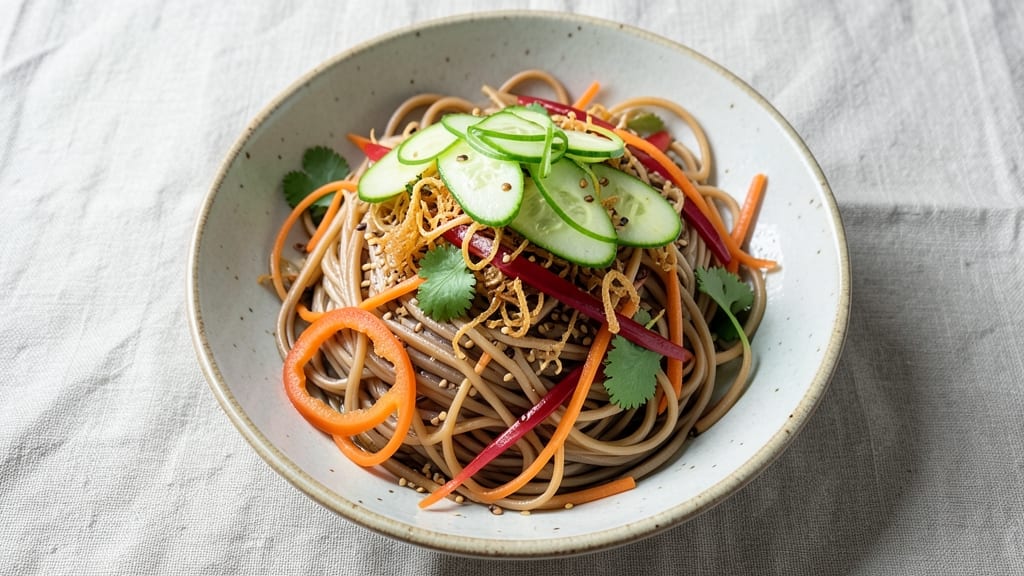
This Asian soba noodle salad delivers restaurant-quality umami flavor with crisp sesame crunch and refreshing textures in every bite. 💛 The secret lies in perfectly cooked buckwheat noodles tossed with a tangy-savory dressing that balances sweet, salty, and spicy notes—all while keeping it completely plant-based.
I developed this recipe after years of testing vegan Asian dishes, and it's become my go-to for quick, satisfying meals that impress even non-vegan eaters.
The foundation starts with high-quality soba noodles—half buckwheat for that signature earthy flavor and nutty texture.
We'll toss them with fresh vegetables like shredded carrots, cucumber, and bell peppers for crunch, then coat everything in a dressing made with rice vinegar, tamari, sesame oil, and a touch of maple syrup for balance.
The real magic happens with the sesame crunch—crispy fried shallots and toasted sesame seeds add layers of texture that make this salad irresistible.
What you'll end up with is a vibrant, flavor-packed salad that's perfect for meal prep or serving immediately. The noodles stay al dente while absorbing just enough dressing, and the vegetables maintain their crispness. This dish works as a light main course, hearty side, or even a refreshing lunchbox meal.
The best part? It comes together in under 20 minutes with minimal prep—ideal for busy weeknights or weekend entertaining.
For extra depth, I recommend adding optional garnishes like thinly sliced scallions, fresh cilantro, or a sprinkle of chili flakes for heat. Serve with edamame or avocado slices for added protein, or keep it simple with a side of miso soup.
The flavor combinations are endless, but the core recipe remains foolproof for achieving that perfect balance of umami, crunch, and freshness every time.
Ingredients for asian soba noodle salad
Nothing beats this umami-packed soba salad for quick, satisfying plant-based meals.
| Ingredient | Amount | Notes |
|---|---|---|
| Soba Noodles (Buckwheat) 🍜 | 8 oz | Dried, 100% buckwheat preferred |
| Carrots 🥕 | 1 ½ cups | Julienned or shredded finely |
| English Cucumber 🥒 | 1 whole | Seedless, thinly sliced |
| Red Bell Pepper 🌶️ | 1 whole | Thinly sliced, any color |
| Crispy Fried Shallots 🧅 | ¼ cup | Store-bought or homemade |
| Toasted Sesame Seeds 🥜 | 2 tbsp | Lightly toasted for aroma |
| Rice Vinegar 💧 | ⅓ cup | Unseasoned preferred |
| Tamari 🥢 | ¼ cup | Gluten-free soy sauce |
| Sesame Oil 🫒 | 1 ½ tbsp | Toasted, not regular |
| Maple Syrup 🍯 | 1 ½ tbsp | Pure, grade B preferred |
| Fresh Ginger 🧡 | 1 tbsp | Grated, freshly grated |
| Scallions 🧅 | 3 whole | Thinly sliced, green parts |
| Sesame Seeds 🥜 | 1 tbsp | Extra for garnish |
| Red Chili Flakes 🔥 | ½ tsp | Optional, for heat |
| Fresh Cilantro 🌿 | ¼ cup | Chopped, optional garnish |
The soba noodles are non-negotiable—100% buckwheat gives that signature earthy flavor. Koyo brand from Asian markets is my go-to, but any high-quality dried soba works. Skip the pre-cooked noodles—they turn mushy. For the veggies, Trader Joe's has the best pre-sliced carrots and cucumbers (saves time), but fresh is ideal. The bell pepper? Any color—red is pretty, but yellow adds sweetness. Pro tip: Soak the noodles in ice water for 30 seconds after cooking to stop them from overcooking.
No tamari? Coconut aminos work in a pinch, but tamari's deeper umami flavor is worth hunting down at Whole Foods or Asian grocery stores. The sesame oil is crucial—toasted sesame oil (not regular) adds that nutty aroma. Short on ginger? 1 tsp ground ginger works, but fresh is always better. The crispy shallots can be homemade (fry thin shallot slices in oil until golden), but the jarred kind from Trader Joe's is a lifesaver. For extra crunch, add 1/4 cup crushed peanuts—they keep well for weeks in the pantry.
This salad keeps beautifully—4-5 days in the fridge, sealed tight. The noodles soften over time, so eat it fresh for best texture. For meal prep, store dressing separately and toss before serving. Freezes for 3 months if packed tightly—just thaw in the fridge overnight. Garnishes like cilantro and chili flakes can be added fresh when serving to keep them vibrant. Double the batch—it disappears fast!
Why You'll Love This Recipe
- No Boil Required: I swear by the cold-soak method—just toss the soba noodles in ice water for 10 minutes, drain, and they’re perfectly al dente. No stove, no fuss, and they hold up better than boiling them anyway.
- Crunchy-Tangy Magic: That combo of thinly sliced cucumber, bell pepper, and crispy fried shallots? It’s the kind of texture contrast that makes you take a second bite. Honestly, the shallots alone sell me—every crunch is like a little flavor explosion.
- Lunchbox Hero: Between us, this is my go-to for packed lunches or picnic spreads. The dressing clings to everything, the veggies stay crisp, and it doesn’t wilt or get soggy. (Yes, even on a Tuesday night when I’m too tired to think.)
- Budget Brightener: Buckwheat soba is cheaper than most noodles, and the veggies—carrots, cucumber, bell pepper—stretch for days. I’ll make a big batch on Sunday, and it’s still fresh by Thursday. Plus, the shallots add luxury without breaking the bank.
Step-by-step instructions for Asian soba noodle salad
Here's how to create this refreshing, umami-packed salad that balances crisp textures and bold flavors.
🍳 Step 1: Cook and Cool the Soba Noodles
Bring a large pot of water to a rolling boil and add the 8 oz soba noodles (buckwheat). Cook according to package directions (usually 5-7 minutes) until al dente—they should still have a slight bite. Drain immediately and rinse under cold water for 30 seconds to stop the cooking process. This prevents them from becoming mushy later.
Transfer the drained noodles to a large mixing bowl and toss with 1 tablespoon sesame oil while still slightly warm. This helps the noodles absorb the oil's nutty flavor. Let them cool completely to room temperature before adding other ingredients—this ensures they stay firm and don't turn to mush in the dressing.
👨🍳 Step 2: Prepare the Crunchy Vegetable Mix
Using a julienne peeler or sharp knife, cut the 1.5 cups carrots into fine matchsticks. Thinly slice the 1 whole English cucumber (remove seeds first) and the 1 whole red bell pepper into long, paper-thin strips. Thinly slice the 3 whole scallions, keeping the green parts separate for garnish.
Add all the prepared vegetables to the cooled noodles. Sprinkle with 0.5 tsp red chili flakes (if using) and 0.25 cup crispy fried shallots. Toss everything gently but thoroughly to distribute the shallots evenly—this is where the magic happens, adding that irresistible crunch and umami depth.
🥘 Step 3: Make the Signature Dressing
In a small bowl, whisk together the 0.33 cup rice vinegar, 0.25 cup tamari, 1.5 tbsp maple syrup, 1.5 tbsp sesame oil, and 1 tbsp freshly grated ginger. The mixture should be smooth and slightly thick—this will coat the noodles perfectly. Taste and adjust—you might want to add a pinch more salt or a touch of maple syrup to balance the flavors.
Here's the thing—don't skip the ginger. It's what ties all the flavors together, giving that bright, zesty kick that cuts through the richness of the sesame oil. If you're using 0.25 cup fresh cilantro, chop it finely and set it aside for garnish—adding it now might make the dressing too herbaceous.
🥘 Step 4: Combine and Toss to Perfection
Pour the dressing over the noodle and vegetable mixture in the large bowl. Add 2 tbsp toasted sesame seeds and gently toss everything together with your hands or a large spoon. Work quickly but carefully to avoid breaking the noodles. You want the dressing to coat each strand evenly without making the salad soggy.
Let the salad sit for 5 minutes before serving. This gives the noodles time to absorb the dressing completely and the flavors to meld together. The texture should be perfectly balanced—crisp vegetables, chewy noodles, and that addictive crunch from the fried shallots.
🍽️ Step 5: Garnish and Serve Immediately
Transfer the salad to a large serving platter or individual bowls. Sprinkle with the reserved green parts of scallions and an extra 1 tbsp sesame seeds for garnish. The contrast of colors—deep reds, bright greens, and golden sesame—makes this dish look as good as it tastes.
Serve immediately while everything is still crisp. The flavors will continue to develop as it sits, but the texture is best enjoyed right away. This salad keeps well in the refrigerator for 2-3 hours, but I promise you won't have any leftovers that long!
Pro Tips For Making Asian Soba Noodle Salad
- RINSE NOODLES COLD: Toss freshly cooked soba noodles under cold water for 30 seconds—this stops the cooking and makes them chewier. I used to skip this and ended up with mushy noodles that turned the salad into soup. Trust me, the rinse is worth the 10-second effort.
- SHRED CARROTS FINE: Use a mandoline or sharp knife to slice carrots into paper-thin strips, not thick matchsticks. Thick shreds stay crunchy and unappetizing; thin ones soften just enough to melt into the dressing. (Yes, this takes 2 minutes longer—but your salad won’t taste like you rushed it.)
- DRESS NOODLES SEPARATELY: Toss the dressing with the noodles first, then mix in veggies last. This ensures every strand gets coated instead of sitting dry at the bottom. I learned this after serving a bowl where half the noodles were naked—embarrassing, but now I don’t repeat it.
- TOAST SHALLOTS LAST: Sprinkle crispy fried shallots on top right before serving—they’ll soften in the dressing if added early. Store them in the fridge in a sealed bag, and add a pinch of salt to keep them crisp. (Pro move: buy pre-made ones if you’re short on time.)
Storing and reheating this asian soba noodle salad
Refrigerator Storage
Store your soba noodle salad in an airtight container with a tight-fitting lid to maintain crispness. I use glass Pyrex containers because they keep the salad fresh longer and are easy to reheat later.
Place it in the fridge at 40°F or below and consume within 4-5 days for optimal texture and flavor. The noodles will soften slightly over time, so eat it fresh whenever possible. 🥗
Freezer Storage
For longer storage, freeze the salad in a single layer on a tray first to prevent clumping, then transfer to a freezer-safe bag or container. Label it with the date—it keeps well for up to 3 months.
When ready to eat, thaw overnight in the fridge and gently toss with a splash of rice vinegar or sesame oil to revive the flavors. Avoid reheating frozen soba noodles as they become too soft. ❄️
Reheating Methods
If you've stored the salad in the fridge, I recommend not reheating it—it's best enjoyed cold. Instead, let it sit at room temperature for 10-15 minutes before serving to bring out the flavors.
If you must warm it slightly, microwave individual portions for 30-45 seconds on low power (50%) to prevent sogginess. Add a few drops of sesame oil afterward to restore some of the lost crispness. 🔥
Reviving Stale Noodles
If your soba noodles have lost their bite after refrigeration, don't toss them! Toss with 1 tablespoon fresh lime juice or rice vinegar and a pinch of salt to refresh the flavors.
For extra crunch, add 1/4 cup crushed peanuts or toasted sesame seeds right before serving. This trick works wonders and makes the salad taste almost as good as fresh. 💡
Dressing Separation
To maximize freshness, store the dressing separately in a small jar or container. Before serving, shake it well and toss with the salad just before eating. This prevents the noodles from absorbing too much liquid and becoming mushy.
For extra flavor, add a pinch of fresh ginger or a drizzle of sesame oil when reassembling. Trust me, this keeps everything vibrant and delicious. ✨
Garnish Like a Pro
Always add fresh garnishes—like scallions, cilantro, or sesame seeds—right before serving to keep them crisp and vibrant. I like to sprinkle red chili flakes for a little heat or crushed peanuts for added crunch.
These finishing touches elevate the dish and make it look restaurant-worthy. Presentation matters, especially with a colorful salad like this! 🌟
Nutrition facts
Frequently asked questions
Can I use regular wheat noodles instead of soba?
While you can substitute wheat noodles, you'll lose that signature earthy flavor and nutty texture that makes soba special. For the closest experience, use 100% buckwheat soba noodles—they're worth hunting down at Asian markets. If you must use wheat, add 1 tbsp toasted sesame oil and 1 tsp miso paste to the dressing for depth.
How do I make this salad spicier?
Start with the 0.5 tsp red chili flakes mentioned in the recipe, then adjust to taste. For extra heat, add 1 tbsp sriracha or 1 tsp gochujang to the dressing. For a smoky kick, sprinkle with 1/2 tsp smoked paprika before serving. Always taste first—chili flakes pack more heat than you might expect!
Can I add protein to this vegan salad?
Try 1 cup edamame (shelled, steamed), 1/2 cup baked tofu cubes, or 1/2 cup marinated tempeh for plant-based protein. Add them after tossing the salad and let them sit for 5 minutes to absorb flavors. For non-vegan options, grilled shrimp or chicken work beautifully with this dressing.
Why did my noodles turn mushy?
Overcooking is the #1 cause—sobas cook faster than wheat noodles! Always rinse them in ice water for 30 seconds after draining, and let them cool completely before adding dressing. If they're already mushy, try the "revive trick": toss with 1 tbsp rice vinegar and 1 tsp toasted sesame seeds to restore some texture.
What's the best way to prep this for meal prep?
Store the dressing separately in a small jar and keep the noodles/veggies in an airtight container for up to 4 days. When ready to eat, toss everything together and add fresh garnishes like scallions or cilantro right before serving. For extra crunch, pack crispy fried shallots in a separate bag and sprinkle just before eating.