
Salads
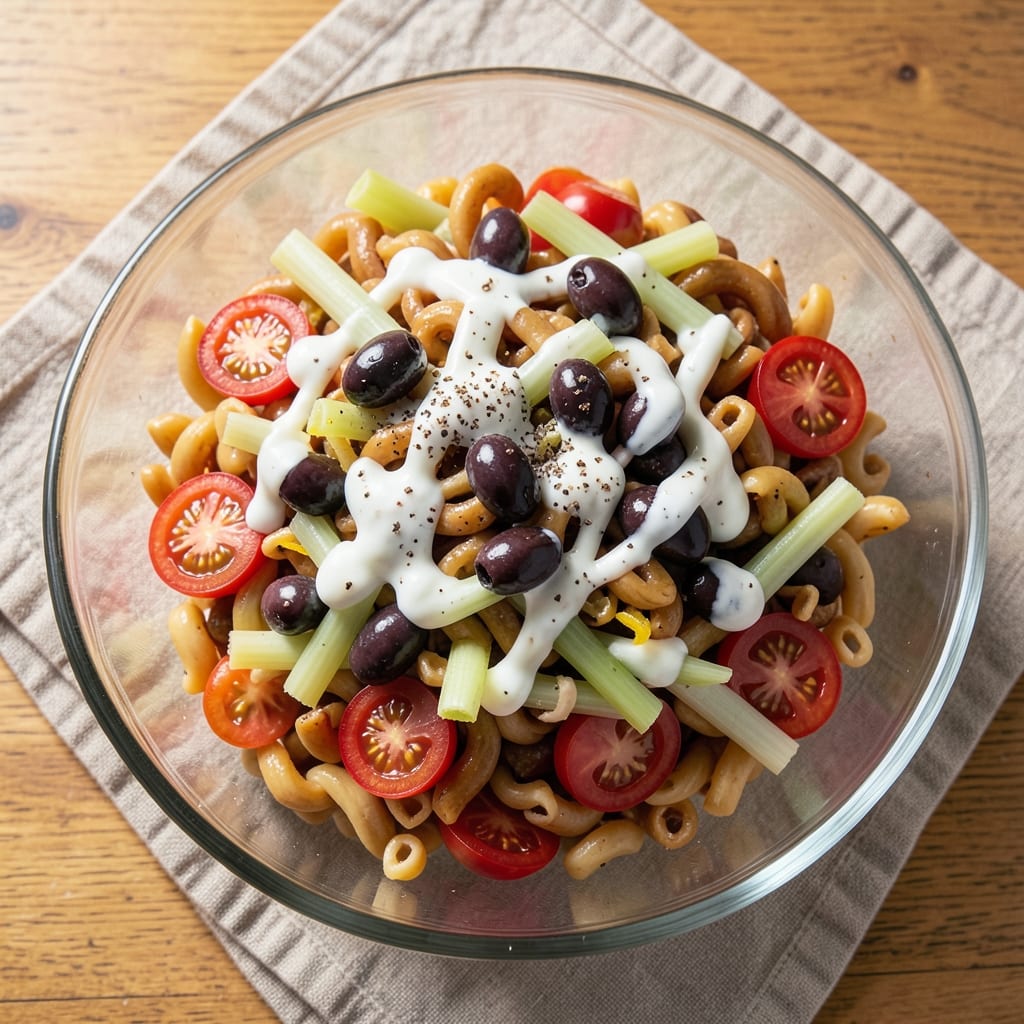
Aldi pasta salad recipe transforms budget-friendly ingredients into a restaurant-worthy side that skips mayo entirely—no soggy lettuce here. The secret lies in a tangy Italian dressing base, crisp celery sticks, and a clever pasta cooking trick that keeps every bite al dente. I developed this version after realizing most store-bought pasta salads rely on heavy mayo that turns mushy within hours.
What makes this recipe work is the no-mayo creaminess achieved through a simple mix of Italian dressing, Greek yogurt, and a splash of lemon juice—keeping it light yet rich. The pasta gets cooked just one minute less than package instructions, then chilled in ice water to stop the cooking process immediately. This ensures your rotini stays firm and holds up perfectly for picnics or potlucks.
By the time you're done assembling, you'll have a pasta salad with crisp celery bites, bright cherry tomatoes, briny Kalamata olives, and a dressing that clings to every noodle without overpowering. The best part? It stays fresh-tasting for days in the fridge, making it ideal for meal prep or last-minute gatherings.
Customize it with grilled chicken, canned tuna, or diced ham—this base recipe handles any protein addition beautifully. The ingredients are all Aldi staples, keeping costs low while delivering impressive results. Let's get started with this foolproof, budget-friendly pasta salad.
Ingredients for aldi pasta salad
Budget-friendly staples transform into a restaurant-quality pasta salad without mayo or soggy textures.
| Ingredient | Amount | Notes |
|---|---|---|
| Rotini Pasta 🍝 | 1 ½ lbs | Cooked one minute less than package instructions |
| Celery Sticks 🧅 | 3 cups | Thinly sliced for crisp texture |
| Cherry Tomatoes 🍅 | 1 ½ cups | Halved, seedless preferred |
| Kalamata Olives 🫒 | 1 cup | Pitted and sliced in half |
| Italian Dressing 🍯 | 1 cup | Store-bought or homemade |
| Plain Greek Yogurt 🥛 | ½ cup | Non-fat or full-fat preferred |
| Lemon Juice 🍋 | 2 tbsp | Freshly squeezed for brightness |
| Red Wine Vinegar 🍷 | 1 tbsp | For tangy depth |
| Diamond Crystal Kosher Salt 🧂 | ½ tsp | Adjust to taste |
| Freshly Ground Black Pepper 🌶️ | ¼ tsp | For subtle seasoning |
| Ice Cubes ❄️ | 1 cup | For pasta cooling bath |
| Optional Protein Addition 🍗 | 1 ½ cups | Grilled chicken, tuna, or ham |
Aldi's rotini pasta is the backbone of this dish—look for the 16-ounce bag to maximize value. The key to crisp celery lies in thin slicing with a sharp knife; mandoline slices work best for uniform cuts. Cherry tomatoes should be firm and bright red—avoid any with soft spots. Kalamata olives add briny depth, so check for whole pits before purchasing. For the dressing base, Giovanni Italian Dressing from Aldi delivers authentic flavor at a fraction of the cost of name brands. If you prefer homemade, combine olive oil, lemon juice, and Italian seasoning for a custom blend.
No Italian dressing? Substitute with balsamic vinegar and olive oil at a 1:2 ratio. Greek yogurt can be swapped for vegan yogurt or sour cream if needed, though texture may vary slightly. For extra tang, add 1 teaspoon of Dijon mustard to the dressing. Cherry tomatoes too expensive? Substitute with grape tomatoes or regular tomatoes cut into smaller pieces. The optional protein additions—like canned tuna or rotisserie chicken—can be added cold or warmed through. If using ham, look for low-sodium varieties to balance the briny olives.
This pasta salad holds up beautifully for 4-5 days in the fridge when stored in an airtight container. For best texture, assemble just before serving to maintain crisp celery and firm pasta. To reheat, gently warm the dressing separately and toss with chilled pasta—never microwave the entire salad as it can turn mushy. For meal prep, portion into individual containers with dressing on the side to keep everything fresh. The dressing can be made 2 days ahead and stored separately, saving time on assembly day.
Why You'll Love This Recipe
- I swear by this trick: cook the rotini al dente, rinse it under cold water, then dump everything in a bowl. The celery stays crisp, the olives don’t get mushy, and the Italian dressing clings like it’s glued on. Honestly, I’ve tried fancy twists—none compare to this 10-minute toss.
- No-Cook After Boil: I swear by this trick: cook the rotini al dente, rinse it under cold water, then dump everything in a bowl. The celery stays crisp, the olives don’t get mushy, and the Italian dressing clings like it’s glued on. Honestly, I’ve tried fancy twists—none compare to this 10-minute toss.
- Salty-Sweet Crunch Bomb: That first bite? Kalamata olives packed with briny punch, cherry tomatoes popping with juice, and the celery’s sharp crunch cutting through the creamy dressing. It’s the kind of combo that makes you grab seconds without thinking—no fancy plating needed.
- Potluck Proven Winner: I’ve taken this to BBQs, picnic tables, and even my mom’s Thanksgiving side dish lineup. The rotini holds up for hours (yes, even in summer heat), and it’s the one dish everyone finishes first. Between us, it’s my secret weapon for gatherings where I don’t want to stress.
Step-by-step instructions for Aldi pasta salad
This method delivers a perfectly balanced pasta salad with creamy texture and crisp celery bites.
Cook the Rotini Pasta to Al Dente Perfection
Bring a large pot of water to a rolling boil and add the 1.5 lbs rotini pasta. Cook for one minute less than the package instructions specify—this ensures the pasta finishes cooking in the cooling bath and maintains its bite. I like to stir occasionally to prevent sticking, but don't overdo it as this can break the pasta.
When the pasta is 1-2 minutes shy of fully cooked, drain it in a colander and immediately transfer it to a large mixing bowl. Add the 1 cup ice cubes to the colander and pour the icy water over the pasta. This rapid cooling stops the cooking process and prevents mushiness. Let it sit for 5 minutes while you prepare the other ingredients—this step is crucial for maintaining texture.
Prepare the Creamy Dressing Base
In a medium bowl, whisk together the 1 cup Italian dressing, 0.5 cup plain Greek yogurt, 2 tbsp lemon juice, and 1 tbsp red wine vinegar until fully combined. This dressing creates the signature no-mayo creaminess that keeps the salad refreshing. Taste and adjust the seasoning with 0.5 tsp Diamond Crystal kosher salt and 0.25 tsp freshly ground black pepper—the yogurt adds a subtle tang that balances the sweetness of the tomatoes.
Here's the thing—Greek yogurt thickens when chilled, so don't worry if the dressing looks slightly lumpy at first. It will emulsify as it sits. If you prefer a smoother texture, you can strain it through a fine-mesh sieve after mixing, but I find the slight texture adds character to the salad.
Prep and Combine All Vegetable Components
While the pasta cools, thinly slice the 3 cups celery sticks into ¼-inch pieces—this ensures they stay crisp rather than soggy. Halve the 1.5 cups cherry tomatoes and remove any seeds if preferred. Slice the 1 cup Kalamata olives in half lengthwise. If using the 1.5 cups optional protein addition, chop it into bite-sized pieces and set aside.
Add the sliced celery, tomatoes, and olives to the cooled pasta. Pour the dressing mixture over everything and gently fold with a large spoon or rubber spatula. The key here is to combine just enough to coat the ingredients without mashing the pasta. If the dressing seems too thick, add 1-2 tablespoons of ice water to loosen it slightly.
Chill and Develop Flavors
Cover the bowl and refrigerate the pasta salad for at least 2 hours—this allows all the flavors to meld together and the dressing to fully absorb into the pasta. I know it's tempting to eat it immediately, but this resting period makes all the difference in texture and taste. The celery will stay crisp, the tomatoes will soften slightly but retain their shape, and the dressing will become perfectly creamy.
Before serving, give the salad one final toss to redistribute everything evenly. The flavors should now be harmoniously balanced—bright from the lemon, tangy from the vinegar, and creamy from the yogurt. If you added protein, it should be fully integrated without overpowering the other components.
Pro Tips For Making Aldi Pasta Salad
- Rinse the Rotini: Drain your cooked rotini and give it a quick cold-water rinse under the tap. The starch clinging to the pasta makes the salad gluey fast—especially with Italian dressing—and nobody wants a gummy mess. ---
- Cut Celery Lengthwise: Slice celery sticks into ¼-inch-thick half-moons instead of thin matchsticks. They hold up better in the salad, stay crisp longer, and add a satisfying bite—no one likes mushy celery after an hour. ---
- Halve the Olives: Pitting and roughly chopping Kalamata olives (not just whole) spreads their briny flavor evenly. Whole olives sink to the bottom and turn the top layer bland—like eating a salad with a side of disappointment. ---
- Toss Dressing Last: Wait until everything else is mixed before adding the Italian dressing. Pasta absorbs liquid instantly, so if you dress it early, you’ll end up with a soggy, watery salad. Add dressing, then stir gently—just enough to coat.
Troubleshooting this dish
Dressing Too Thin?
If your dressing separates or looks too thin after chilling, stir in 1 tablespoon of plain Greek yogurt or 1 teaspoon of cornstarch mixed with 1 tablespoon cold water. The yogurt adds thickness naturally, while the cornstarch acts as a binder. For extra richness, fold in 1 tablespoon of grated Parmesan cheese—it blends seamlessly and adds umami depth. 🥛
Celery Turning Soggy?
Celery is the most common culprit for soggy pasta salads, but thin slicing and a quick prep fix solve this. Toss freshly sliced celery with ½ teaspoon lemon juice and ¼ teaspoon salt immediately after cutting—this draws out excess moisture. For maximum crispness, add celery to the salad bowl just 10 minutes before serving rather than during initial assembly. If using pre-cut celery, rinse it under cold water and pat dry thoroughly before adding.
Pasta Too Soft?
Overcooked pasta ruins texture, but you can salvage it by mixing in 2 tablespoons of cold olive oil and 1 tablespoon of red wine vinegar. The acidity helps firm up the pasta slightly while adding brightness. For next time, test pasta for doneness 30 seconds early—it continues cooking in the ice bath. If all else fails, stir in ½ cup uncooked pasta (like orzo) to bulk up the salad and create a fresh bite.
Dressing Too Tangy?
Balance overly acidic dressing by adding 1 tablespoon of honey or ½ teaspoon of sugar to mellow the sharpness. The Greek yogurt already provides creaminess, but a touch of sweetness rounds out the flavors beautifully. For a savory fix, stir in 1 teaspoon of Dijon mustard—it adds complexity without overpowering. Always taste as you go, since store-bought Italian dressings vary in acidity.
Protein Getting Dry?
If your added protein (like chicken or tuna) tastes dry or bland, revive it with 1 tablespoon of warm dressing or a splash of lemon juice. For chicken, I recommend poaching it in ½ cup chicken broth with 1 bay leaf for 5 minutes before adding to the salad—this keeps it juicy. Canned tuna? Drain it thoroughly and flake with a fork, then mix with 1 teaspoon of olive oil to prevent dryness. Add protein last to avoid soggy textures.
Salad Separating?
Pasta salads often separate when stored, but a quick fix keeps everything cohesive. Before refrigerating, stir in 1 tablespoon of mayonnaise (just enough to help bind) or 1 teaspoon of xanthan gum dissolved in 1 tablespoon water. For assembly, layer ingredients in this order: dressed pasta first, then celery, tomatoes, olives, and protein on top. This prevents heavy ingredients from sinking. When ready to serve, give it a gentle stir to redistribute flavors evenly. ✨
Nutrition facts
Frequently asked questions
Can I make this pasta salad ahead of time?
This recipe actually tastes better when made 24 hours ahead. Store it in an airtight container in the fridge, and the flavors will meld beautifully. Just give it a good stir before serving to redistribute everything evenly. The celery stays crisp if added just 10 minutes before serving.
What's the best way to add protein to this salad? For maximum flavor, use grilled chicken breast or rotisserie chicken (shredded or diced). If you prefer seafood, canned tuna or shrimp work well—just
Why does the recipe use Greek yogurt instead of mayo?
The Greek yogurt creates a lighter, tangier creaminess that keeps the salad refreshing. Unlike mayo, it won't make the pasta soggy over time. Plus, it adds protein and keeps the dish lighter for warm weather. The yogurt also helps balance the acidity of the Italian dressing and lemon juice.
Can I substitute any of the vegetables?
Certainly! Swap cherry tomatoes for grape tomatoes or cucumber, and use green olives if Kalamata are unavailable. For extra crunch, add bell peppers or red onion. Just adjust the amount to maintain the salad's balance—about 3 cups total of mixed veggies works best.
How do I keep the celery crisp for longer?
Toss freshly sliced celery with ½ teaspoon lemon juice and ¼ teaspoon salt immediately after cutting to draw out moisture. Store it separately from the pasta salad in the fridge, and add it to the bowl just before serving. For extra crispness, you can also briefly blanch celery in boiling water for 30 seconds, then shock in ice water.