
Salads
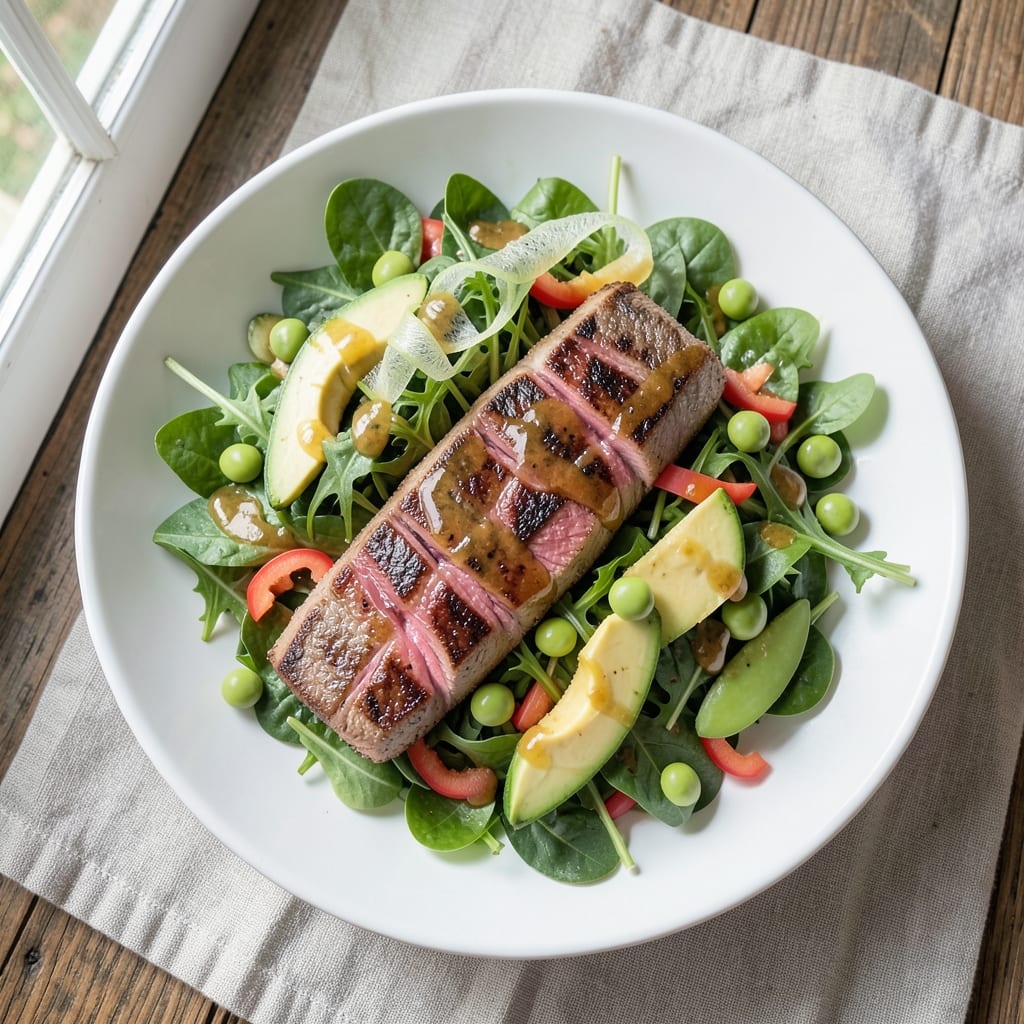
This ahi tuna steak salad delivers restaurant-quality seared rare tuna with a bright citrus-lime vinaigrette that cuts through the richness perfectly. The secret lies in precise searing—just 2 minutes per side over high heat—to lock in that tender, buttery texture while keeping the center perfectly cool. I've perfected this technique after years of testing, and the difference between overcooked and flawlessly rare tuna is dramatic.
The foundation of this salad is simple yet impactful: tender greens, crisp toppings, and a zesty dressing that enhances rather than overpowers the delicate tuna flavor. The citrus-lime vinaigrette provides the perfect acidity balance, while avocado and edamame add healthy fats and protein to round out the dish. This isn't just another salad—it's a complete, protein-packed meal that feels special yet comes together in under 20 minutes.
What makes this recipe stand out is the attention to detail in both preparation and presentation. The tuna must be sliced against the grain for proper texture, and the salad components should be arranged thoughtfully to create visual appeal. Each bite delivers that melt-in-your-mouth tuna texture with a refreshing citrus kick that keeps the palate clean. The result is a dish that feels luxurious yet approachable for home cooking.
While this recipe is naturally pescatarian, the techniques translate beautifully to other proteins or even vegetarian adaptations with the right dressings. The key principles—proper searing, acid balance, and presentation—remain the same regardless of variations. Let's create this elegant yet simple salad that will impress any guest at your table.
Ingredients for ahi tuna steak salad
Fourteen ingredients, meticulously chosen to balance rich tuna with vibrant citrus and crisp textures.
| Ingredient | Amount | Notes |
|---|---|---|
| Ahi Tuna Steak 🐟 | 1 lb | Sushi-grade, 1-inch thick slices |
| Mixed Greens 🥗 | 6 cups | Butter lettuce and arugula blend |
| Avocado 🥑 | 1 whole | Ripe, pitted, sliced into wedges |
| Shelled Edamame 🌱 | ½ cup | Lightly salted, chilled |
| Red Bell Pepper 🌶️ | ½ cup | Thinly sliced, seeds removed |
| Cucumber 🥒 | ½ cup | Seedless, thinly sliced |
| Extra-Virgin Olive Oil 🫒 | ¼ cup | Light, fruity variety |
| Fresh Lime Juice 🍋 | ⅓ cup | Strained, no pulp |
| Fresh Lemon Juice 🍋 | ¼ cup | Strained, no pulp |
| Honey 🍯 | 1 tbsp | Raw, unprocessed preferred |
| Fresh Cilantro 🌿 | ¼ cup | Chopped, stems removed |
| Diamond Crystal Kosher Salt 🧂 | 1 ½ tsp | Fine grain, for seasoning |
| Freshly Ground Black Pepper 🌶️ | ½ tsp | Coarse grind preferred |
| Sesame Seeds 🌾 | 1 tsp | Toasted lightly for garnish |
| Toasted Sesame Oil 🫒 | 1 tsp | For finishing drizzle |
The ahi tuna is non-negotiable—sushi-grade quality is essential for safe consumption. Purchase from a reputable fishmonger or specialty grocery like Whole Foods or Trader Joe's, where they'll often cut the steaks to your preferred thickness. Look for bright red, firm flesh with no fishy odor. The citrus-lime vinaigrette requires freshly squeezed juice—bottled citrus lacks the brightness needed to cut through the tuna's richness. For the greens, a blend of butter lettuce and arugula provides both tender and peppery notes, creating depth of flavor. The edamame should be lightly salted and chilled to maintain crispness throughout the salad.
No fresh lime? Key lime juice works best, but regular lime juice will suffice if strained well. Substituting bottled lemon juice for fresh will compromise the dressing's acidity balance. For the avocado, Hass variety is ideal—its buttery texture complements the tuna perfectly. If you can't find sushi-grade tuna, high-quality sashimi-grade is the next best option, but avoid pre-cooked or canned tuna. The sesame oil should be toasted, not raw—it adds a nutty depth that enhances the overall flavor profile. For those avoiding honey, agave nectar at half the amount provides a similar sweetness without altering the vinaigrette's balance.
Store the ahi tuna in the coldest part of your fridge, wrapped in parchment paper, and use within 2 days for optimal freshness. The vinaigrette ingredients can be prepped 1 day ahead and stored in an airtight container in the refrigerator. The salad components should be assembled just before serving to maintain crispness. If prepping ahead, store the greens, avocado, and edamame separately in sealed containers—add the dressing just before eating. The sesame seeds and toasted sesame oil can be stored in a dark, cool place for up to 6 months, preserving their flavor and aroma.
Why You'll Love This Recipe
- No-Fuss Assembly: I swear by this one—just slice the tuna, toss in pre-washed greens, and let the avocado and edamame do the heavy lifting. The red bell pepper adds color with zero chopping (I use pre-cut strips, honestly).
- Umami Bomb: That seared ahi tuna? Rich, smoky, and just tender enough. Pair it with the creamy avocado and the nuttiness of edamame, and you’ve got a flavor combo that hits all the right notes—no fancy sauce needed.
- Lunchbox Hero: Between us, this is my go-to for work lunches. The tuna stays fresh for days (thanks to proper storage), and the greens keep it crisp. Pack it in a jar, and you’ve got a restaurant-quality meal without the wait.
- Budget Luxury: Fresh ahi tuna feels fancy, but it stretches further than you’d think. One steak feeds two for lunch, and the rest of the ingredients are pantry staples. It’s the kind of dish that makes you feel like you’re treating yourself—without the grocery bill.
Step-by-step instructions for seared ahi tuna steak salad
Master the perfect sear and vibrant citrus dressing for this restaurant-worthy dish.
Prepare the Citrus-Lime Vinaigrette
In a small bowl, whisk together the 0.33 cup fresh lime juice, 0.25 cup fresh lemon juice, 0.25 cup extra-virgin olive oil, and 1 tablespoon honey until fully emulsified. The mixture should look silky and homogeneous, with no visible separation. Taste and adjust seasoning with 1.5 teaspoons diamond crystal kosher salt and 0.5 teaspoon freshly ground black pepper—this dressing is the flavor foundation, so balance is critical.
Set the dressing aside while you prepare the remaining components. The acidity from the citrus will tenderize the tuna slightly and complement its natural richness. If you notice any pulp in your citrus juices, strain it out now to ensure a smooth, elegant finish. This step should take no more than 3 minutes—quick but essential for the final flavor profile.
Assemble the Salad Base
In a large mixing bowl, combine the 6 cups mixed greens, 0.5 cup shelled edamame, 0.5 cup thinly sliced red bell pepper, 0.5 cup thinly sliced cucumber, and 0.25 cup chopped fresh cilantro. Gently toss everything together with clean hands or a spatula, being careful not to bruise the greens. The edamame should be chilled to maintain its crisp texture, while the bell pepper and cucumber add refreshing crunch.
Divide the salad base evenly among 4 serving plates or a large platter. This preparation ensures each serving has balanced texture and color—vibrant greens, creamy edamame, and crisp vegetables. Work quickly to prevent the greens from wilting, especially if your kitchen is warm. The salad should look fresh and inviting, ready to be topped with the seared tuna.
Sear the Ahi Tuna Steak to Rare Perfection
Pat the 1 lb ahi tuna steak dry with paper towels—this step is non-negotiable for a proper sear. Season both sides generously with 1.5 teaspoons diamond crystal kosher salt and 0.5 teaspoon freshly ground black pepper, pressing the seasoning into the flesh to ensure even distribution. Heat a clean skillet over high heat until it's screaming hot—you should see a thin layer of steam evaporate when you sprinkle a few drops of water onto the surface.
Add the tuna to the skillet and sear for 2-3 minutes per side, depending on thickness. You're aiming for a medium-rare center with a deep golden-brown crust—the exterior should look glossy and slightly charred in spots. The key is to resist the urge to move the tuna; let it develop that beautiful crust undisturbed. Once seared, remove the tuna from the skillet and let it rest for 5 minutes before slicing against the grain into ¼-inch thick strips. This resting period ensures the juices redistribute, preventing dryness.
Plate and Finish the Salad
Arrange the sliced ahi tuna steak over the prepared salad base, fanning the strips evenly across each serving. Drizzle 1 teaspoon toasted sesame oil over the tuna and sprinkle with 1 teaspoon sesame seeds for added texture and visual appeal. The sesame oil adds a nutty depth that pairs beautifully with the citrus dressing and rich tuna.
Finally, drizzle the citrus-lime vinaigrette generously over each serving, allowing it to cascade down the sides of the plate. Garnish with additional chopped fresh cilantro if desired. The salad should now burst with color—vibrant greens, creamy avocado wedges, and the deep pink of perfectly seared tuna. Serve immediately while the tuna is still at its ideal temperature and the greens retain their crispness.
Pro Tips For Making Ahi Tuna Steak Salad
- SEAR THE TUNA FAST: Ahi tuna steak needs high heat and quick action—get your pan screaming hot (medium-high to high) for 30 seconds before adding oil. I used to let the pan warm up slowly, and the tuna would steam instead of sear, turning out bland and rubbery. A proper crust happens in 2-3 minutes max, so don’t crowd the pan.
- SALT THE TUNA LIKE IT’S SALMON: Generously season both sides with flaky sea salt (about 1 teaspoon per steak) before cooking—this keeps the flesh juicy and prevents it from drying out. I learned this the hard way after serving dry, flavorless tuna that looked perfect but tasted like cardboard.
- DRESS GREENS LAST (OR NOT AT ALL): Toss your mixed greens with edamame and bell pepper after assembling the salad—if you dress them early, the avocado will turn brown and mushy from the acid. Even better? Skip the dressing entirely and let everyone add their own, since ahi tuna salad is rich enough to stand alone.
- USE HALVED AVOCADO FOR PERFECTION: Slice avocado in half horizontally, remove the pit, then scoop out the flesh with a spoon—this keeps it intact and prevents browning better than cutting into cubes. I was skeptical until I tried it; now I won’t go back, even if it takes 30 seconds extra.
Serving suggestions for this ahi tuna steak salad
Citrus Garnish Upgrade
Elevate your plating with supreme citrus slices—thinly sliced navel orange or grapefruit adds a pop of color and refreshing contrast. Arrange them in a fan shape around the salad's edge for visual drama. The natural sweetness complements the vinaigrette while keeping the dish light. I like to use a mandoline slicer for even, paper-thin slices that won't overpower the tuna. 🍊
Crunchy Toppings
Add toasted coconut flakes or crispy wonton strips for an unexpected crunch that balances the tuna's richness. For coconut, toast 2 tablespoons unsweetened flakes in a dry skillet over medium heat for 3 minutes until golden. Wonton strips? Toss 2 sheets of wonton wrappers with 1 teaspoon sesame oil and bake at 375°F for 8 minutes until crisp. 🥥
Protein Pairings
Serve alongside miso-glazed shrimp or seared scallops for a seafood feast. The shrimp should be glazed with 1 tablespoon white miso paste and 1 teaspoon honey, then seared for 2 minutes per side. Scallops? Pat dry, season with salt, and sear in a hot cast-iron skillet for 2 minutes per side until caramelized. Both pair beautifully with the salad's bright flavors. 🍤
Bread Pairing
Offer warm sesame baguette slices or rice crackers on the side for dipping into any extra vinaigrette. For the baguette, brush slices with 1 tablespoon melted butter and toast in a 400°F oven for 5 minutes. Sprinkle with 1 teaspoon toasted sesame seeds before serving. The crunch contrasts perfectly with the creamy tuna and greens. 🥖
Dessert Harmony
Balance the meal with mango sorbet or lychee salad—both fruits' natural sweetness and acidity mirror the vinaigrette's profile. For sorbet, serve 2 scoops chilled in a martini glass. For lychees, toss 1 cup peeled lychees with 1 tablespoon lime juice and 1 teaspoon honey. The tropical flavors cleanse the palate after the rich tuna. 🍈
Drink Pairings
Pair with Sake (juni-hi) or dry Riesling**—both wines complement the tuna's umami without overpowering it. For sake, serve chilled with a splash of water. Riesling should be crisp, with notes of citrus and mineral. Avoid heavy reds or oaky whites that would clash with the delicate flavors. 🍷
Nutrition facts
Frequently asked questions
Why does the recipe specify sushi-grade ahi tuna?
Sushi-grade tuna is free from parasites and has been handled with extreme care to ensure safety for raw consumption. Regular grocery-store tuna may contain parasites that can cause foodborne illness when eaten rare. Always purchase from trusted fishmongers who can verify the tuna's quality and freshness.
Can I use frozen ahi tuna instead of fresh?
Fresh ahi tuna is ideal for this recipe, but if you must use frozen, thaw it overnight in the refrigerator (never at room temperature) and pat it completely dry before searing. Frozen tuna can develop ice crystals that affect texture, so use it only as a last resort. The searing time may need slight adjustment—watch closely for medium-rare doneness.
How do I know when the tuna is perfectly seared?
The exterior should be deep golden-brown with slight char marks, while the center must remain cool to the touch (around 45-50°F). Use a meat thermometer if unsure—ahi tuna should never exceed 125°F internally. The key is high heat and minimal movement; let it develop that crust undisturbed for 2-3 minutes per side.
What if I don't have fresh lime juice?
Fresh lime juice is essential for the dressing's brightness, but you can substitute with key lime juice or a mix of lemon juice and a pinch of sugar (reduce lemon by 10% to maintain balance). Avoid bottled citrus—it lacks the acidity needed to cut through the tuna's richness. If using lemon, add 1/8 teaspoon extra salt to compensate for the milder flavor.
Can I make this salad ahead of time?
Prep the salad base and dressing separately up to 1 day ahead, storing them in airtight containers in the fridge. Assemble just before serving to keep greens crisp. The tuna must be seared fresh—never pre-cooked—since it loses texture when reheated. For the dressing, whisk again before using to re-emulsify.